Q25 - Golden Gate Assembly Constructs
Golden Gate assembly is a one-step cloning method for joining multiple DNA inserts into a plasmid backbone.
This method uses BsaI (a type IIs restriction enzyme). In contrast to traditional restriction enzymes, it recognizes a non-palindromic sequence and cuts the adjacent sequence, which is shifted by a number of base pairs, as shown in the figure below. Notice the restriction enzymes are only specific for the recognition site (shaded in gray), while the cutting site can have any nucleotide sequence.
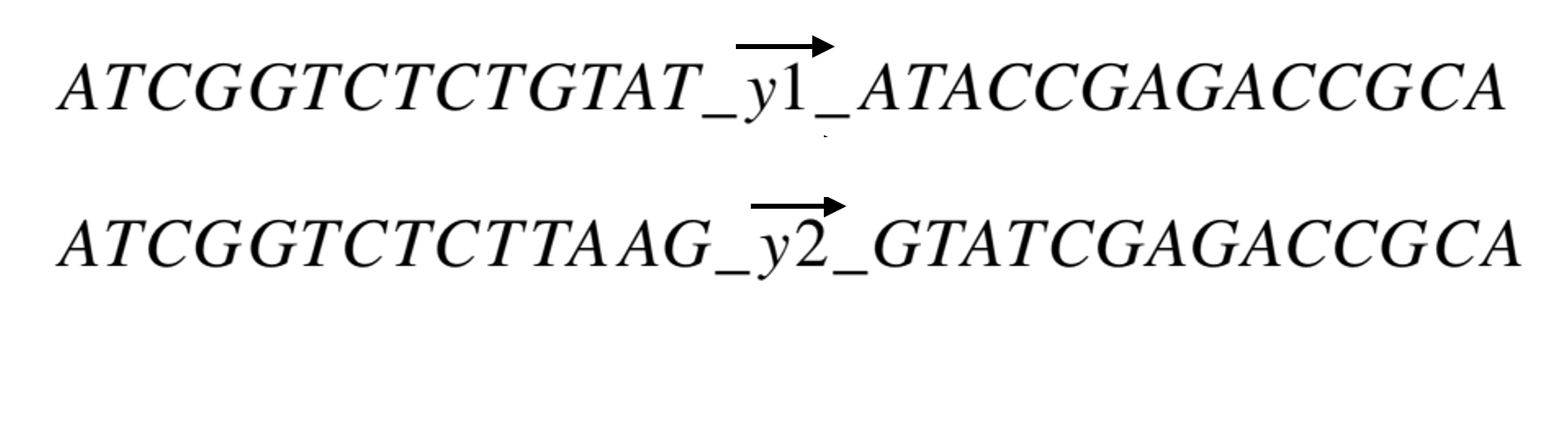
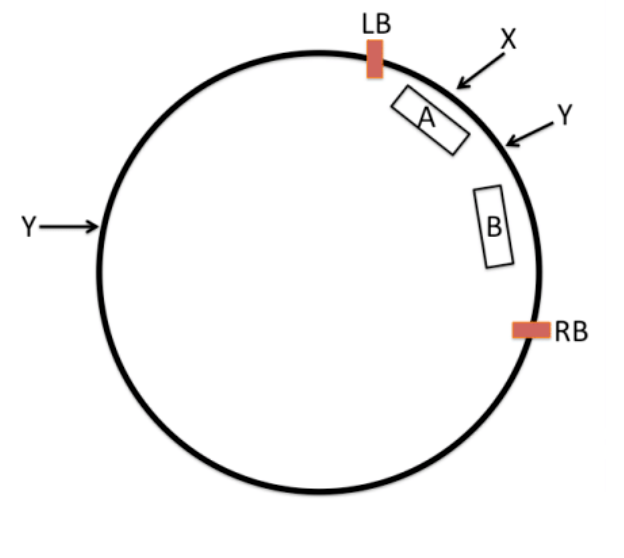
Consider combining the following plasmid backbone and two inserts:
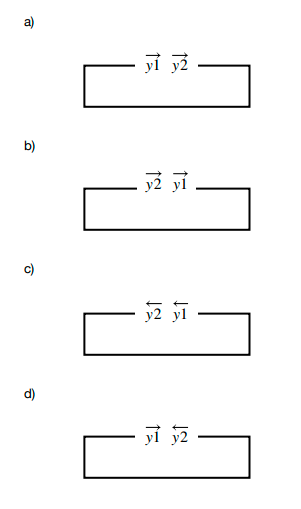
For each of the constructs below, indicate if it can be observed after treatment with BsaI and DNA ligase.
Question reproduced from IBO 2023, Theoretical Paper 2, licensed under CC BY-NC-SA 4.0 - attributed to the International Biology Olympiad. Open the full exam PDF