Q45 - Mustard Seed Coat Color Inheritance
Mustard (Brassica juncea) seeds are used as spice in Arabian cuisine. Mustard seeds have either brown or yellow seed coat color.
To study the inheritance of seed coat color in mustard, crosses were made with plants producing either brown seeds (A) or yellow seeds (B). B. juncea is amphidiploid. Amphidiploids originate from hybridisation between two species, and the chromosome number of the hybrid is the sum of the chromosome numbers of both parental species.
The figure represents results from 3 different crosses. Pure lines have been used for parental crosses.
- Cross I: A cross between a plant with brown seeds (female parent) and a plant with yellow seeds (male parent) produces F₁ with brown seeds.
- Cross II: A reciprocal cross produces F₁ with yellow seeds.
- Cross III: Self-pollinating the F₁ plants from Cross I gives F₂ plants which have only brown seeds. Selfing the F₂ plants produces seeds (F₃ generation), which are either brown or yellow. The ratio of brown (500) to yellow (26) seeds is 15:1.
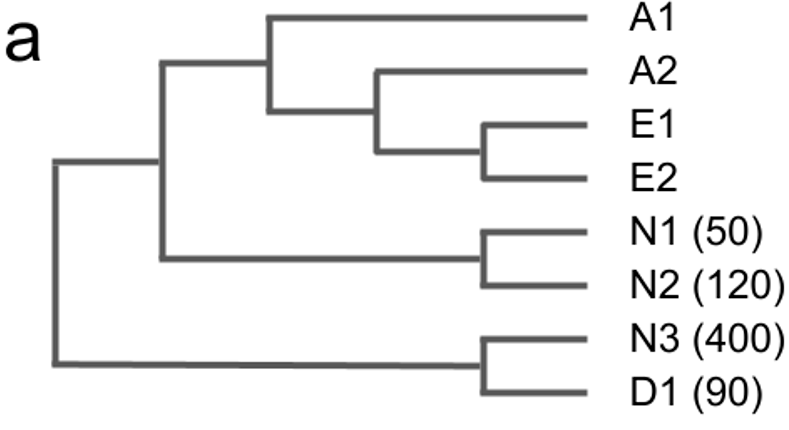
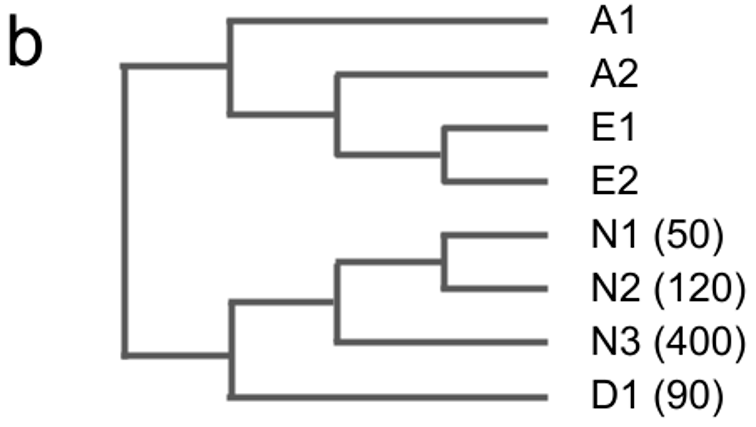
True or false?
Question reproduced from IBO 2023, Theoretical Paper 2, licensed under CC BY-NC-SA 4.0 - attributed to the International Biology Olympiad. Open the full exam PDF