Q44 - Gene Drive Technology
Gene drives (mutagenic chain reaction) are a modern technology which causes highly efficient conversion of wild type alleles to non-functional alleles in all progeny of a carrier.
Gene drives are based on a transgenic construct containing genes of a target-locus-specific guideRNA (gRNA) and Cas9 RNA-guided DNase. If this transgenic construct co-occurs in a cell with the wild type target locus, Cas9 cleaves the target DNA. Next, a copy of the construct is inserted into the target locus by the homology directed repair (HDR) mechanism. This transgene insertion disrupts the target locus and leads to a loss-of-function mutation (see the figure).
Initially gene drive technology was tested on fruit flies. The mutagenic construct yellowmut was integrated into the X-linked gene yellow; loss-of-function in yellow leads to the flies having yellow bodies (wildtype flies have brown bodies). The Y-chromosome does not contain a copy of the gene yellow.
Assume sex is determined in the same way as in humans.
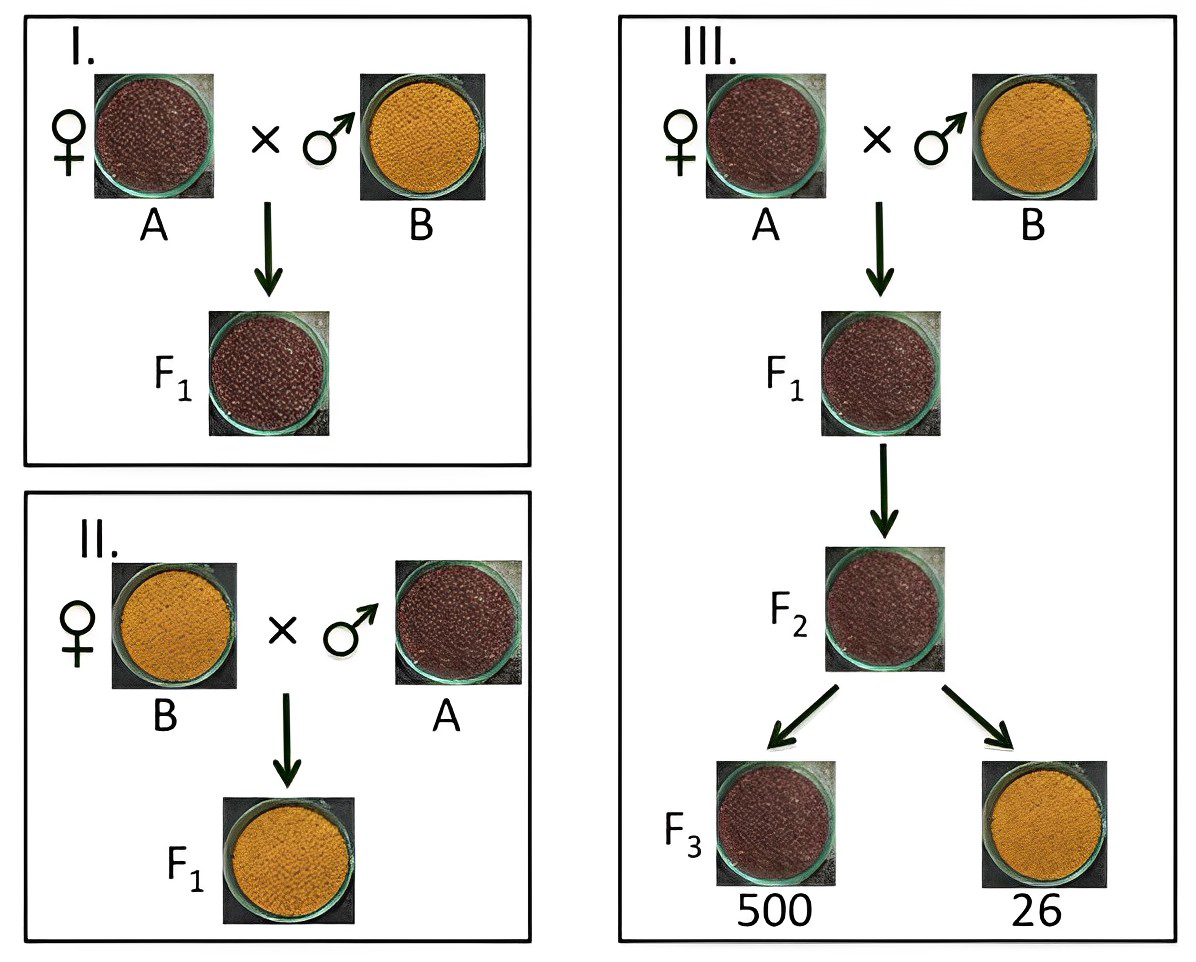
True or false?
Question reproduced from IBO 2023, Theoretical Paper 2, licensed under CC BY-NC-SA 4.0 - attributed to the International Biology Olympiad. Open the full exam PDF