Q36 - Aquatic Carbon Uptake
Aquatic carbon primarily exists in the dissolved form, and due to the formation of H2CO3 (carbonic acid), there are three main species - H2CO3, HCO3-, and CO3(2-). Despite that, Rubisco only uses CO2 as the carbon source.
The oceanic pH is around 8, and freshwater pH is around 7. Generally for aquatic plants, epidermal cells take up carbon directly, but diffusion is significantly slower in water than in air. Plants can uptake HCO3- faster than CO2. Some plants use intracellular carbonic anhydrase as a quicker carbon sourcing mechanism.
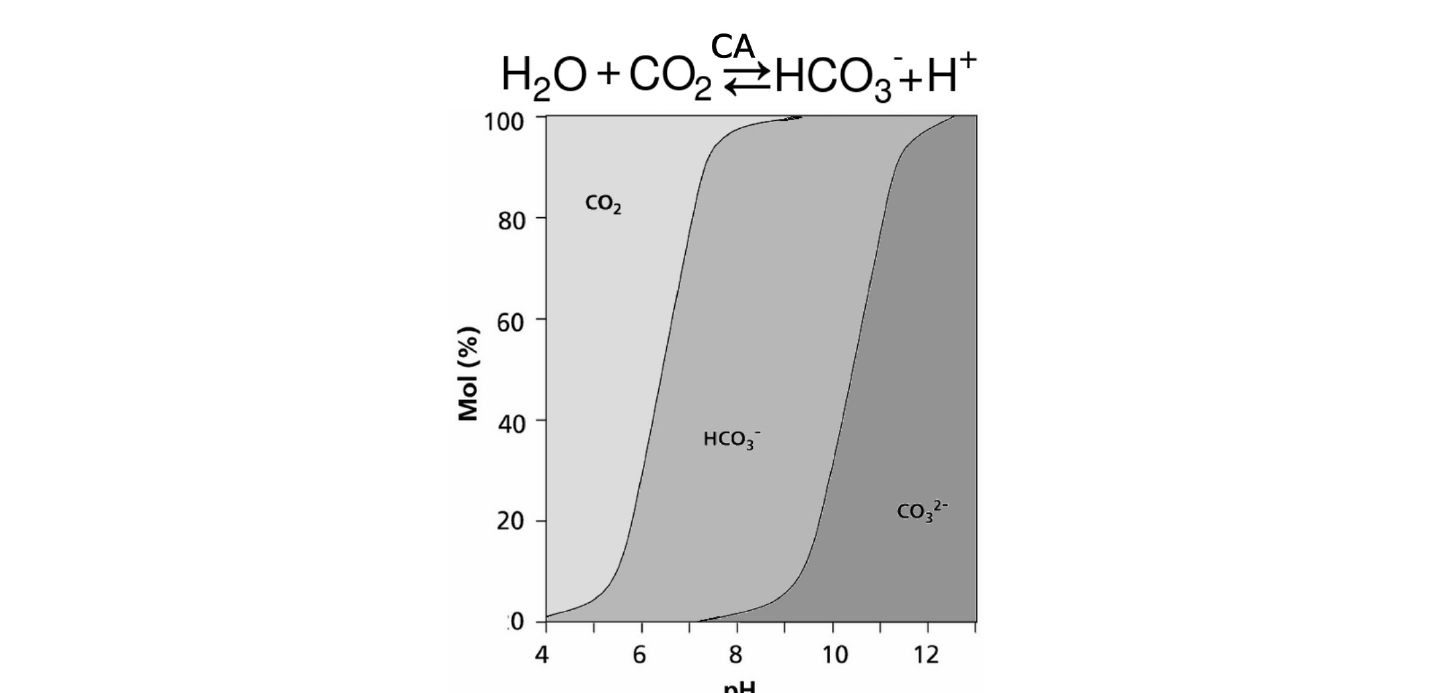 Figure 1. Reaction for which carbonic anhydrase (CA) is the catalyst. Percent concentration (Mol(%)) of three types of dissolved carbon against water pH. The two lines are the boundaries separating three types.
On your answer sheet, indicate “T” for true statements and “F” for false ones.
Question reproduced from IBO 2024, Theoretical Exam Part A, licensed under CC BY-NC-SA 4.0 - attributed to the International Biology Olympiad. Open the full exam PDF · Community solutions (unofficial)