Q2 - Red Deer mtDNA Phylogeny & Bootstrap Support
There are many subspecies of Red Deer (Cervus elaphus) in Eurasia. The cytochrome b gene of mitochondrial DNA from 106 red deer samples, collected from different localities and representing different subspecies, was analyzed.
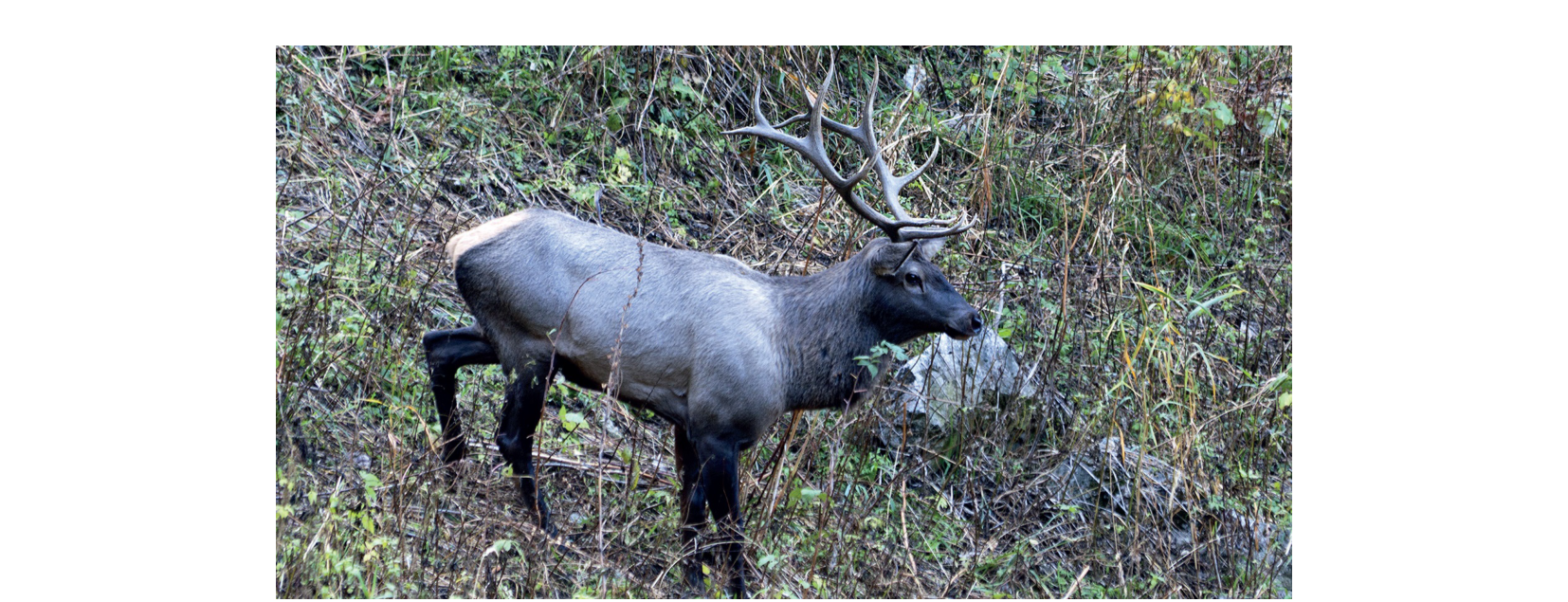 Figure 1. Red Deer in the National Park “Kölsay kölderi”.
Figure 2 shows part of the phylogenetic tree of Cervus samples based on the analysis of the mitochondrial DNA cytochrome b gene.
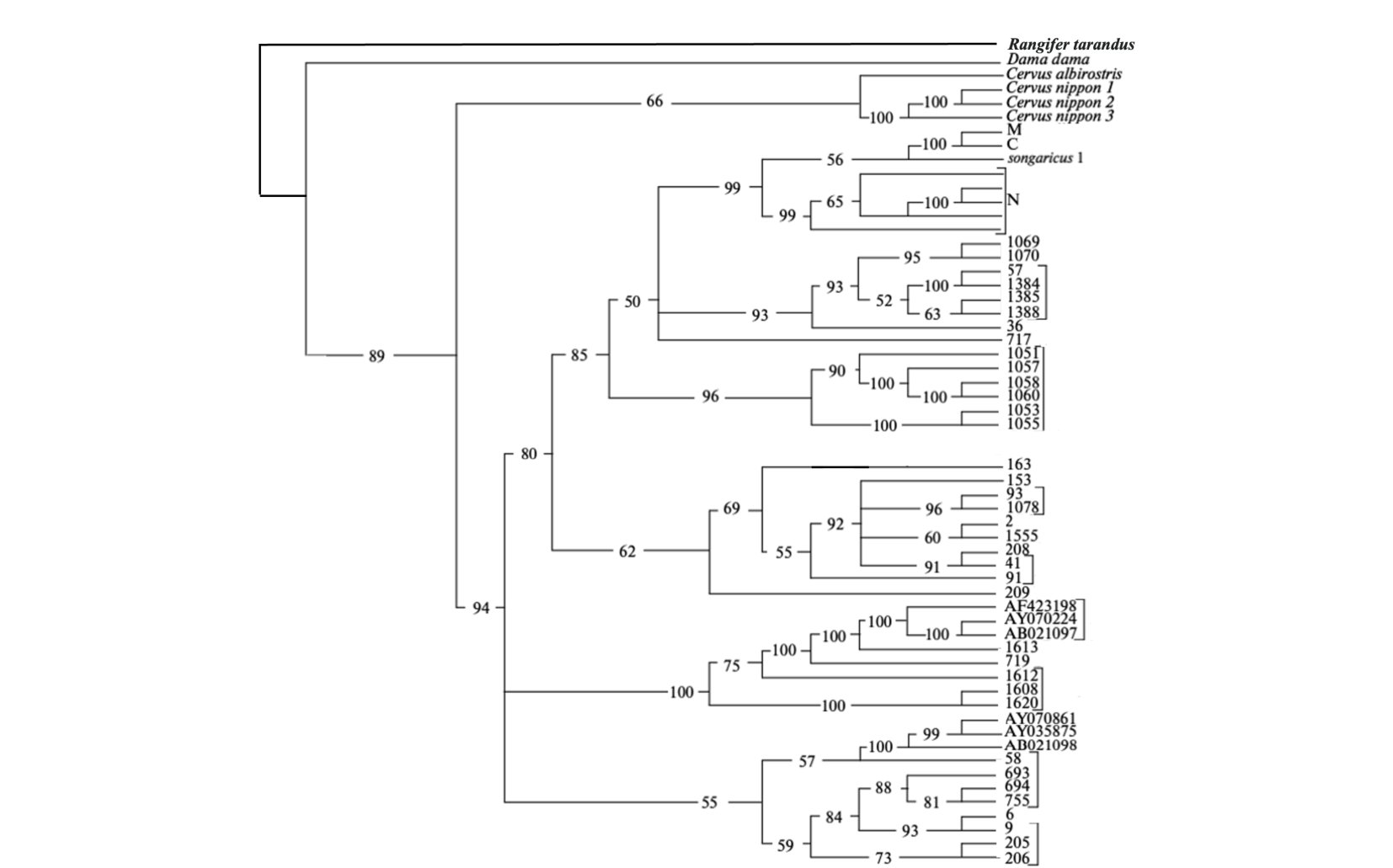 Figure 2. Phylogenetic tree of Red Deer. The numbers on each branch are called bootstrap values. They indicate how many times out of 100 iterations the same branch is observed when repeating the generation of a phylogenetic tree on a resampled set of data. (all the tips with numbers or letters indicate various groups of Cervus elaphus)
On your answer sheet, indicate “T” for true statements and “F” for false ones.
Question reproduced from IBO 2024, Theoretical Exam Part B, licensed under CC BY-NC-SA 4.0 - attributed to the International Biology Olympiad. Open the full exam PDF