Q3 - BRCA1/53BP1 and DNA Double-Strand Break Repair Pathway Choice
DNA double-strand breaks (DSBs) occur when both strands of the DNA molecule are broken, leading to cell death if not properly repaired. DSBs occur frequently and are primarily repaired through homologous recombination (HR) or non-homologous end-joining (NHEJ). As shown in Figure 1, the BRCA1 protein, when activated by DSBs, inhibits the 53BP1 protein, promoting the HR pathway. Alternatively, 53BP1 can be recruited to DSB sites, where it promotes the NHEJ pathway. Activation of either HR or NHEJ can be sufficient for cell survival. Figure 2 shows the level of BRCA1 protein and cell cycle profile of normal cells. 53BP1-deficient cells have similar BRCA1 protein and cell cycle profile as normal cells. 53BP1 protein level remains relatively same throughout the cell cycle in both normal and BRCA1-deficient cells. BRCA1 is required for the activation of the HR pathway regardless of the presence of 53BP1.
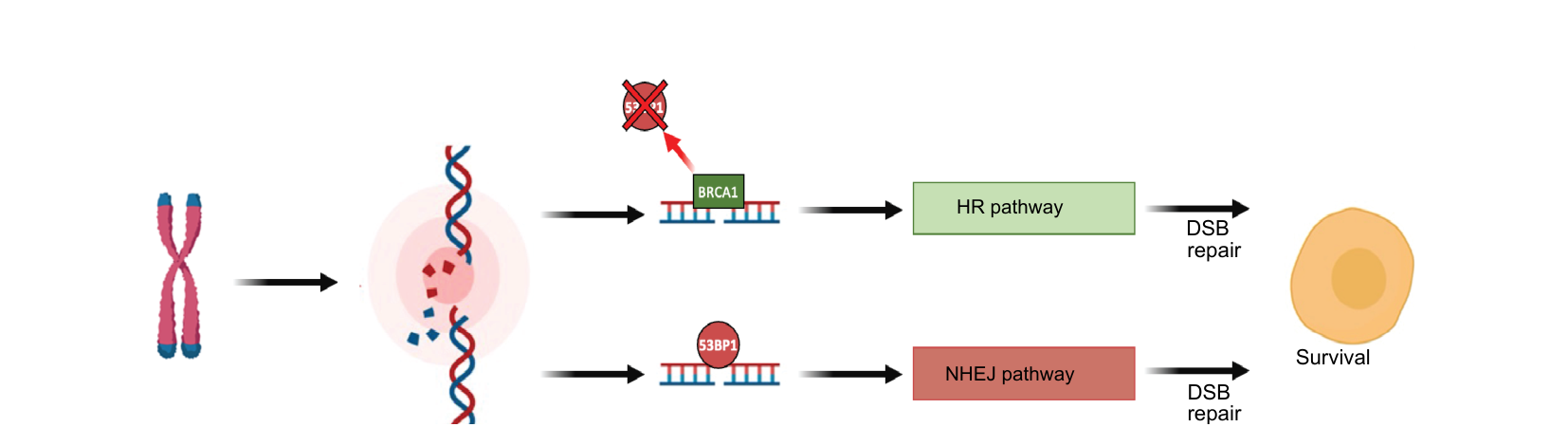 Figure 1. DSB repair pathways in normal cells. The red arrow indicates inhibition.
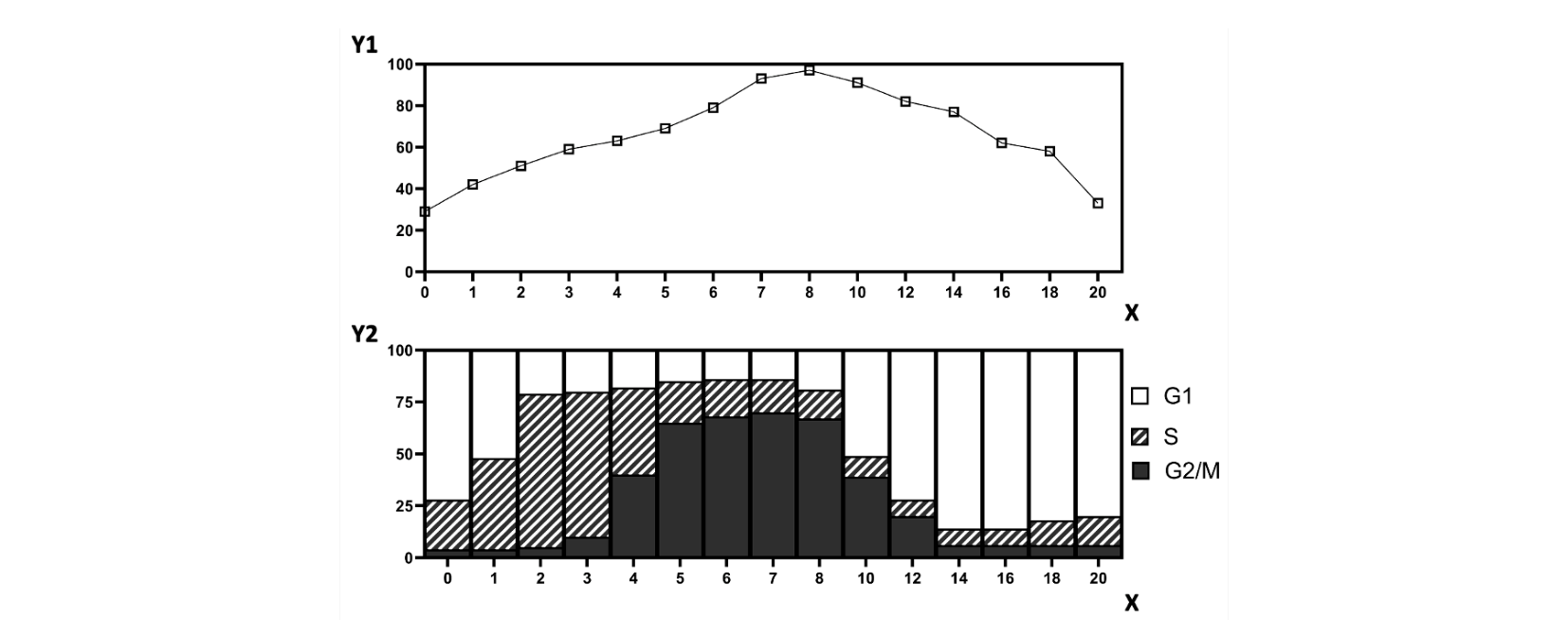 Figure 2. Normal cells were sampled over 20 hours and BRCA1 protein concentration relative to the maximum and the proportions of cells in various stages of cell cycle are analyzed. Y1 = BRCA1 protein (%). Y2 = % of Cells. X = Hours.
On your answer sheet, indicate “T” for true statements and “F” for false ones.
Question reproduced from IBO 2024, Theoretical Exam Part B, licensed under CC BY-NC-SA 4.0 - attributed to the International Biology Olympiad. Open the full exam PDF