Q24 - Robertsonian Translocation and Chromosome 14/21 Anomalies
Robertsonian translocation in human chromosomes occurs when recombination between two acrocentric chromosomes results in the fusion of two long arms and the loss of two short arms. Acrocentric chromosomes are characterized by centromeres positioned close to one end, resulting in notably short second arms. Obvious examples of such chromosomes in humans are chromosomes 14 and 21. Other acrocentric chromosomes have short arms of similar length and no banding pattern.
Table 1 shows information about anomalies associated with chromosomes 14 and 21, and Figure 1B displays the karyogram of one patient’s gamete.
| Karyotype | Phenotype |
|---|---|
| Trisomy 14 (2n + 1) | Lethal |
| Trisomy 21 (2n + 1) | Down syndrome |
| Monosomy 14 (2n - 1) | Lethal |
| Monosomy 21 (2n - 1) | Lethal |
| 14-21 balanced translocation carrier (2n - 1) | Normal |
Table 1. Abnormalities of chromosomes 14 and 21.
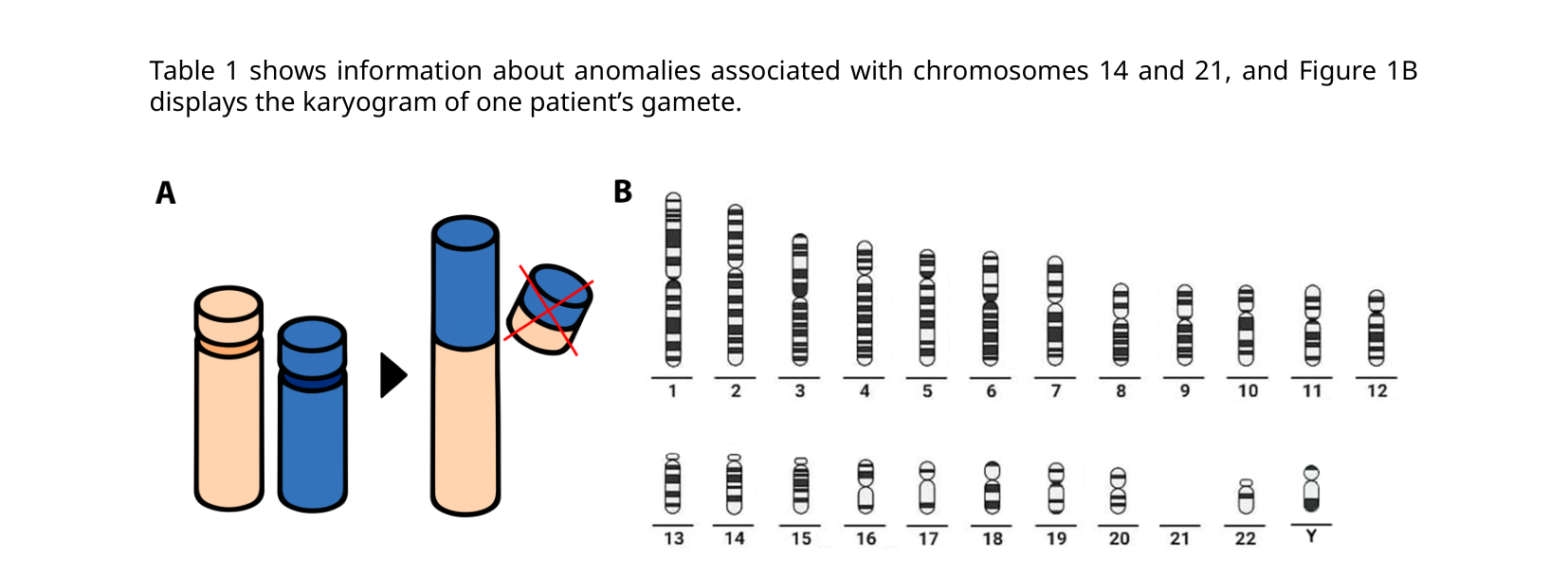 Figure 1. A Robertsonian translocation mechanism. B Karyogram of a gamete.
On your answer sheet, indicate “T” for true statements and “F” for false ones.
Question reproduced from IBO 2024, Theoretical Exam Part B, licensed under CC BY-NC-SA 4.0 - attributed to the International Biology Olympiad. Open the full exam PDF