Q23 - ACE2/CTS1 Mutations and Multicellularity in Yeast
Sometimes a formation of multicellular, organized structures can be observed in baker’s yeast (Saccharomyces cerevisiae) in which newly divided yeast cells do not separate from the parent cell, illustrating a potential transition step from unicellular to multicellular organisms. The emergence of multicellular structures can be influenced by various factors, one of which is a mutation in the ACE2 gene, responsible for the transcriptional regulation of the protein-coding gene - CTS1. To investigate this, scientists crossed different yeast strains and sequenced ACE2 gene alleles.
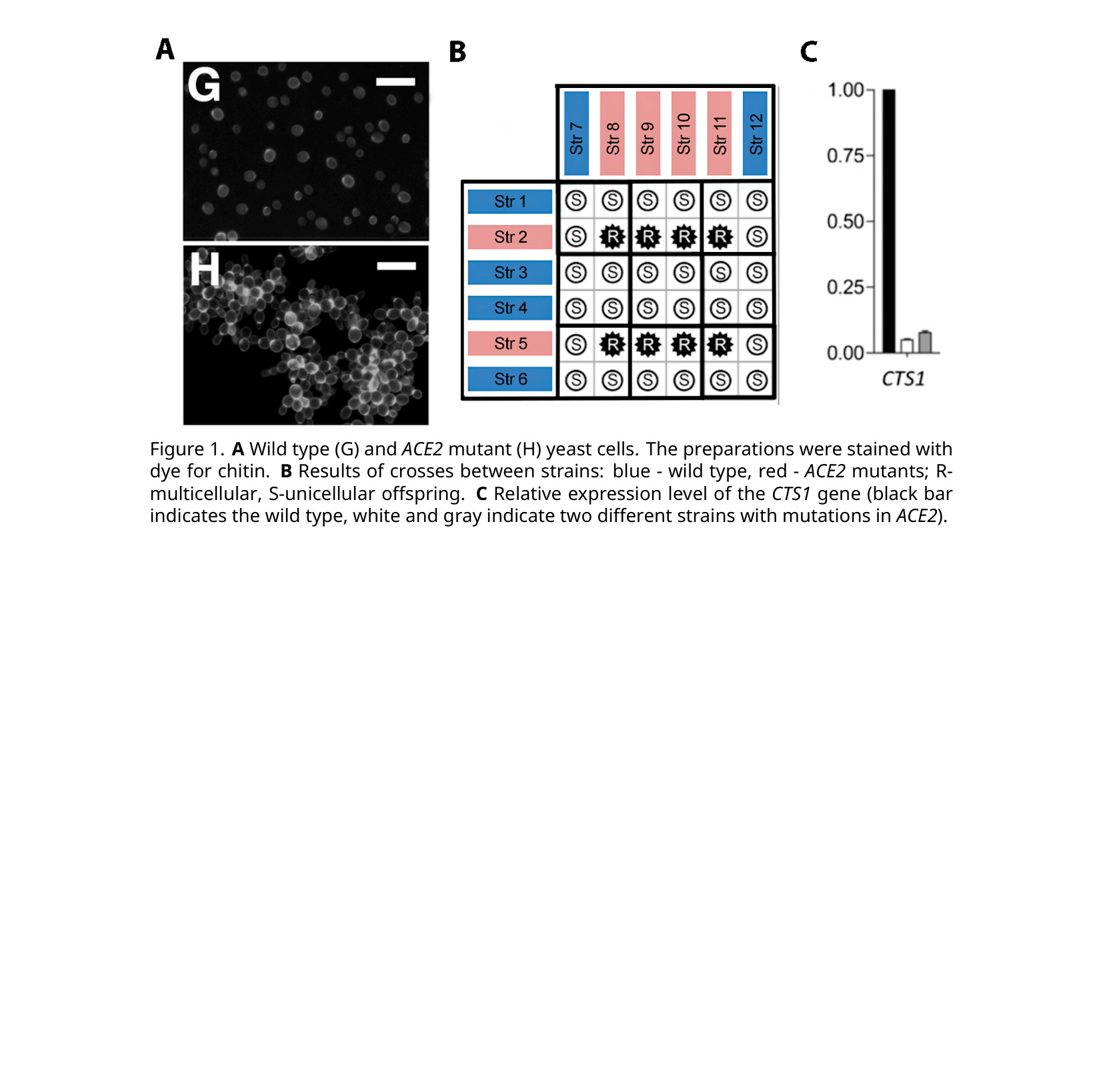 Figure 1. A Wild type (G) and ACE2 mutant (H) yeast cells. The preparations were stained with dye for chitin. B Results of crosses between strains: blue - wild type, red - ACE2 mutants; R-multicellular, S-unicellular offspring. C Relative expression level of the CTS1 gene (black bar indicates the wild type, white and gray indicate two different strains with mutations in ACE2).
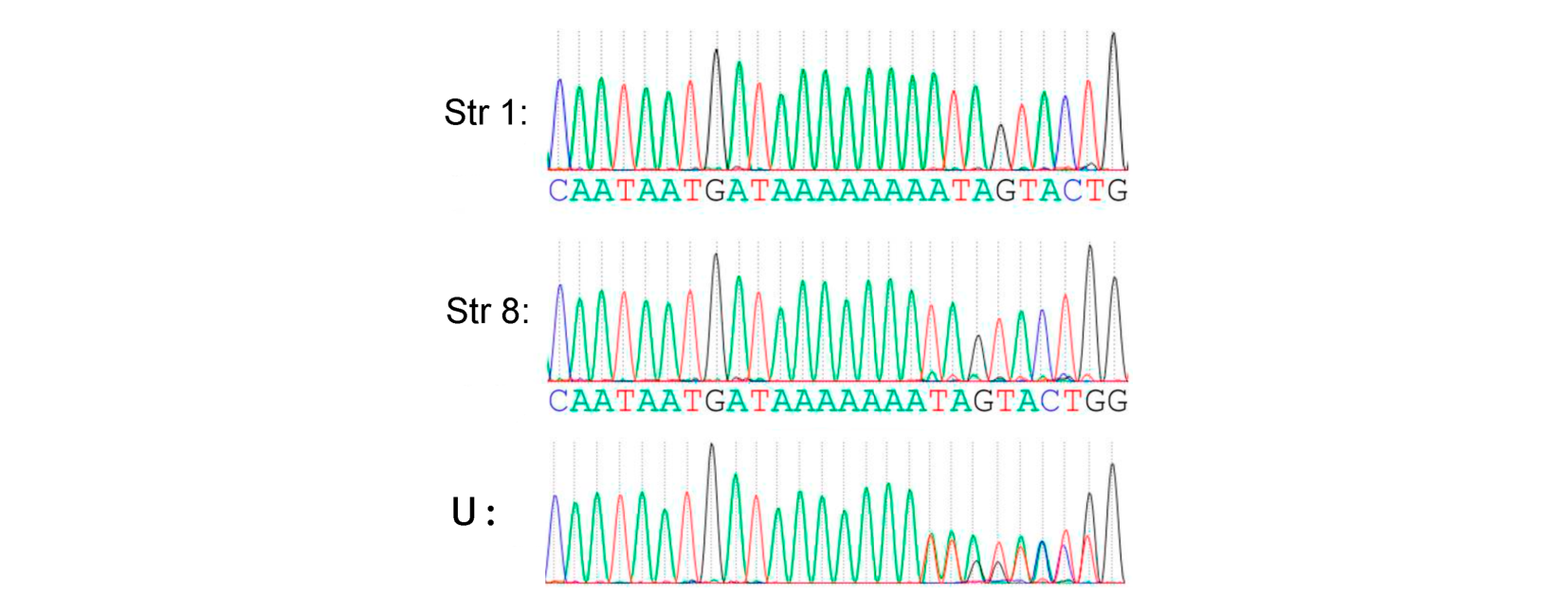 Figure 2. Ace2 gene region sequencing results; U - unknown.
On your answer sheet, indicate “T” for true statements and “F” for false ones.
Question reproduced from IBO 2024, Theoretical Exam Part B, licensed under CC BY-NC-SA 4.0 - attributed to the International Biology Olympiad. Open the full exam PDF