Q29 - Cas9 Target Sites, Donor Design, and Mutation Severity
Cas9 is an enzyme utilized in genome engineering, where it cleaves the DNA at sites complementary to the gRNA sequence. To cleave the DNA, Cas9 requires an NGG (N is any nucleotide) sequence next to the target site. Repair of Cas9-cleaved DNA results in either random mutations or precise introduction of the desired change. The latter requires a donor template having a homologous sequence to the target site.
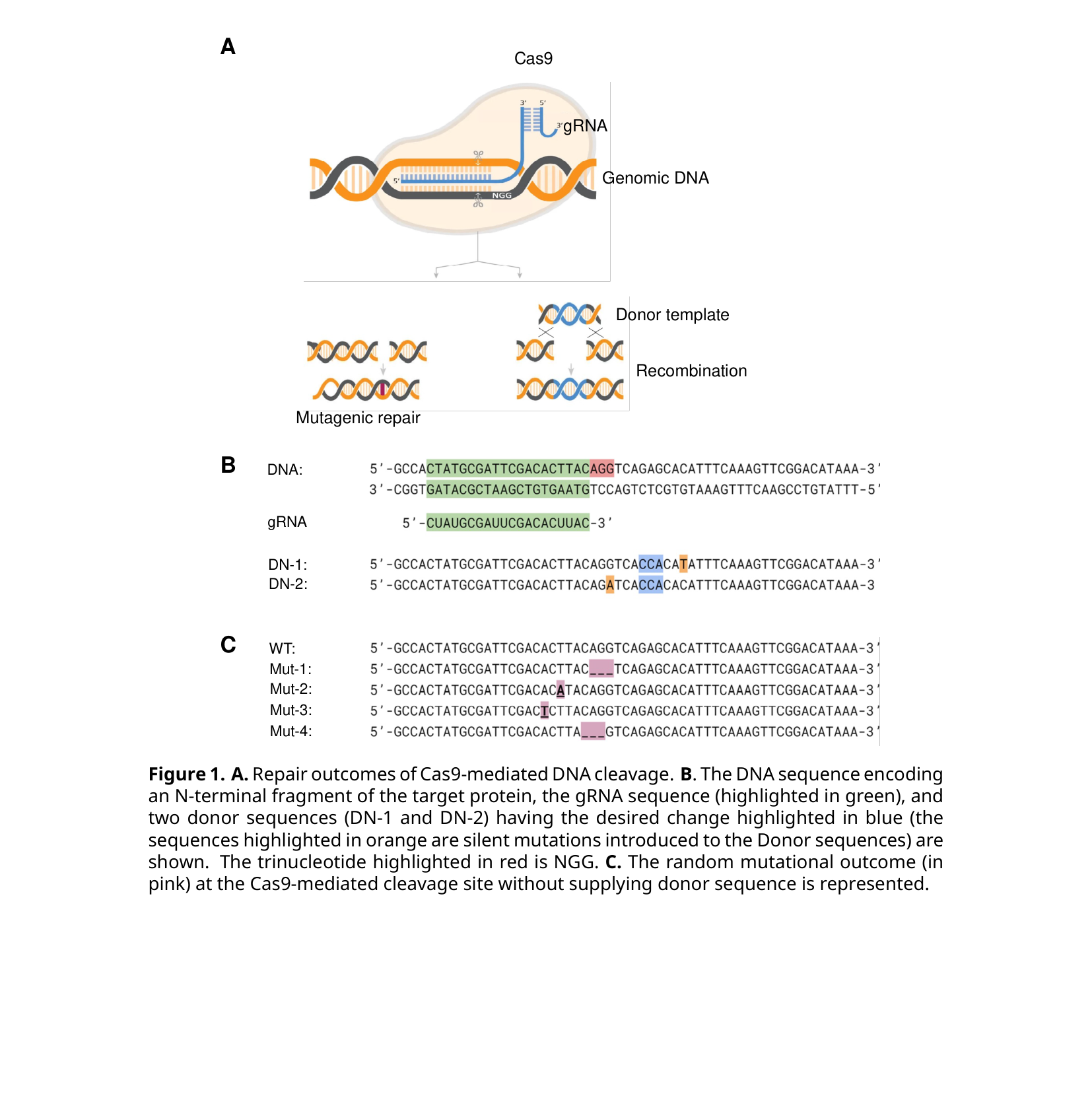 Figure 1. A. Repair outcomes of Cas9-mediated DNA cleavage. B. The DNA sequence encoding an N-terminal fragment of the target protein, the gRNA sequence (highlighted in green), and two donor sequences (DN-1 and DN-2) having the desired change highlighted in blue (the sequences highlighted in orange are silent mutations introduced to the Donor sequences) are shown. The trinucleotide highlighted in red is NGG. C. The random mutational outcome (in pink) at the Cas9-mediated cleavage site without supplying donor sequence is represented.
On your answer sheet, indicate “T” for true statements and “F” for false ones.
Question reproduced from IBO 2024, Theoretical Exam Part B, licensed under CC BY-NC-SA 4.0 - attributed to the International Biology Olympiad. Open the full exam PDF