Q5 - Ketogenic Diet Metabolism and Catecholamine Seizure Latency
Ketogenic (high-fat, low-carbohydrate) diet is an efficient treatment for recurrent seizures, as in epilepsy. Ketogenic diet is thought to exert its effect via a metabolic pathway shown in Figure 1, as it leads to a production of beta-hydroxybutyrate. Increasing the number of reactions in a biochemical pathway decreases its overall reaction rate.
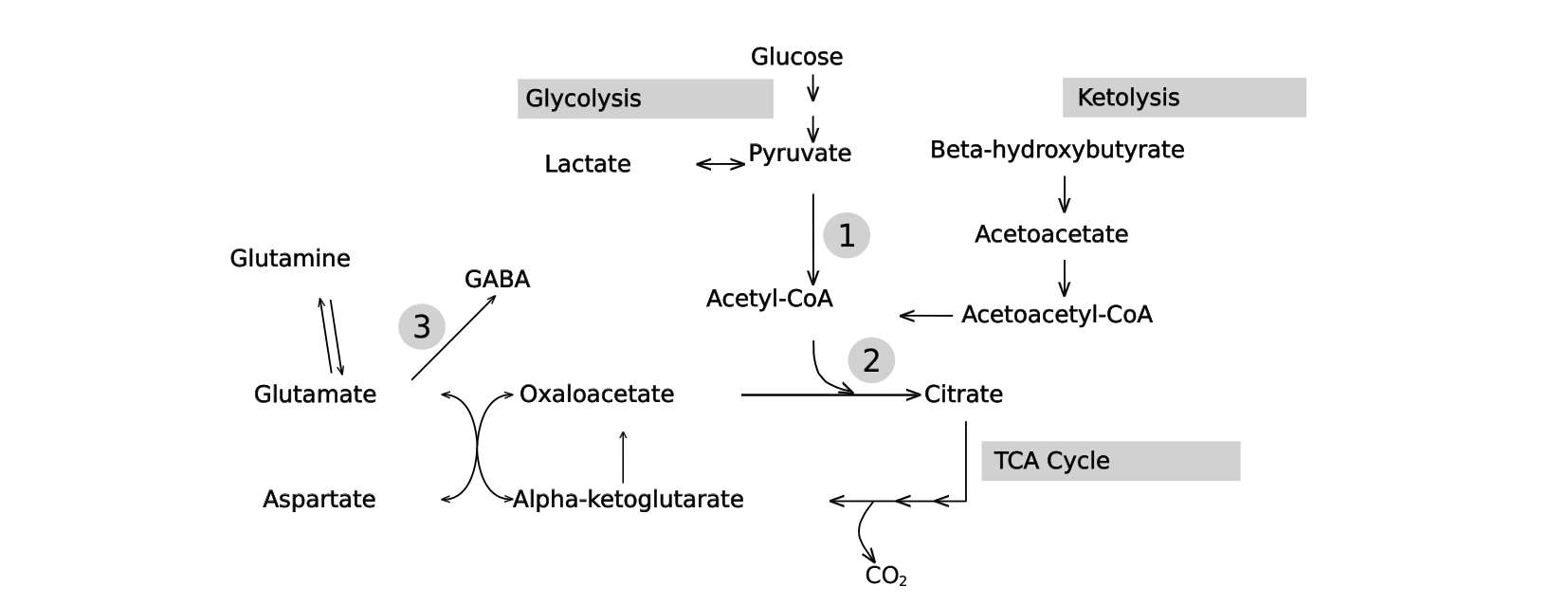 Figure 1. Glycolysis and ketolysis both feed into the TCA cycle via acetyl-CoA (reaction 1) and citrate (reaction 2); TCA-cycle intermediates alpha-ketoglutarate and oxaloacetate connect to the glutamate/GABA/aspartate shunt (reaction 3).
Dopamine is known to play a role in muscle control (e.g., its deficiency is one of the causes of Parkinson’s disease). A study investigated the interaction of catecholamines (dopamine, noradrenaline, and adrenaline) with a ketogenic diet. The study used Dbh knockout (Dbh-/-) and heterozygote (Dbh+/-) mice that were fed with either a ketogenic or normal diet. To estimate the efficacy of the diet in each group, they were introduced to fluorothyl (a seizure-inducing agent), and the latency to the first seizure was measured.
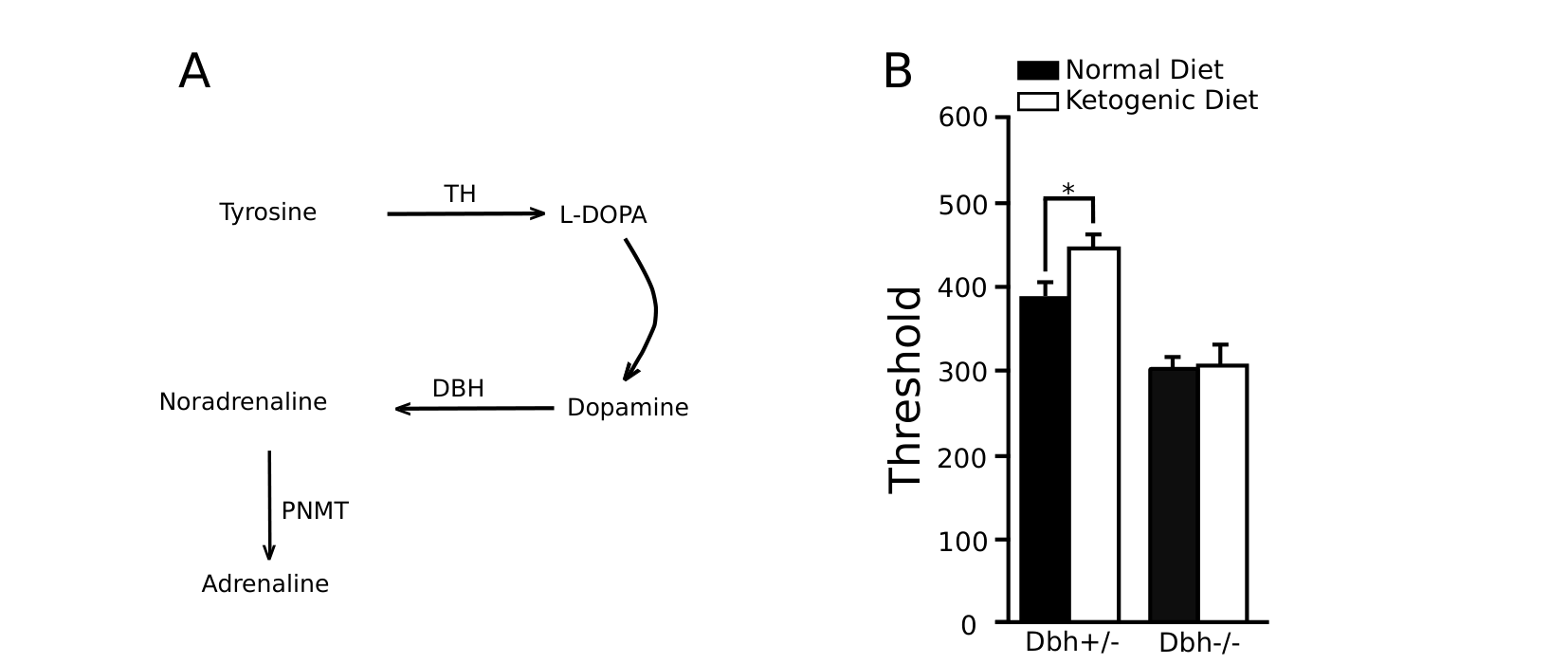 Figure 2. A Metabolism of catecholamines. B Seizure latency threshold (in milliseconds) after provocation with fluorothyl in Dbh +/- and -/- mice fed either the standard or ketogenic diet. Asterisk indicates a significant difference.
On your answer sheet, indicate “T” for true statements and “F” for false ones.
Question reproduced from IBO 2024, Theoretical Exam Part B, licensed under CC BY-NC-SA 4.0 - attributed to the International Biology Olympiad. Open the full exam PDF