Q15 - The Pathogenic Life Cycle of Mycobacterium tuberculosis
Tuberculosis is caused by the bacterium Mycobacterium tuberculosis. One third of the world’s population is currently infected with M. tuberculosis, and about 10% of these suffer from tuberculosis (TB). TB annually kills more than 1 million people. The pathogenic life cycle of M. tuberculosis is shown in Fig.
Pathogenic life cycle of M. tuberculosis (Mt). A granuloma is a group of tightly linked macrophages (from Cambier et al. 2014).
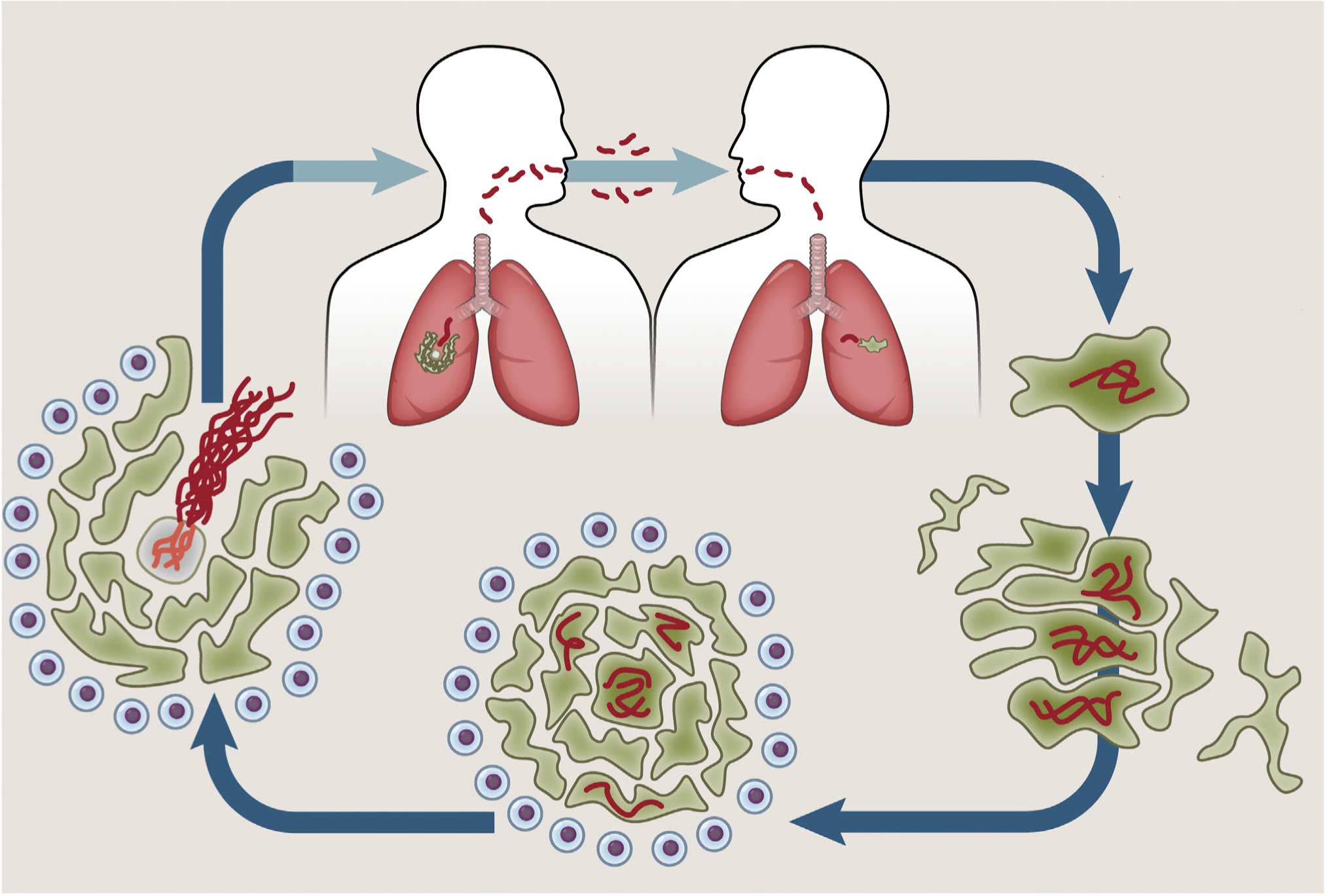 Figure 1.
Using the information and data, determine which of the statements are true or which are false.
A. Transmission of tuberculosis requires physical contact
B. Theoretically, a person with macrophage deficiency would be expected to suffer greatly from an Mt attack
C. The granuloma of macrophages is the host's succesful way of reducing the spread of the disease within the body
D. A new generation of Mt is released when the macrophages in the granuloma die
Question reproduced from IBO 2015, Theoretical Exam B, licensed under CC BY-NC-SA 4.0 - attributed to the International Biology Olympiad. Open the full exam PDF · Community solutions (unofficial)