Q18 - Screening for Statin Resistance Genes in Yeast
Statin-drugs are used to lower blood cholesterol levels in patients that are at risk for cardiovascular diseases due to elevated blood cholesterol levels. One type of statins functions by inhibiting the de novo synthesis of cholesterol (or ergosterol) in eukaryotic cells via competitive binding and inhibition of the enzyme 3-hydroxy-3-methyl-glutaryl-CoA reductase (HMG). This enzyme also exists in S. cerevisiae and high concentrations of this group of statins can hence act as fungicides. In the current experiment aimed at identifying genes/enzymes that could make yeast resistant to statins.
A: An agar plate-based experiment, where a dilution series of two yeast cell cultures (wild type (WT) and MlcE expressing (MlcE)) have been spotted onto agar plates containing different concentrations of the statin lovastatin. The highest cell concentration is on the left of each plate; B: Bright field and fluorescence microscopy of yeast strains expressing red fluorescent protein (RFP) alone or RFP fused with MlcE (MlcE-RFP), respectively; C: The chemical structure of the compounds tested in A and D; D: Plate based-experiment, as described in A, testing different toxic compounds.
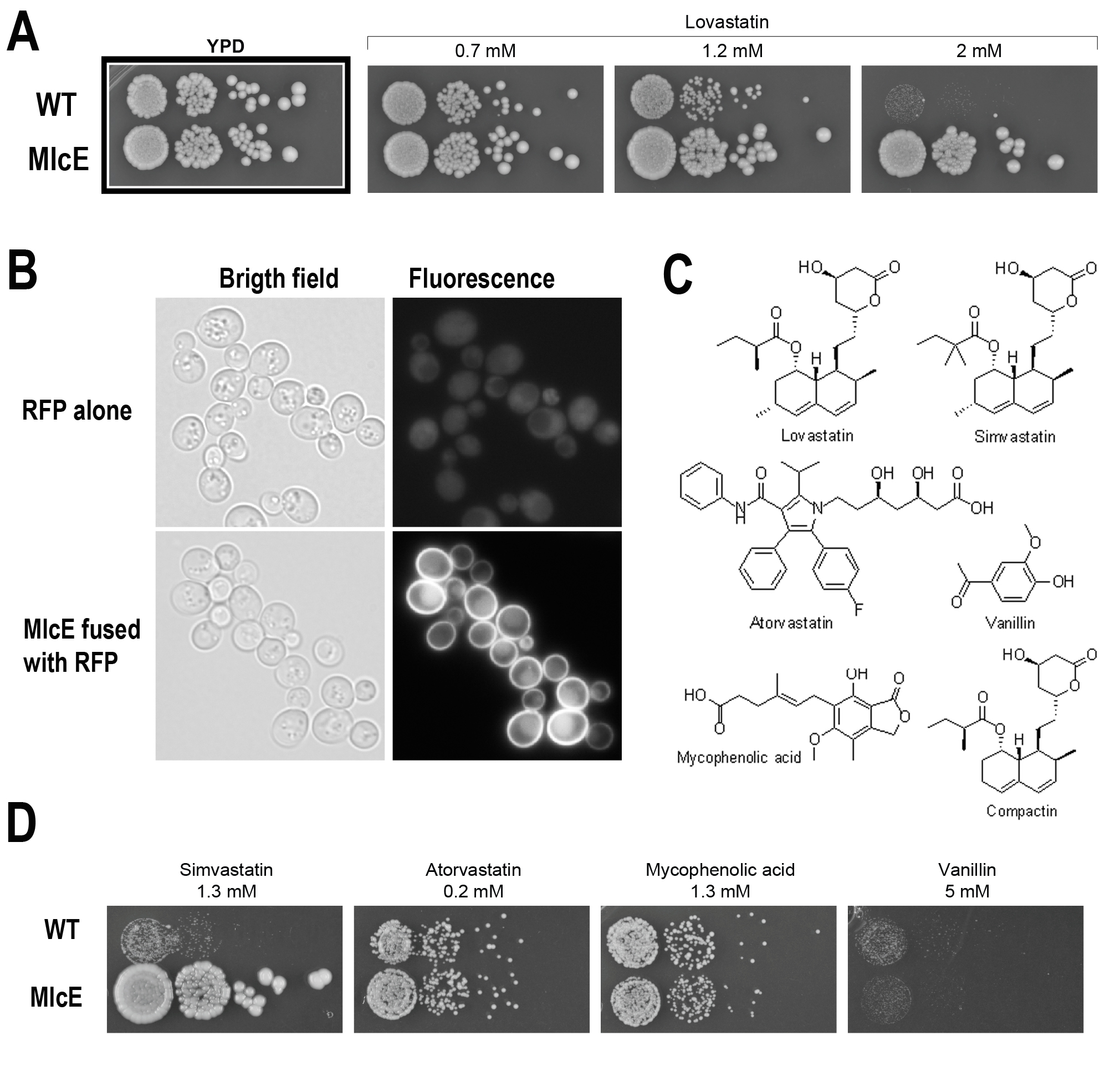 Figure 1.
Using the information and data, determine which of the statements are true or which are false.
Question reproduced from IBO 2015, Theoretical Exam B, licensed under CC BY-NC-SA 4.0 - attributed to the International Biology Olympiad. Open the full exam PDF · Community solutions (unofficial)