Q53 - Mitochondrial Membrane Potential in Hypoxia/Reoxygenation Injury
Reoxygenation after a period of lack of oxygen causes cardiomyocyte damage. One of the most important indices evaluating myocardial functions is mitochondrial membrane potential, which is labelled by a cell permeant dye (positively-charged, grey color in the figure below and red color in the attached figure) readily accumulating in active mitochondria due to their relative negative charge.
The figure below illustrates hypoxia/reoxygenation (HR)-treated single myocyte model (1) with or without pre-hypoxic treatment of drug A. Myocyte images were captured at time points (a, b, c).
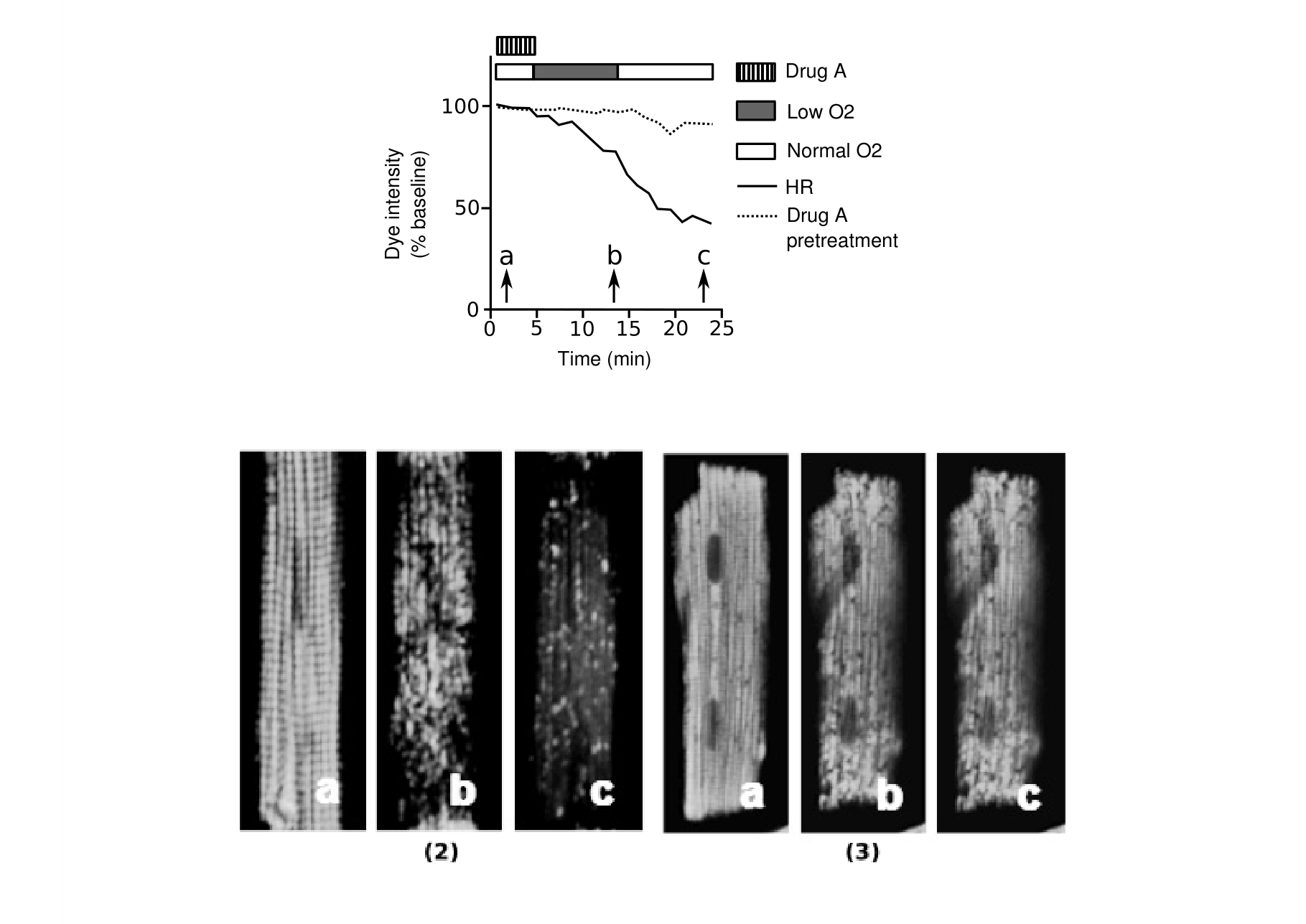 Figure 1.
Using the information and data, determine which of the statements are true or which are false.
Question reproduced from IBO 2016, Theoretical Paper B, licensed under CC BY-NC-SA 4.0 - attributed to the International Biology Olympiad. Open the full exam PDF · Community solutions (unofficial)