Q81 - Clutch-Size Manipulation and Optimal Brood Size in Magpies
In an experimental study on magpies Pica pica, conducted in Sweden, Göran Högstedt manipulated the original clutch size (shown on the right of the graph) of experimental birds to generate a number of different clutch sizes for each category of bird, as shown in the X-axis. The number of young fledged successfully by the birds under these different conditions is indicated by the Y-axis. Food abundance and quality of territory are thought to be associated with clutch size. Predation is lower in large clutches.
Experimental brood size vs. number of young fledged, grouped by the bird’s original (initial) clutch size.
Analyse the following statements, with reference to the data provided and indicate in the answer sheet if each of the statements is true or false.
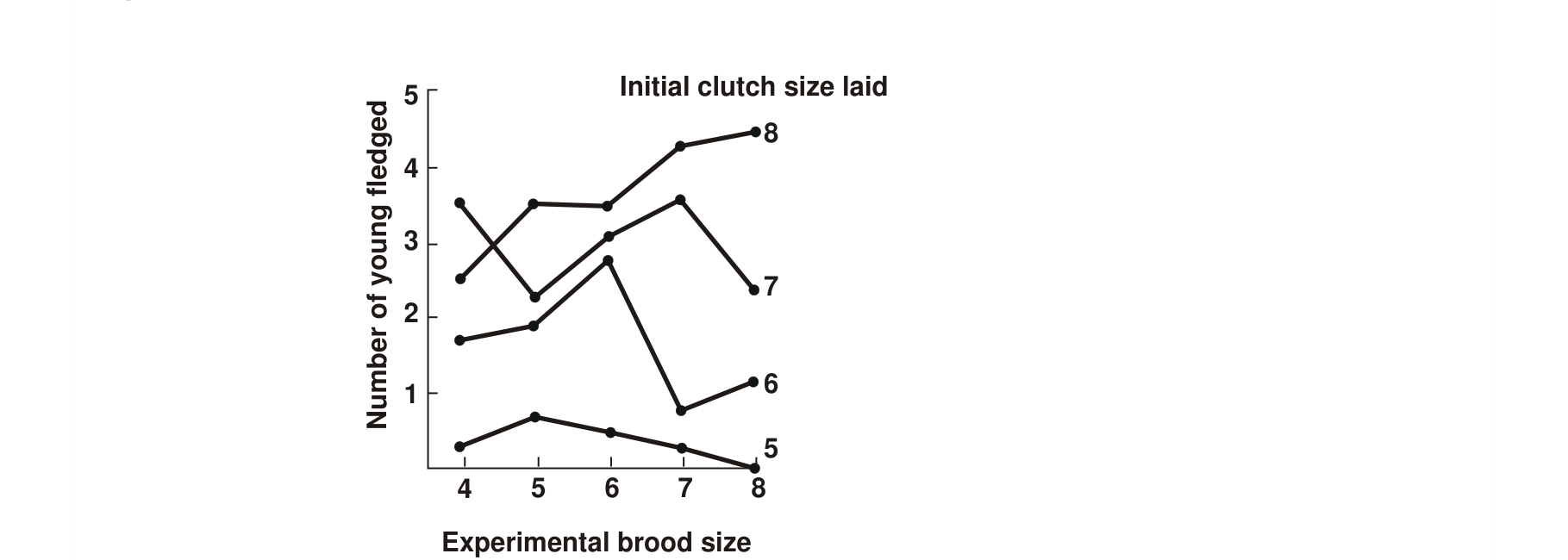 Figure 1.
Using the information and data, determine which of the statements are true or which are false.
Question reproduced from IBO 2016, Theoretical Paper B, licensed under CC BY-NC-SA 4.0 - attributed to the International Biology Olympiad. Open the full exam PDF · Community solutions (unofficial)