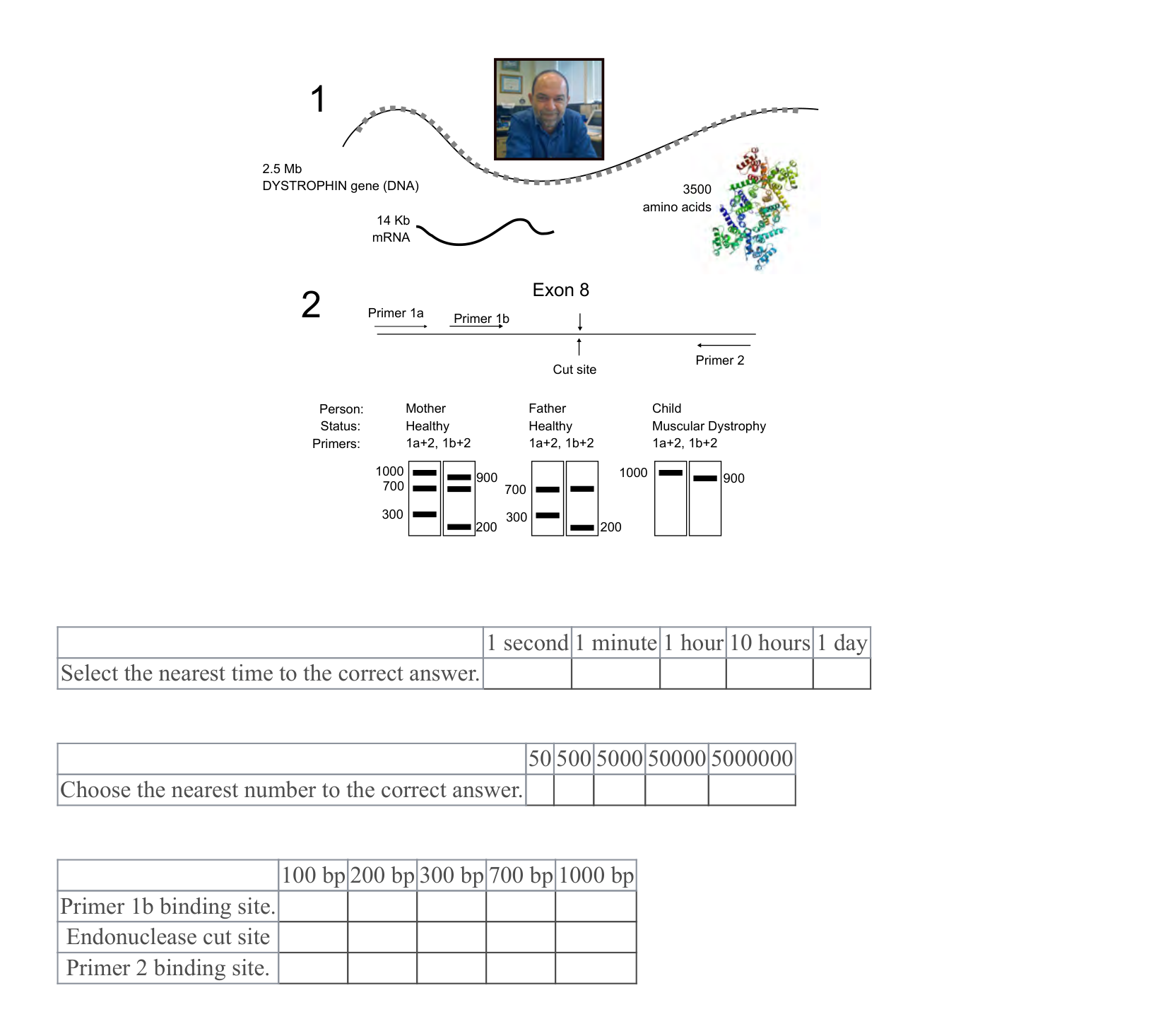
Muscular Dystrophy is caused by alterations to DYSTROPHIN (1). This is a very large gene, and its length affects the biology and diagnosis of Muscular Dystrophy. RNA polymerase moves along DNA at 30 bp per second. -8 DNA polymerase has an error rate of 10 mistakes per base. Repair systems later correct 99% of mistakes. Sir Alec Jeffreys (1950-present) invented DNA fingerprinting (RFLPs) whereby DYSTROPHIN exons may be amplified by PCR, treated with DNA-cutting enzymes (endonucleases), and separated on an agarose gel, according to length in bp (2).
This question mixes multiple-choice/numeric-estimate parts with True/False statements - answer each part using the information and data above.
A. About how long would RNA polymerase, moving at 30 bp/s, take to transcribe the entire 2.5 Mb DYSTROPHIN gene?
B. Given a DNA polymerase error rate of 10⁻⁸ per base (99% later corrected) across the gene's 2.5 Mb, roughly how many cell divisions occur, on average, before a new causal mutation survives correction?
C. How far (in bp) is the Primer 1b binding site from Primer 1a?
D. How far (in bp) is the endonuclease cut site from Primer 1a?
E. How far (in bp) is the Primer 2 binding site from Primer 1a?
F. DYSTROPHIN is on the X chromosome.
G. Muscular Dystrophy is dominant.
H. DYSTROPHIN protein could be made in bacteria with a 20 kb plasmid.
I. Many muscular dystrophy patients have new (de novo) causal mutations.