Q26 - Receptor Occupancy and a Non-Competitive Inhibitor of Acetylcholine Signalling
Whilst Lewis Wolpert (1929-present) hypothesised graded responses to signals control animal development, Sir John Gurdon (1933-present) was the first scientist to relate the number of activated receptors to different cell responses. The neurotransmitter acetylcholine can produce a graded response, but if the inhibitor BCM is above the critical concentration (>X mM), a cell’s response to acetylcholine is significantly below maximal at all acetycholine concentrations. Each acetylcholine receptor has one binding site for the neurotransmitter acetylcholine.
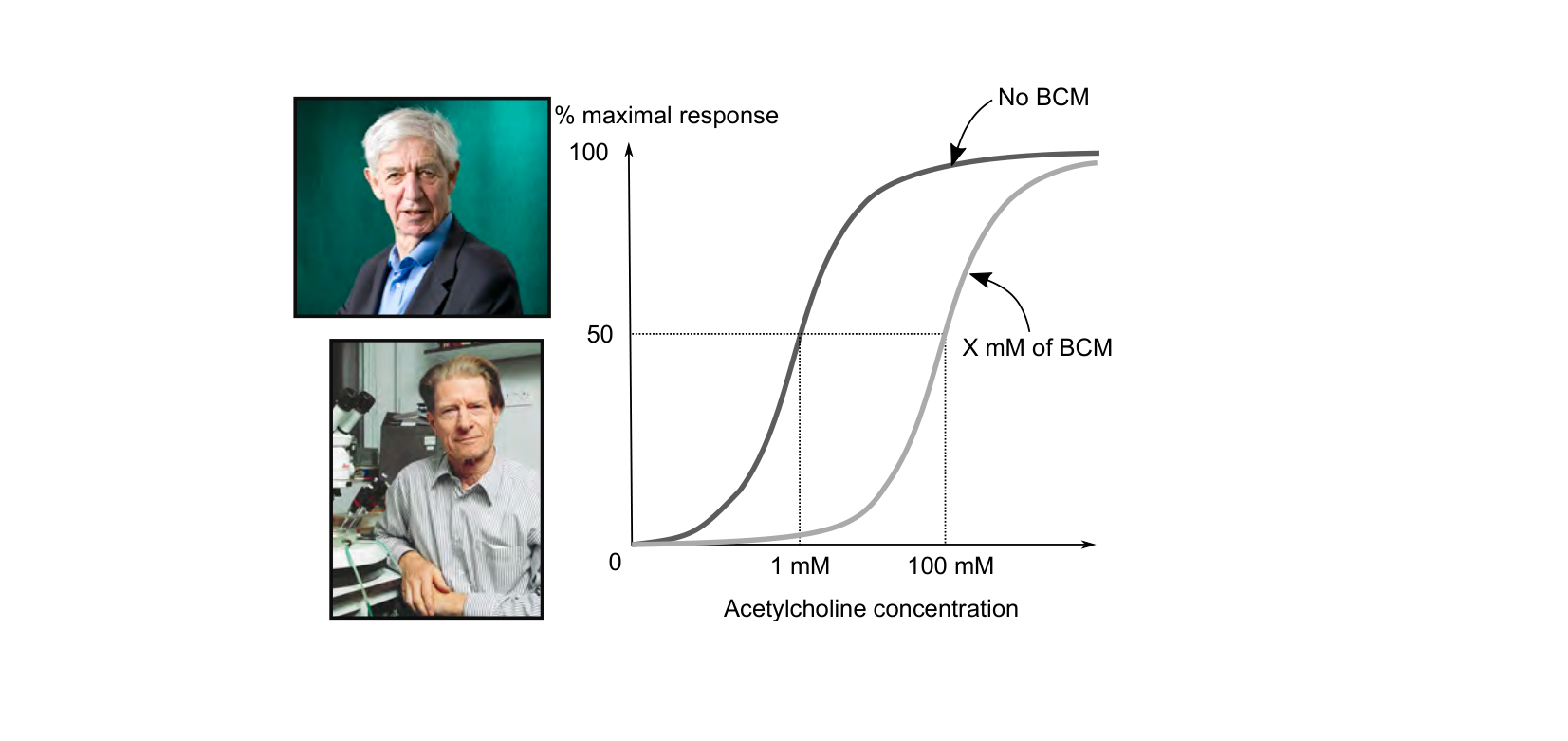
This question mixes multiple-choice/numeric-estimate parts with True/False statements - answer each part using the information and data above.
Question reproduced from IBO 2017, Theoretical Exam A, licensed under CC BY-NC-SA 4.0 - attributed to the International Biology Olympiad. Open the full exam PDF · Official answer key & worked solutions