Q35 - Cross-Reactivity Limits an ELISA for Triazine Pesticides
John Marrack (1886-1976) discovered the biochemistry of antibody-antigen interactions. These can be harnessed to detect pesticides contaminating sample water: 1) Wells are coated in the pesticide. 2) A very small amount of antibody against the pesticide is mixed with sample water, and then the mix is transferred to the wells. 3) The wells are washed with clean water several times. 4) An enzyme that produces a blue pigment, which is attached to a secondary antibody that binds the first antibody, is added. Different antibodies (X, Y & Z) can be used for this process.
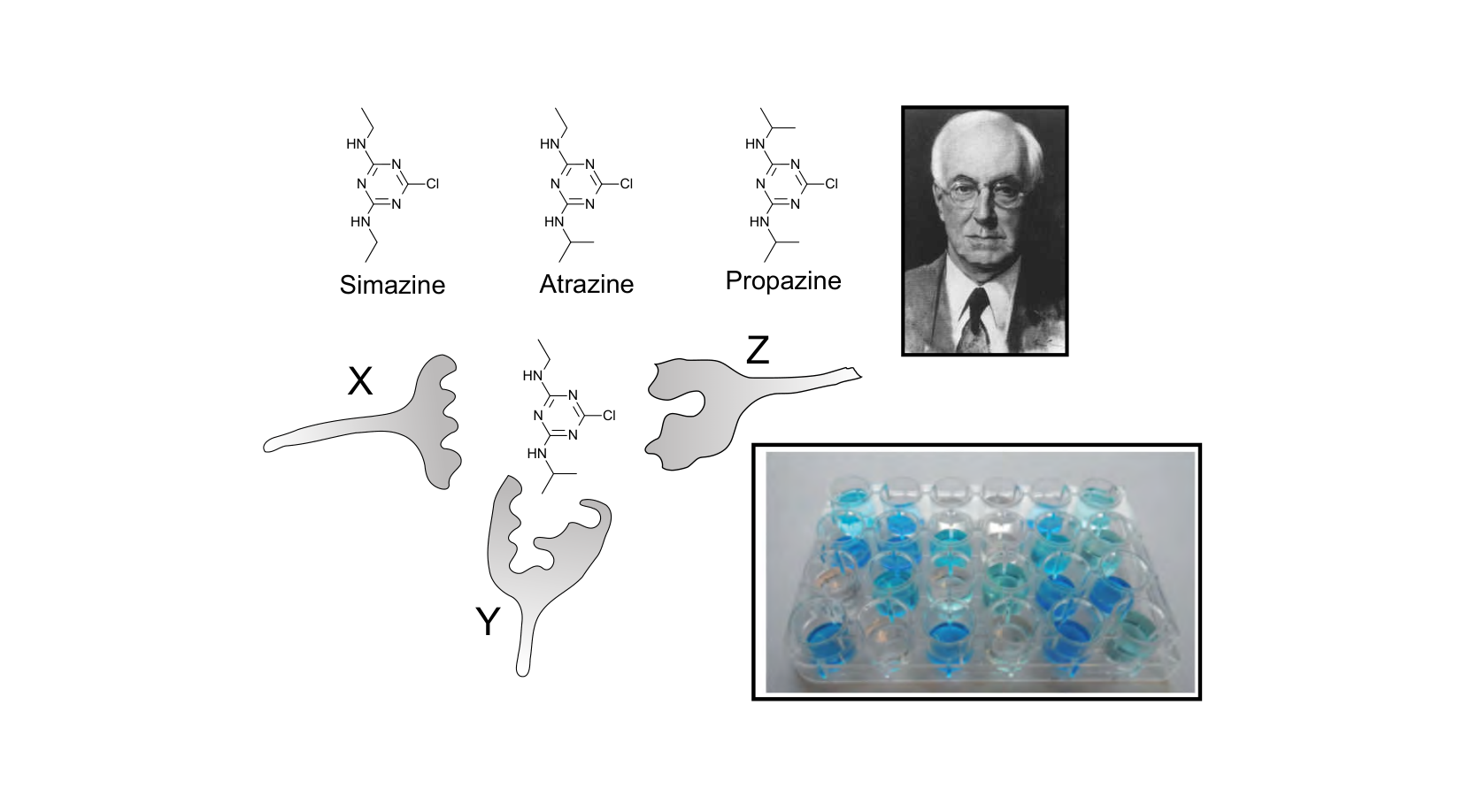
Using the information and data, determine which of the statements are true or which are false.
Question reproduced from IBO 2017, Theoretical Exam A, licensed under CC BY-NC-SA 4.0 - attributed to the International Biology Olympiad. Open the full exam PDF · Official answer key & worked solutions