Q32 - Human Embryos Break the Established OCT4/GATA6 Rulebook
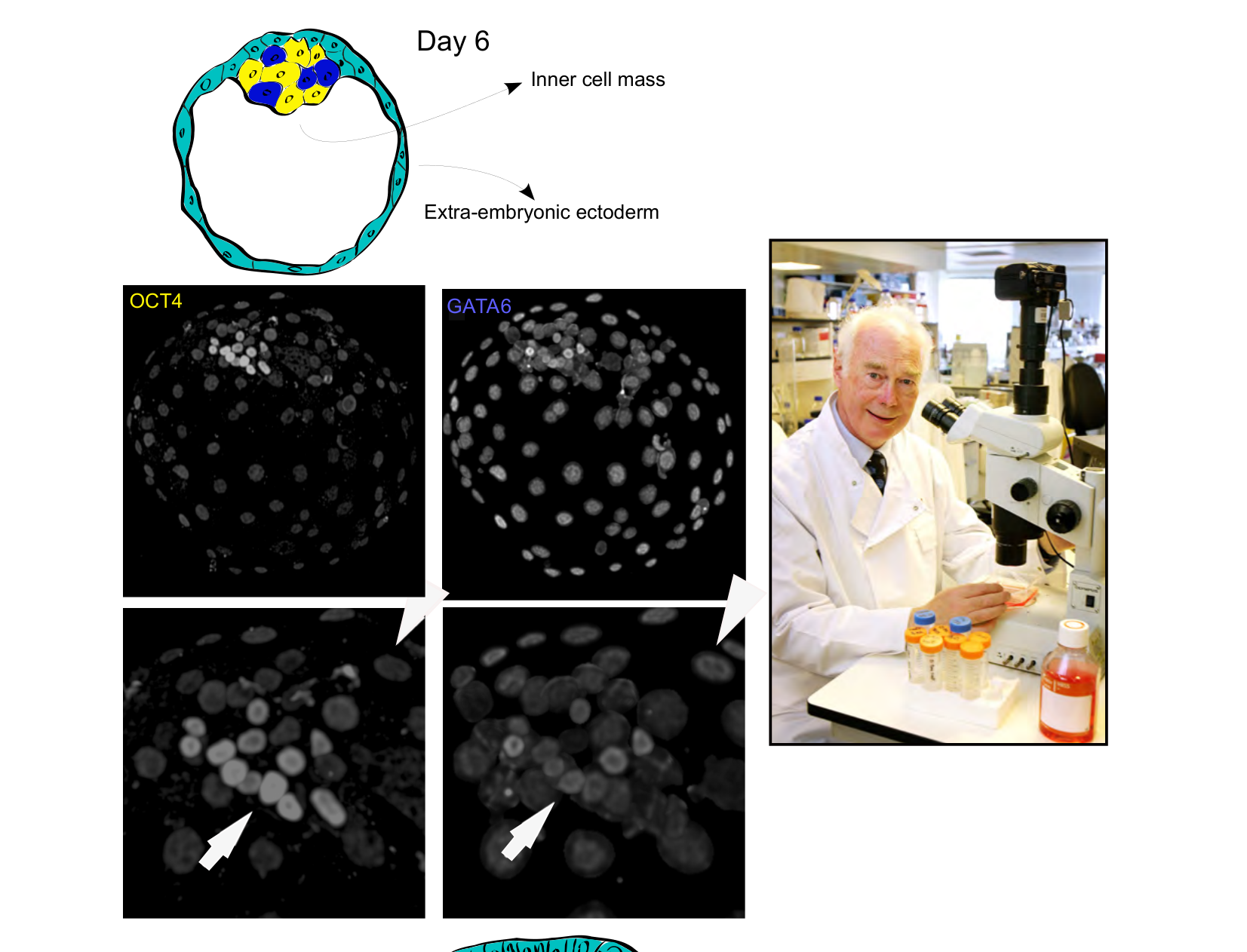
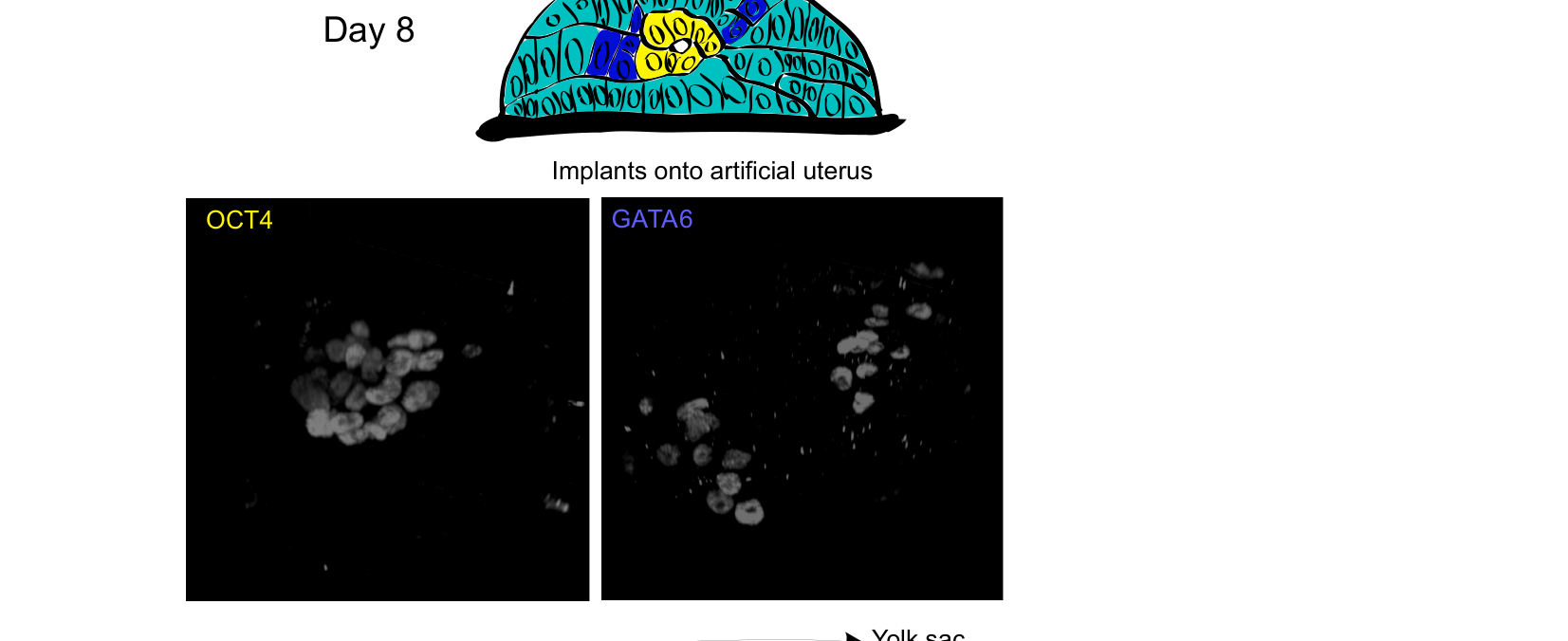
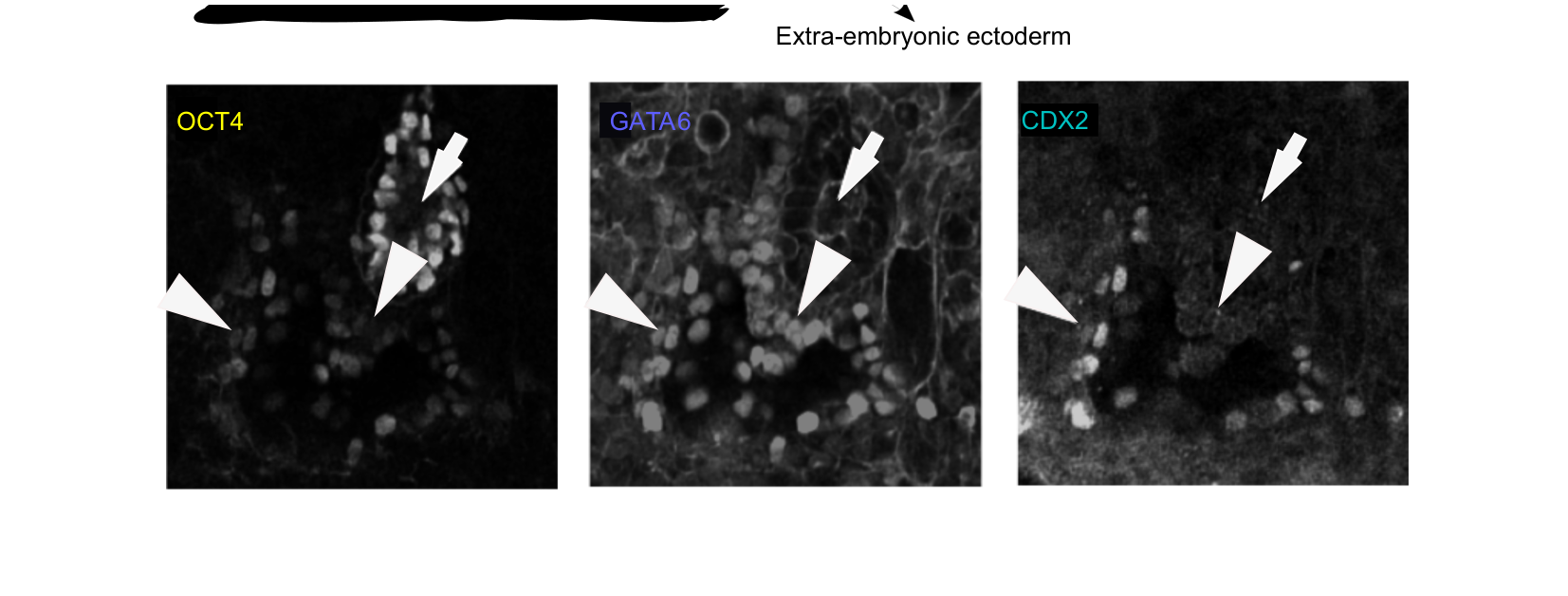
Sir Martin Evans (1941-present) was the first person to culture Embryonic Stem Cells (ESCs)(from a mouse). It is now known that the following transcription factors: - OCT4 determines ESCs to become epiblast, - GATA6 determines ESCs to become extra-embryonic endoderm, -CDX2 determines ESCs to become epiblast. In all previously known animal studies, OCT4 and GATA6 are found only in the inner cell mass, and block the transcription of one-another, until cells adopt one fate. Additionally, no known animal cells express all three markers at the same time. However, closely related species can have quite different embryos. Hence, in 2016 English scientists grew human embryos in Vitro for a record breaking 14 days, and stained them for these transcription factors. Arrows mark the same point on each image.
Using the information and data, determine which of the statements are true or which are false.
Question reproduced from IBO 2017, Theoretical Exam B, licensed under CC BY-NC-SA 4.0 - attributed to the International Biology Olympiad. Open the full exam PDF · Official answer key & worked solutions