Q6 - pHLIP-Mediated AntimiR Delivery to Tumours
MicroRNAs are short non-coding RNAs expressed in various tissues and cell types that suppress the expression of target genes. MicroRNAs involved in cancer are called oncomiRs. Inhibition of oncomiRs using antisense oligomers (that is, antimiRs) is an evolving therapeutic strategy. However, the in vivo efficacy of current antimiR technologies is hindered by physiological and cellular barriers for delivery into targeted cells. A novel antimiR delivery platform that specifically targets tumour microenvironment makes use of synthetic molecules called peptide nucleic acid (PNA) antimiRs attached to a peptide called pHLIP. PNA antimiRs are antimiRs whose nucleotides are connected by peptide bonds instead of the normal phosphodiester bonds. The structure of pHLIP is pH dependent. At low pH, a transmembrane structure is induced in pHLIP that facilitates transport of attached PNA into tumour cells (Fig. 1). pHLIP mediated transport of antimiR-155 effectively inhibited the miR-155 oncomiR in cultured cells (Fig. 2).
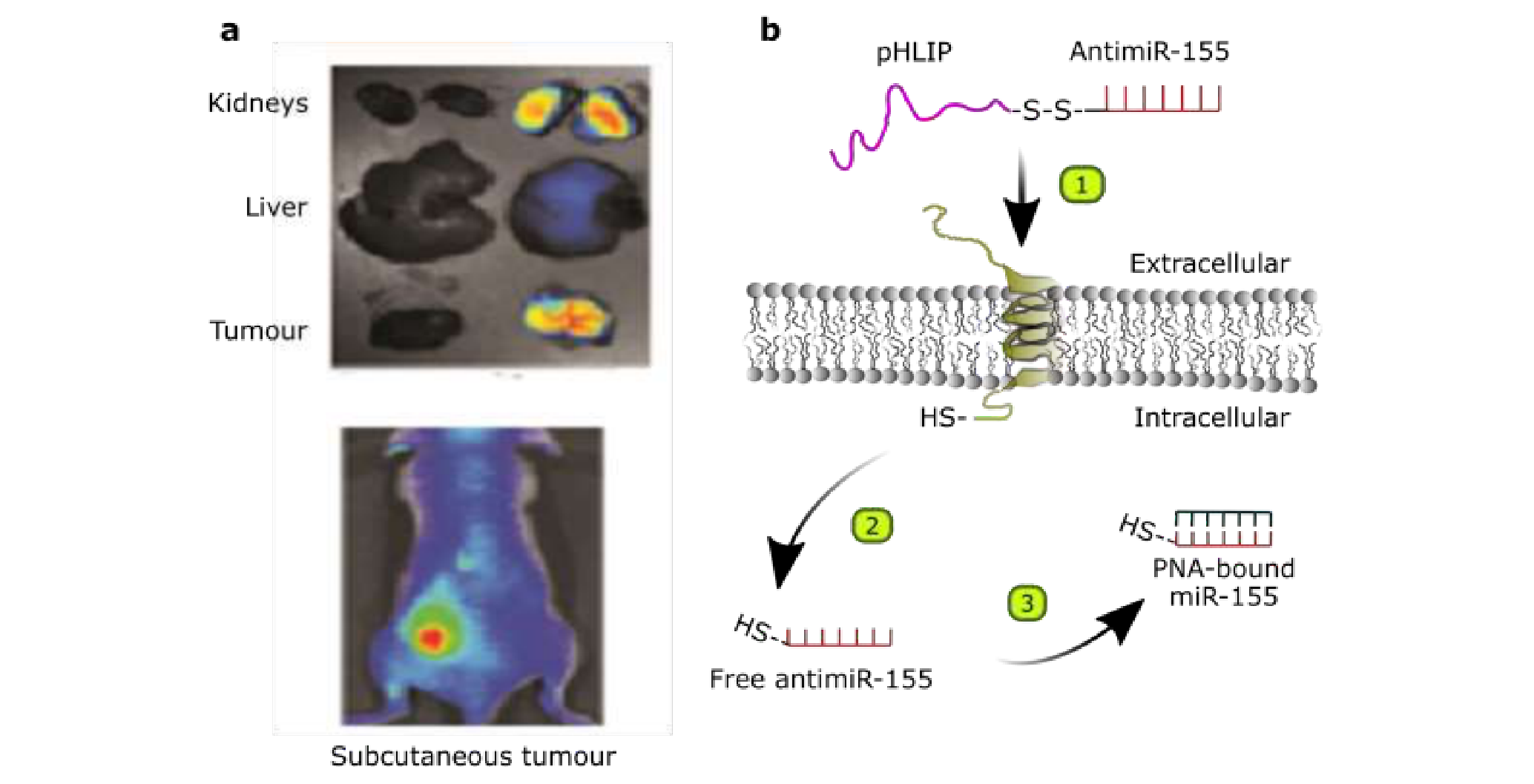 Figure 1.
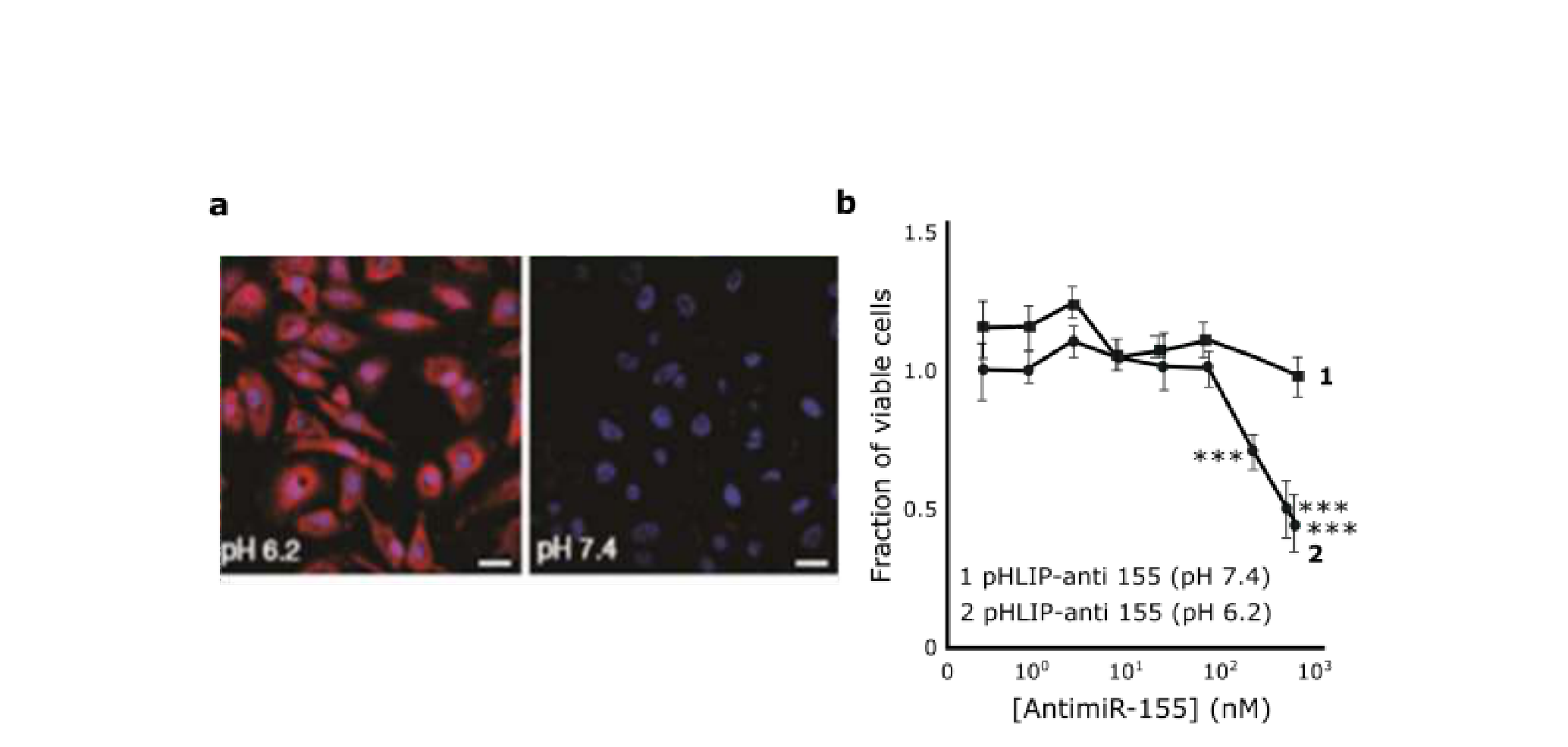 Figure 2.
Using the information and data, determine which of the statements are true or which are false.
Question reproduced from IBO 2018, Theoretical Paper 1, licensed under CC BY-NC-SA 4.0 - attributed to the International Biology Olympiad. Open the full exam PDF · Community solutions (unofficial)