Q19 - Respiratory Phase and Memory Performance
In a recognition memory task, subjects (human being) viewed a series of different visual objects that occurred at different times within the breathing cycle. The interval between displaying images was 3-6 seconds. After a 20 min break, subjects were presented with the old pictures from the encoding session plus an equal number of new pictures; and the subjects pressed the “Yes” button if they had previously viewed the object’s image, and pressed the “No” button if the image was new. Subjects’ memory performance was examined in the episodes of inspiration and expiration, and in mouth breathing and nasal breathing (In figures “*” means p < 0.05 which indicates significant difference between groups).
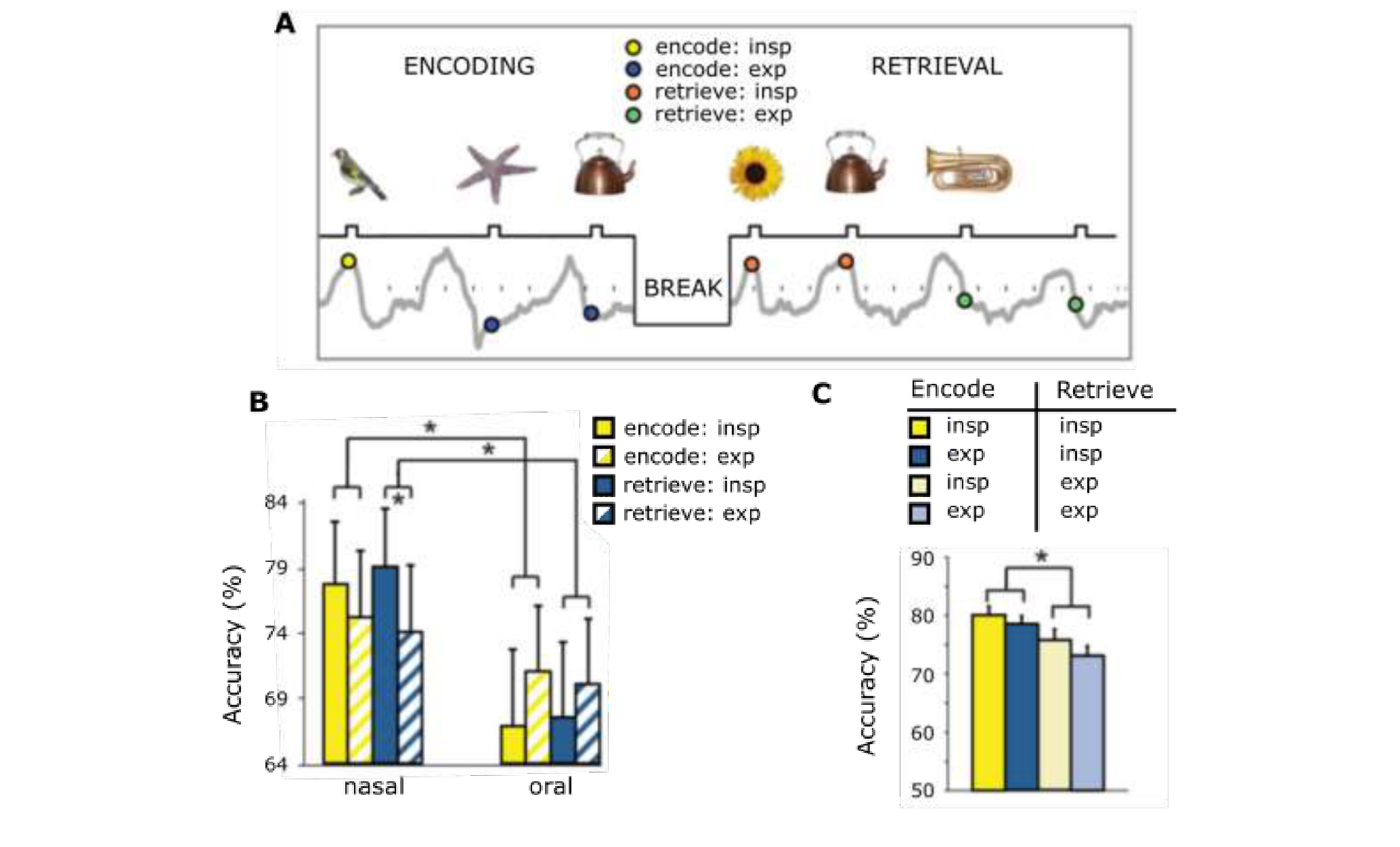 Figure 1.
Using the information and data, determine which of the statements are true or which are false.
Question reproduced from IBO 2018, Theoretical Paper 2, licensed under CC BY-NC-SA 4.0 - attributed to the International Biology Olympiad. Open the full exam PDF · Community solutions (unofficial)