Q24 - HOX Genes, Retinoic Acid, and Neural Tube Patterning
Neural tube in the vertebrate embryos, lies the anterior-posterior (AP) axis and creates a variety of structures. There is a large body of evidence showing that AP patterning of the vertebrate embryos is controlled by HOX genes. Spatial and temporal expression patterns of HOX genes are controlled by factors usually present as gradients in the AP axis of embryos. One of these gradients is generated by retinoic acid (RA), a derivative of vitamin A, with a maximum concentration in the posterior region of the embryos (Figure below).
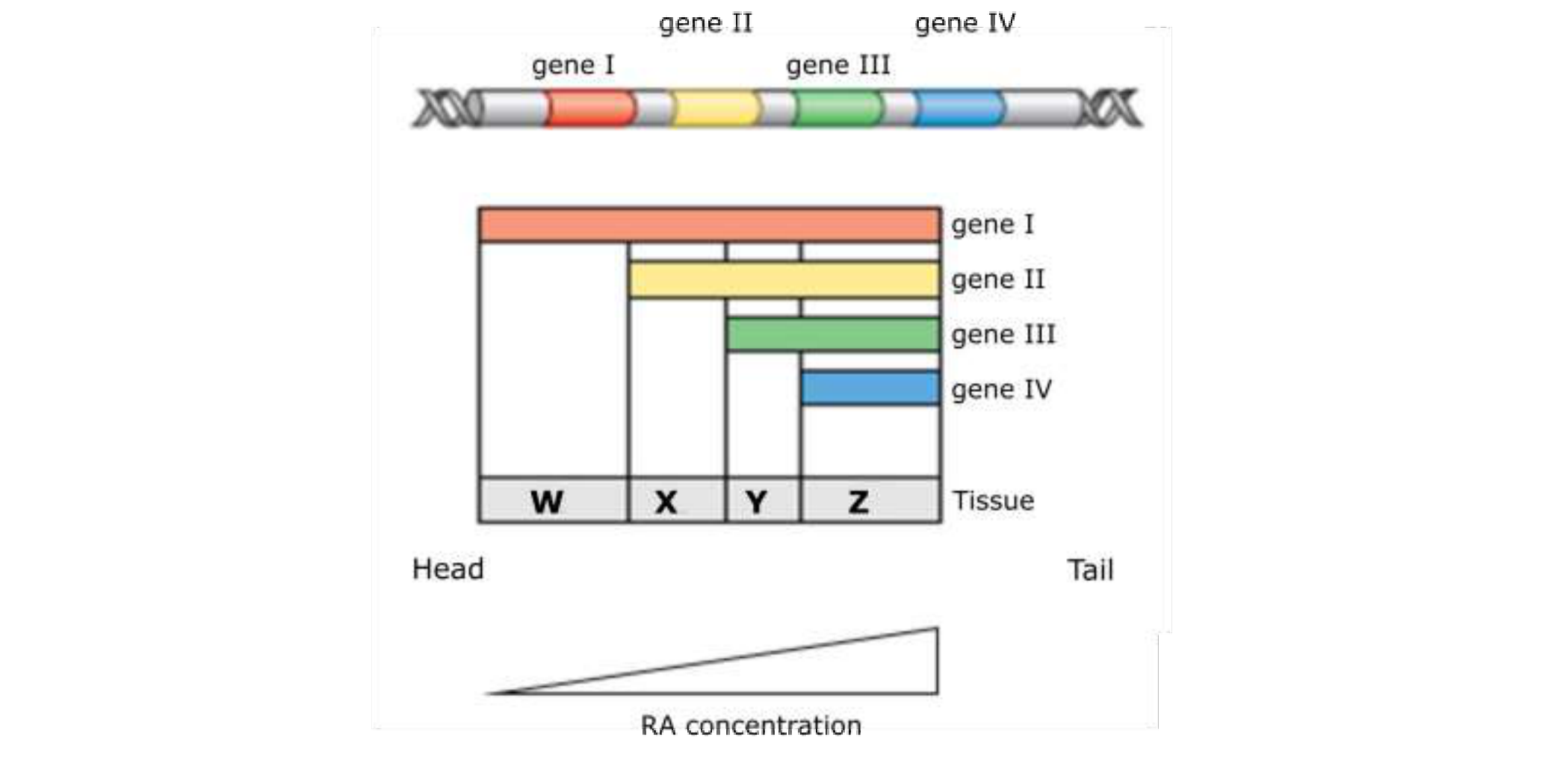 Figure 1.
Using the information and data, determine which of the statements are true or which are false.
Question reproduced from IBO 2018, Theoretical Paper 2, licensed under CC BY-NC-SA 4.0 - attributed to the International Biology Olympiad. Open the full exam PDF · Community solutions (unofficial)