One of the main purposes of phylogenetics is to construct trees that represent the evolutionary relationships of taxa. A major challenge is combining results from independent researchers in this field. Below are two phylogenetic trees of legume genera from two independent research groups.
Fig.1 & Fig.2. Phylogenetic trees of legume genera from two independent studies.
Q.36.1: Is there any genus with conflicting results from the phylogenetic trees above?
Q.36.2: This is the combined tree from the two trees above. Some missing genera are indicated with letters (A, B, etc.) - your task is to find which genus belongs to which letter. A letter can symbolize more than one genus; if a genus doesn’t occur in the tree at all, indicate that with “Q”.
Fig.3. The combined tree, with some genera replaced by placeholder letters A–F (Q = not present in this tree).
Indicate the appropriate genus with an X in the appropriate box on the answer sheet.
Q36.1. Two independent research groups each published a phylogenetic tree of legume genera (Fig.1 and Fig.2). Is there a genus placed in conflicting positions between the two trees?
Q36.2 (Anthyllis). Fig.3 is the combined tree from Fig.1 and Fig.2, with some genera replaced by placeholder letters (A-F); a genus absent from Fig.3 entirely is marked Q. Which letter does Anthyllis belong to?
Q36.2 (Arachis). Which letter does Arachis belong to?
Q36.2 (Astragalus). Which letter does Astragalus belong to?
Q36.2 (Cajanus). Which letter does Cajanus belong to?
Q36.2 (Cercis). Which letter does Cercis belong to?
Q36.2 (Cicer). Which letter does Cicer belong to?
Q36.2 (Glycine). Which letter does Glycine belong to?
Q36.2 (Lathyrus). Which letter does Lathyrus belong to?
Q36.2 (Leucaena). Which letter does Leucaena belong to?
Q36.2 (Lotus). Which letter does Lotus belong to?
Q36.2 (Ononis). Which letter does Ononis belong to?
Q36.2 (Parasponia). Which letter does Parasponia belong to?
Q36.2 (Trifolium). Which letter does Trifolium belong to?
Q36.2 (Trigonella). Which letter does Trigonella belong to?
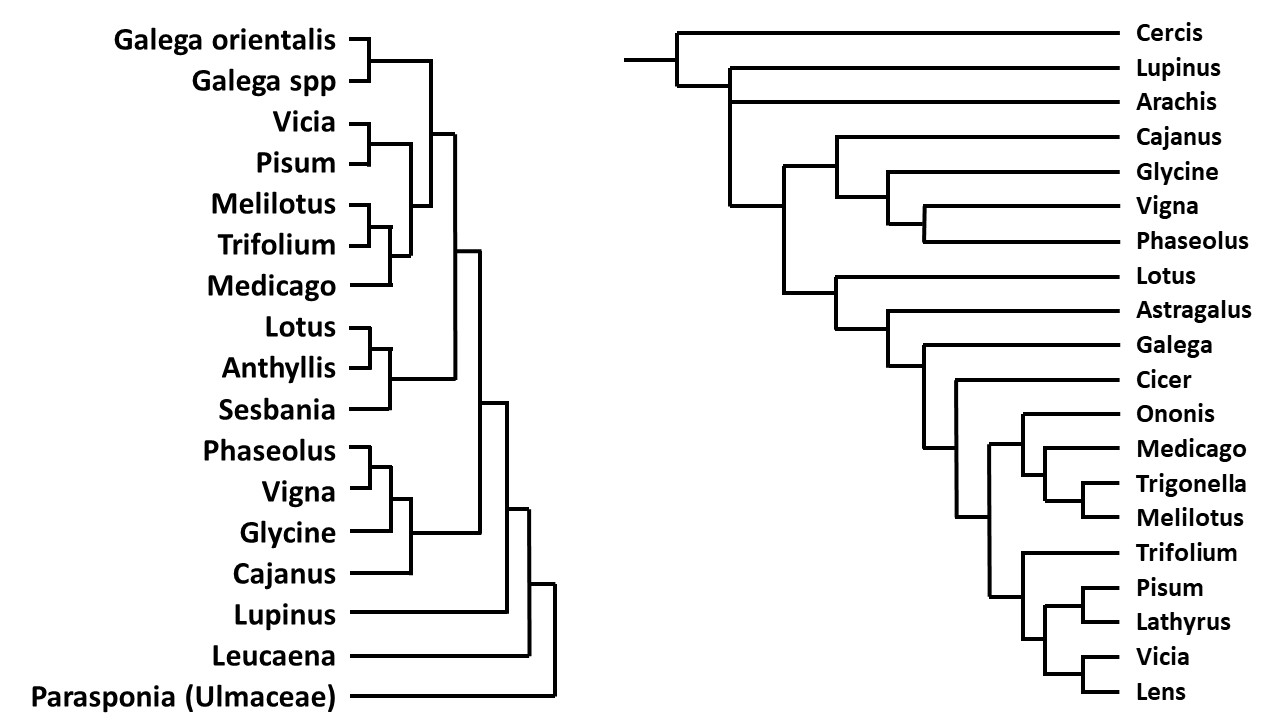 Fig.1 & Fig.2. Phylogenetic trees of legume genera from two independent studies.
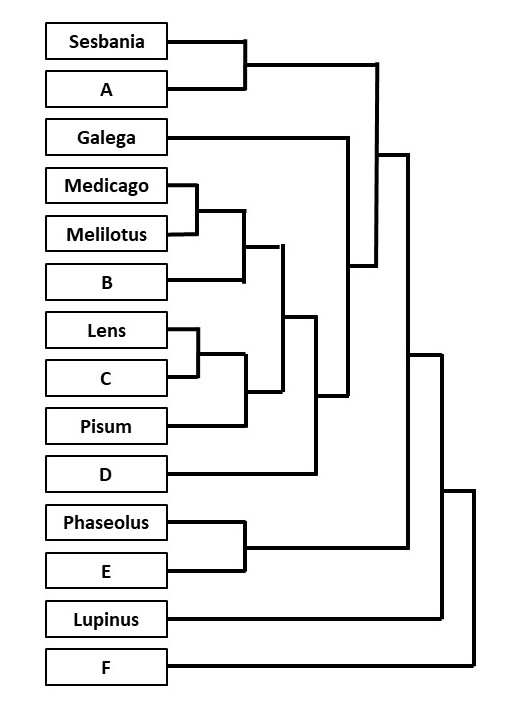 Fig.3. The combined tree, with some genera replaced by placeholder letters A–F (Q = not present in this tree).