Q38 - Attractant vs. Repellent Pheromones in Pharaoh Ants
The following experiment was used to determine whether Pharaoh ants (Monomorium pharaonis) use attractive or repulsive chemical signals to mark their foraging routes. The researchers used two ant colonies.
The first colony was used as the trail-laying colony in a paper Y-bifurcation apparatus (left side), where they were able to leave pheromone trails. The researchers put a feeder with sucrose at the end of one branch (feeder branch) and left the other branch’s end empty (non-feeder branch). After foraging, they removed five sections (S, Fb, Nb, Fe, Ne) and a control from the apparatus and put them, alternately, in different unbranched apparatuses (right side):
- S: 1 mm before the bifurcation
- Fb: 3 mm after the bifurcation, in the feeder branch
- Nb: 3 mm after the bifurcation, in the non-feeder branch
- Fe: 60 mm after the bifurcation, in the feeder branch
- Ne: 60 mm after the bifurcation, in the non-feeder branch
- Control: no ant trail pheromones used
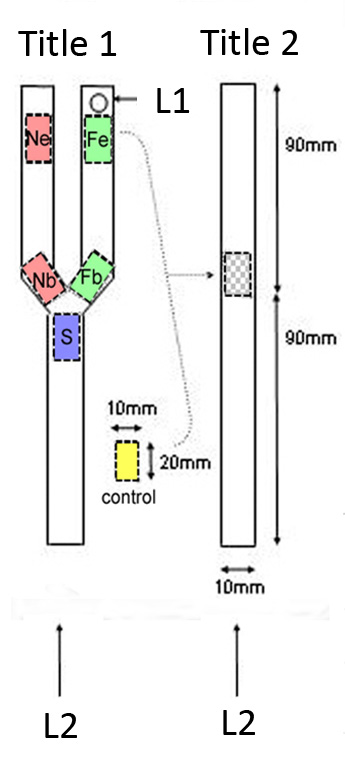 Fig.1. Experimental setup. Title 1 = Trail sections. Title 2 = Test position of section. L1 = feeder. L2 = From nest.
The researchers tested each section with 50 ants from another colony, and counted how many times the ants made U-turns.
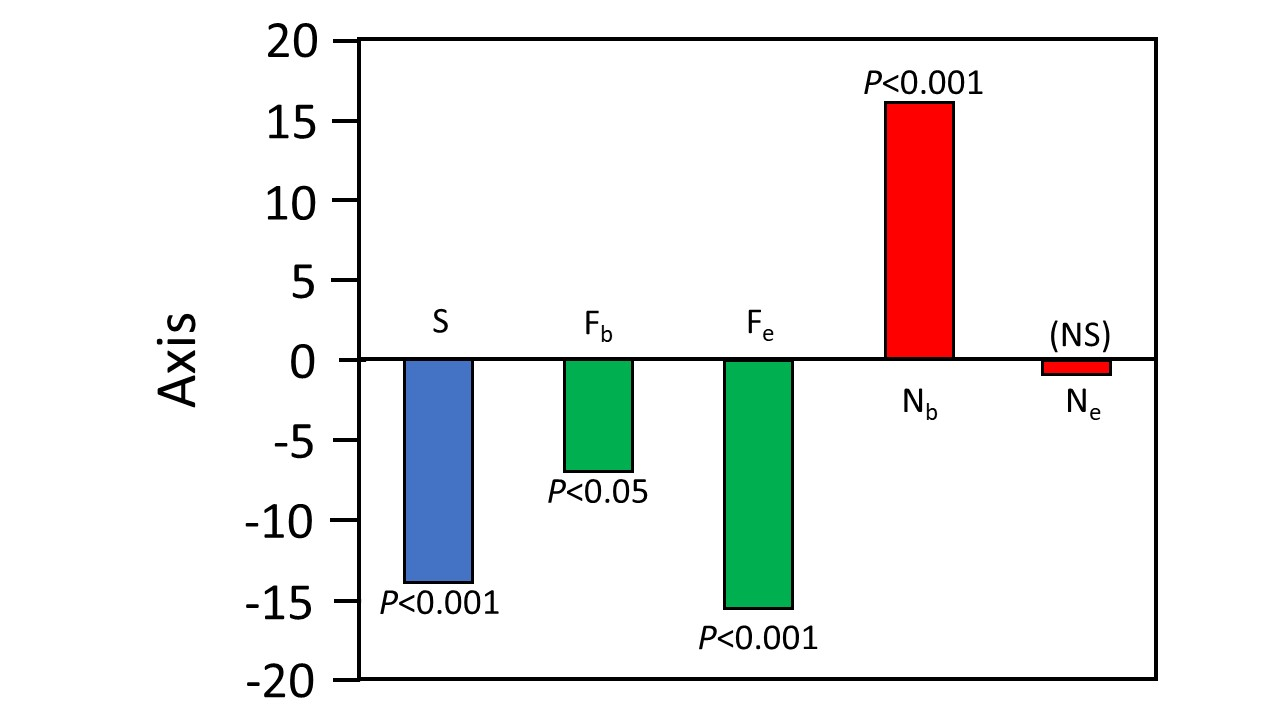 Fig.2. The result of the experiment: number of U-turns compared to control. P<0.001 and P<0.05 indicate the significance level of the difference compared to control (the lower the value, the stronger the significance). NS means no significant difference compared to control. Axis = Number of U-turns ants made relative to control.
Based on the significant results of the experiment, determine which type of pheromone the ants used in each of the five sections.
- A – attractant pheromone
- R – repellent pheromone
- Q – no trail pheromone used
Question reproduced from IBO 2019, Theoretical Exam A, licensed under CC BY-NC-SA 4.0 - attributed to the International Biology Olympiad. Open the full exam PDF · Official answer key