Q21 - Huntingtin, Glycolytic ATP and Fast Axonal Transport
Huntington’s disease (HD) is a genetic disorder characterized by devastating degeneration of nerve tissues that progresses with age. Huntingtin (HTT) is known to be the causative protein of HD. Near the transcriptional initiation point of HTT gene, there is a sequence containing repeated CAG (corresponding to glutamine), which are usually between 9 to 35 repeats in healthy individuals. These repeats are 35 to 75 in HD-population. The symptoms of HD tend to appear at a younger age and are more severe when there are an increased number of CAG repeats. Recently, scientists in France have revealed that HTT plays an important role in maintaining neuronal fast axonal transport (FAT, Figure 1). By careful observations with fluorescence microscopy, they first showed that HTT was co-localized with motor proteins (kinesin and dynein) that are involved in FAT. HTT was also shown to be co-localized with synaptic vesicles, as well as with glyceraldehyde-3-phosphate dehydrogenase (GAPDH). Interestingly, HTT was not found with mitochondria that were transported by FAT. Next, using cultured neurons, they investigated the effects of oligomycin, an inhibitor of ATP production in mitochondria, and iodoacetate acid, an inhibitor of GAPDH activity (Table 1). Furthermore, when HTT expression was suppressed by RNAi treatment, only the FAT of synaptic vesicles, not that of mitochondria, was significantly reduced. These results indicate that HTT was solely involved in FAT of synaptic vesicles.
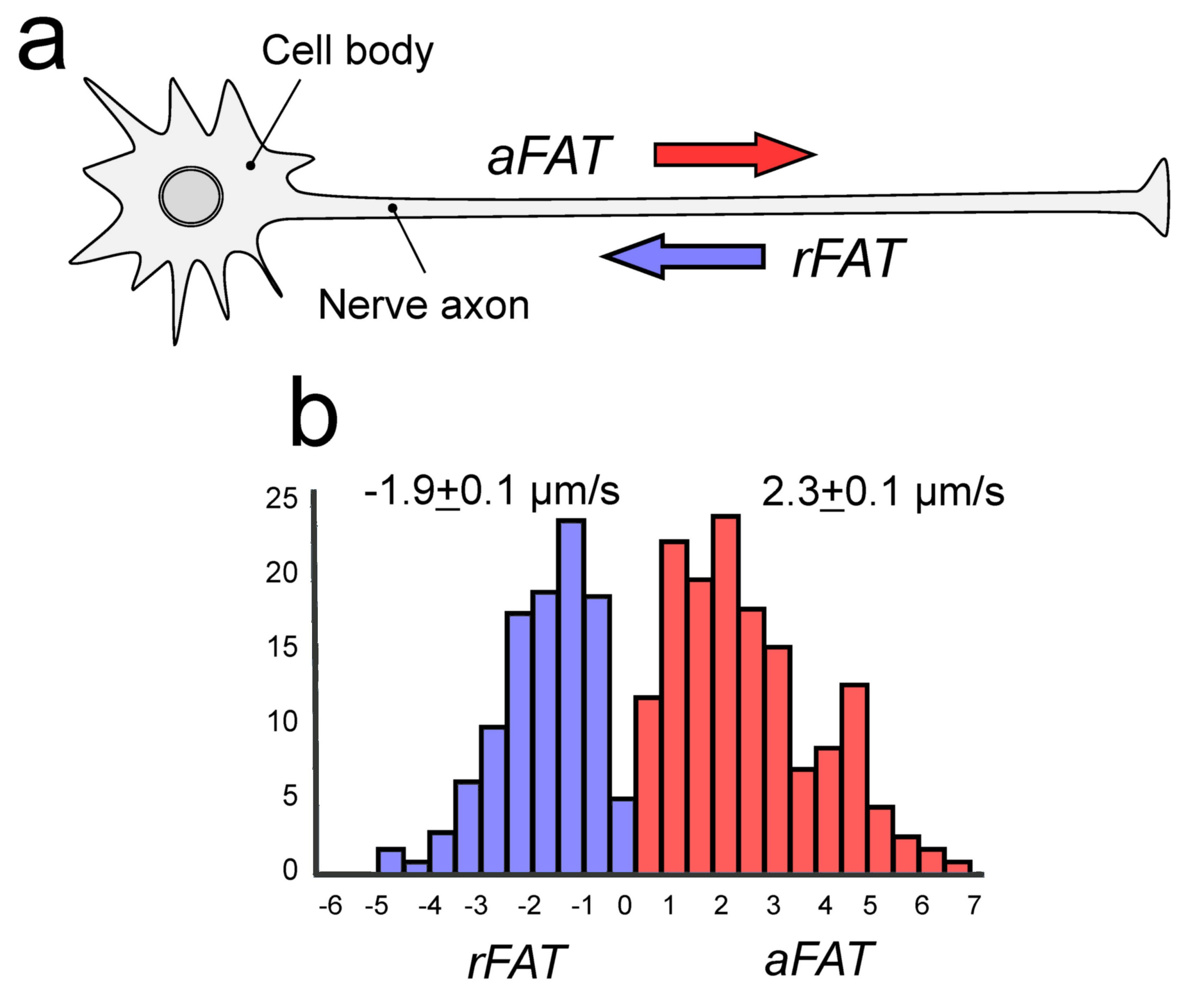 Figure 1.
Using the information and data, determine which of the statements are true or which are false.
Question reproduced from IBO 2020, Theoretical Exam 1, licensed under CC BY-NC-SA 4.0 - attributed to the International Biology Olympiad. Open the full exam PDF · Community solutions (unofficial)