Q24 - Nuclear-to-Cytoplasmic Ratio and the Midblastula Transition in Xenopus
In the African clawed frog, Xenopus laevis, the mode of cell division shifts from cleavage to somatic cell division, which has interphase, at the 12th cleavage after fertilization. This is called the mid-blastula transition (MBT). Microinjection of mRNA of genes that are required for nuclear membrane formation at one-cell stage results in the increase of the nuclear size, but cell size does not change compared with a control embryo. In this experiment, MBT occurs earlier than the 12th cleavage (Figure 1, left). Conversely, when the nuclear size is artificially reduced, the cell size does not again change but MBT occurs later than the 12th cleavage (Figure 1, right). Note: These treatments do not alter the time required for each cleavage.
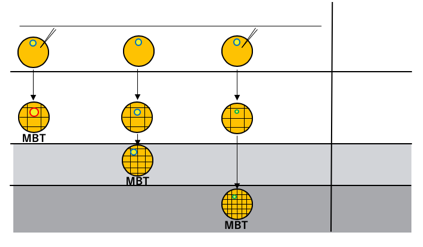 Figure 1.
Using the information and data, determine which of the statements are true or which are false.
Question reproduced from IBO 2020, Theoretical Exam 1, licensed under CC BY-NC-SA 4.0 - attributed to the International Biology Olympiad. Open the full exam PDF · Community solutions (unofficial)