Q7 - Apoptosis - p53/Bax/Bcl-2 Pathway Under Hypoxia
Hypoxia is a hallmark of solid tumors and plays a critical role in different steps of tumor progression. To develop an effective treatment against malignant tumors, it is important to understand how cancer cells that develop under hypoxic conditions avoid apoptosis. The figure shows the mechanism of apoptosis.
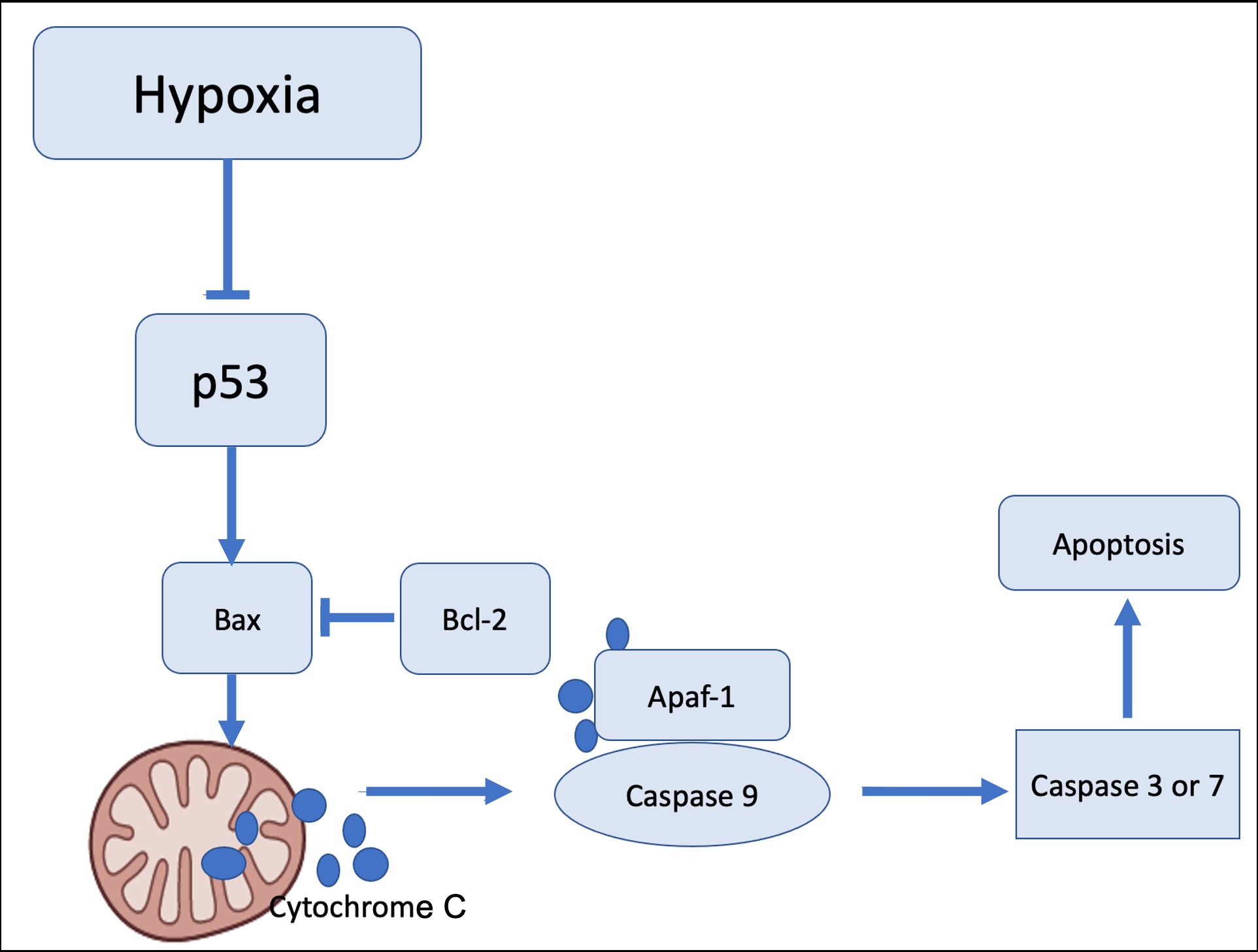 Mechanism of apoptosis. p53 protein promotes the expression of Bax and its translocation from cytosol to mitochondria, which leads to mitochondrial protein cytochrome C release to the cytoplasm, activating the caspase cascade.
Using the information and figure, determine whether the following statements are true or false:
Question reproduced from IBO 2022, Theoretical Paper 1, licensed under CC BY-NC-SA 4.0 - attributed to the International Biology Olympiad. Open the full exam PDF · Community solutions (unofficial)