Q8 - Ethidium Bromide - DNA Binding and Intercalation
Ethidium bromide is a fluorescent dye which can intercalate into double-stranded DNA (Figure 1), resulting in a sharp increase in the fluorescence intensity of ethidium bromide. Ethidium bromide can bind to and intercalate in DNA in different ways (Figure 2).
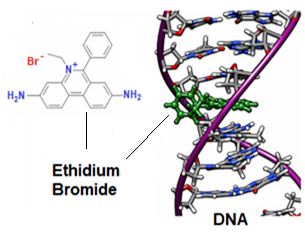 Figure 1. Ethidium bromide and its binding to DNA.
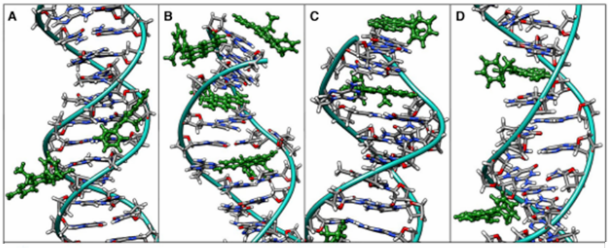 Figure 2. Modes of binding of ethidium bromide to DNA. A - minor groove binding. B - intercalation of ethidium bromide into DNA. C - stacking on the terminal base pairs and insertion mode in DNA. D - major groove intercalation between DNA and minor groove binding.
Using Figures 1 and 2, determine whether the following statements are true or false:
Question reproduced from IBO 2022, Theoretical Paper 1, licensed under CC BY-NC-SA 4.0 - attributed to the International Biology Olympiad. Open the full exam PDF · Community solutions (unofficial)