Q76 - Insulin and Glucagon Dynamics in Type 2 Diabetes
Insulin and glucagon hormones are synthesized in the islets of the pancreas. The balance of their production ensures a stable level of glucose in the blood. Increased glucose levels stimulate the production of insulin by β-cells, while in hypoglycemia, glucagon is released by α cells.
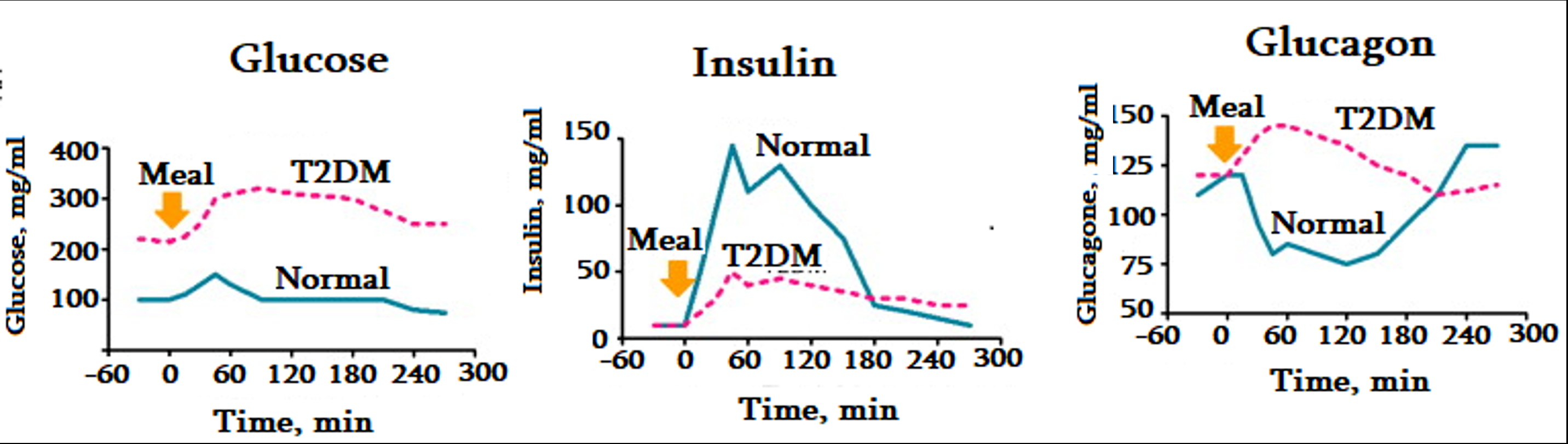 Changes in glucose, insulin and glucagon levels in healthy individuals (“Normal”) and individuals with type 2 diabetes (T2DM), before and after a meal.
Based on this biochemical analysis, determine whether the following statements are true or false.
A. The increase in glucose levels in the plasma of healthy people after a meal is due to heightened glucagon levels.
B. The increase in glucose levels in the plasma leads to a more pronounced increase in insulin levels in type 2 diabetes (T2DM) patients than in healthy individuals.
C. Glucagon production in healthy people is suppressed by an increase in glucose levels in plasma and by subsequent stimulation of insulin production.
D. In T2DM patients, the suppressive effect of glucose on glucagon disappears, and may even be replaced by the stimulation of glucagon production.
Question reproduced from IBO 2022, Theoretical Paper 2, licensed under CC BY-NC-SA 4.0 - attributed to the International Biology Olympiad. Open the full exam PDF · Community solutions (unofficial)