Q57 - PIP2/PIP3 Signaling in T Cells - PTEN and Antigen Dose
After the antigen binds to the receptors on T cells, phosphatidylinositol-4-phosphate (PIP1) is phosphorylated to yield PIP2, which is then phosphorylated again resulting in PIP3. Both new lipid compounds are crucial messengers of the immune response. Results of a cell culture experiment to analyze this process are shown on the plots. Each trace is a time series for PIP2 or PIP3. There are four experimental groups in total: (1) stimulated with low dosage of the antigen; (2) stimulated with low dosage of antigen, while adding SF1670 (the inhibitor of enzyme PTEN, which is a key enzyme involved in lipid signaling); (3) stimulated with high dosage of antigen; (4) stimulated with high dosage of antigen, while adding SF1670.
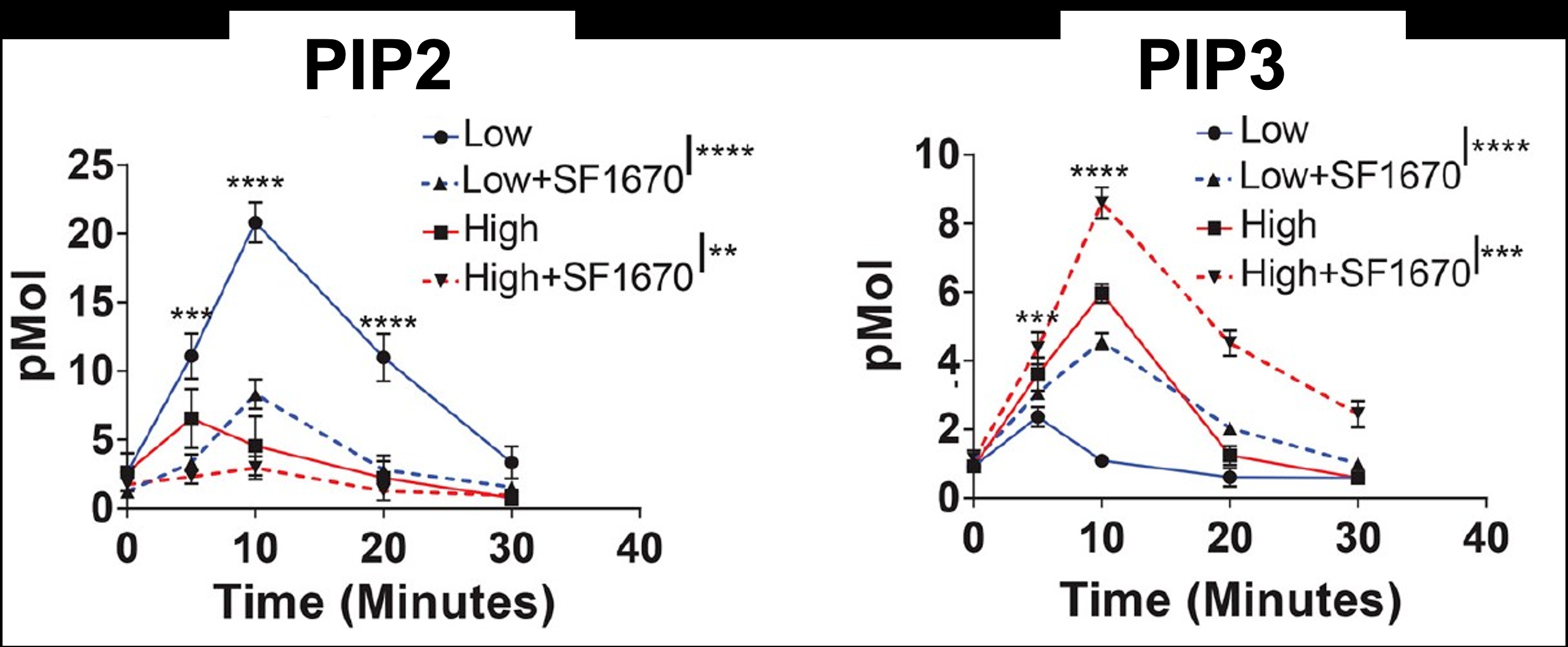 Figure. PIP2 (left) and PIP3 (right) concentration over time under four experimental conditions.
Determine whether the following statement are true or false:
Question reproduced from IBO 2022, Theoretical Paper 2, licensed under CC BY-NC-SA 4.0 - attributed to the International Biology Olympiad. Open the full exam PDF · Community solutions (unofficial)