Q9 - Microglia and Memory Forgetting
Brain microglia (a type of macrophage) perform many roles in the central nervous system. The role of microglia in synaptic reorganisation and circuit rewiring, which modulates memory, was tested in mice.
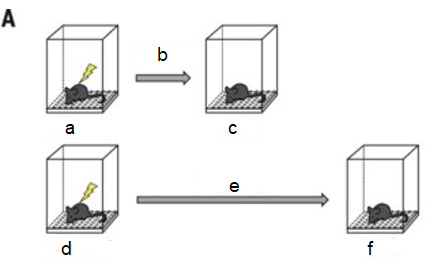
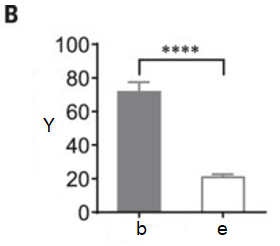
Mice were trained to freeze when receiving a stimulus (A). The % of mice remembering to freeze 5 days, and 35 days, after training is shown in B.
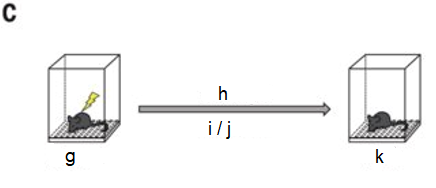
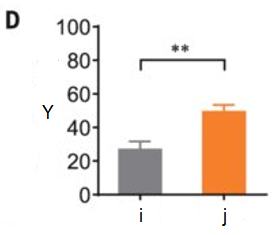
The % of mice remembering to freeze 35 days after training were compared with Pexidartinib (PLX) and without (PLX) treatment at the start of the study (shown in D). Pexidartinib (PLX) selectively removes only microglial cells. A single Pexidartinib treatment permanently removes microglial cells.
True or False?
Question reproduced from IBO 2023, Theoretical Paper 2, licensed under CC BY-NC-SA 4.0 - attributed to the International Biology Olympiad. Open the full exam PDF