Q8 - Chromatin DNase Sensitivity
When eukaryotic nuclear genes are being actively transcribed, their chromatin is usually more relaxed. This leaves the underlying DNA more sensitive to the enzymatic activity of DNase I.
Chromatin was purified from each of pancreatic islet of Langerhans cells, hepatocytes, spermatids and skeletal muscle cells. The chromatin was then exposed to progressively increasing concentrations of DNase I, followed by DNA purification and digestion with restriction endonucleases.
The resulting DNA fragments were subjected to electrophoresis, denaturation and Southern hybridization (with radiolabeled ssDNA probes complementary to the histone, insulin, acetylcholine receptor or actin gene).
Restriction fragments of a particular length correspond to particular genes:
- 2.5 kb = histone H2A
- 3 kb = insulin
- 3.3 kb = acetylcholine receptor
- 4 kb = actin
The autoradiograms (A–D) show the results for each cell type.
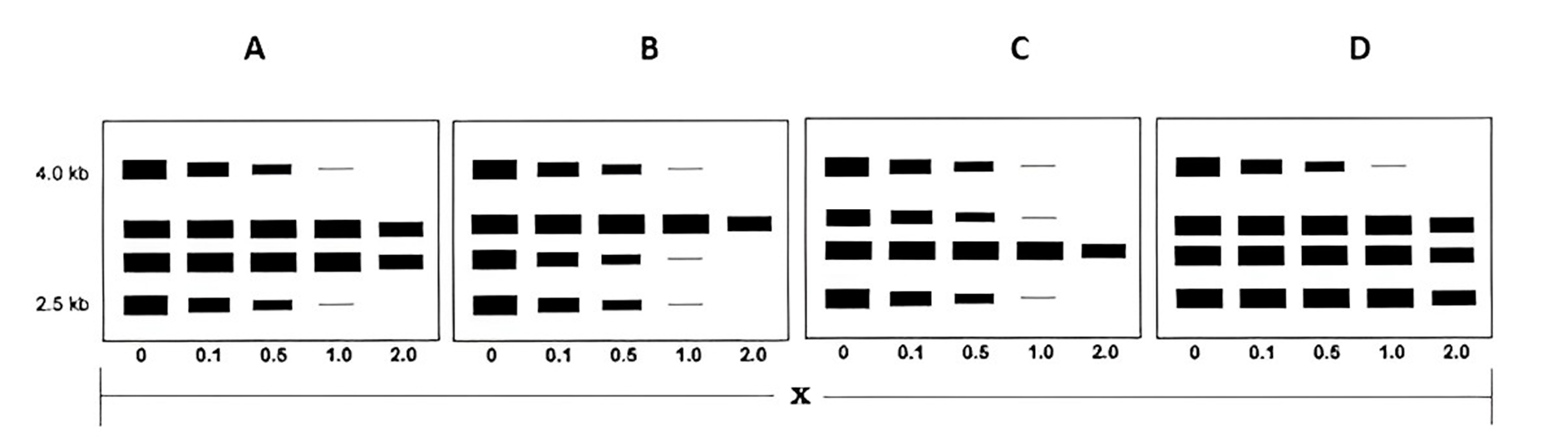
Match the autoradiograms A–D with the corresponding cell types:
- Pancreatic β cells
- Hepatocytes
- Spermatids
- Skeletal muscle cells
Question reproduced from IBO 2023, Theoretical Paper 2, licensed under CC BY-NC-SA 4.0 - attributed to the International Biology Olympiad. Open the full exam PDF