Q11 - Directed Evolution of Enzyme D (NADH-Dependent)
Directed evolution is a process that mimics natural selection by artificially applying selective pressure to organisms to screen and select for a desired phenotype. Directed evolution can be employed in protein engineering.
The Escherichia coli AL strain was engineered by deleting specific pathways that regenerate NAD⁺ (Figure 1). NAD⁺ regeneration can be restored by introducing a foreign enzyme, referred to as Enzyme D, which converts an exogenous substrate, not naturally connected to the native metabolic network, into a non-toxic product using NADH as a cofactor. A library comprising randomized mutants of Enzyme D is introduced into the engineered E. coli AL strain.
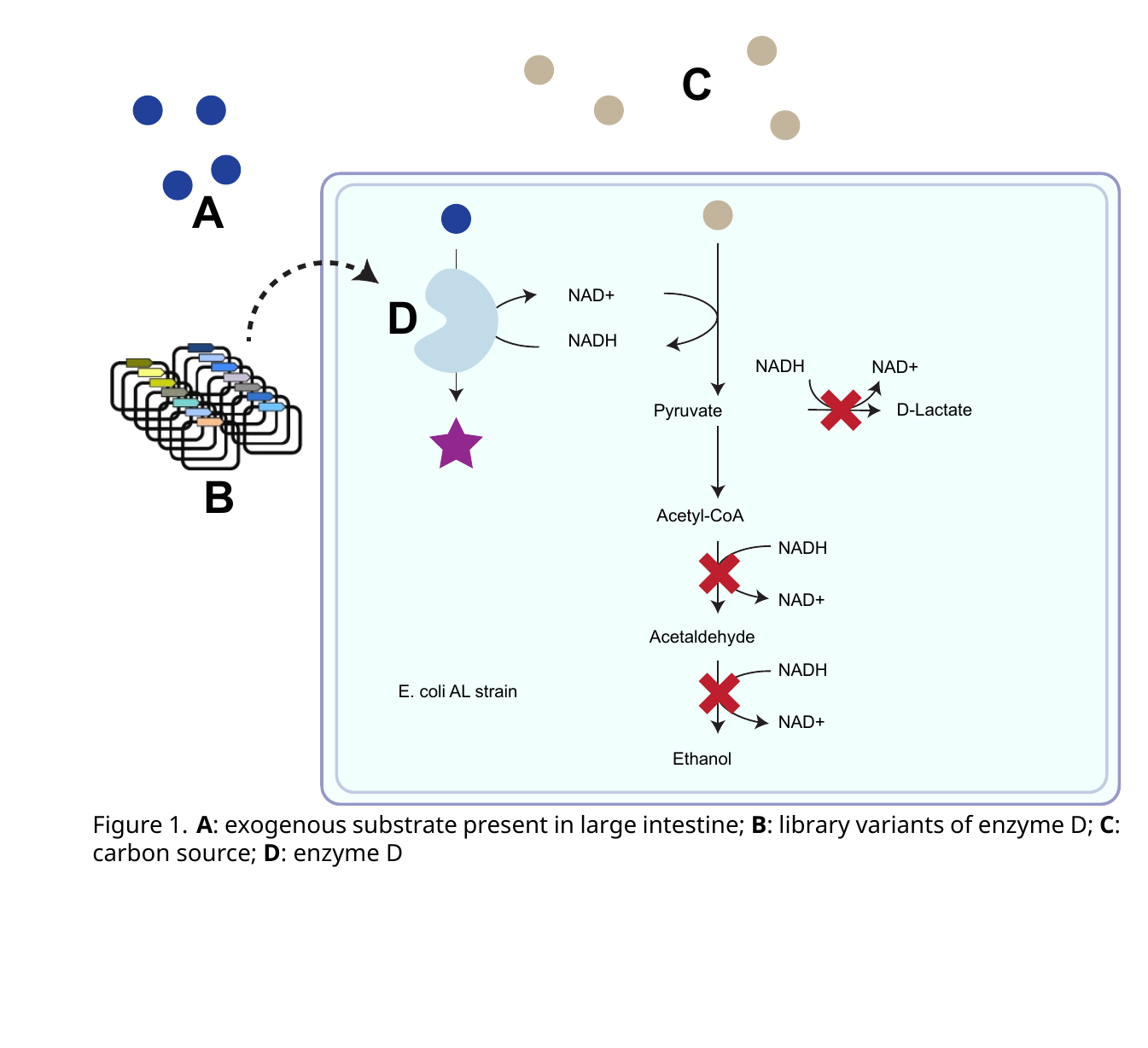 Figure 1. A: exogenous substrate present in large intestine; B: library variants of enzyme D; C: carbon source; D: enzyme D.
On your answer sheet, indicate “T” for true statements and “F” for false ones.
Question reproduced from IBO 2024, Theoretical Exam Part A, licensed under CC BY-NC-SA 4.0 - attributed to the International Biology Olympiad. Open the full exam PDF · Community solutions (unofficial)