Q2 - Strigiformes (Owls) Phylogenetic Identification
You are given five species of birds from the Strigiformes order (Owls), commonly found in Kazakhstan (Figure 1A). However, the genera to which these species belong are unknown to you. To ascertain this, you were provided with information depicted in the figures below.
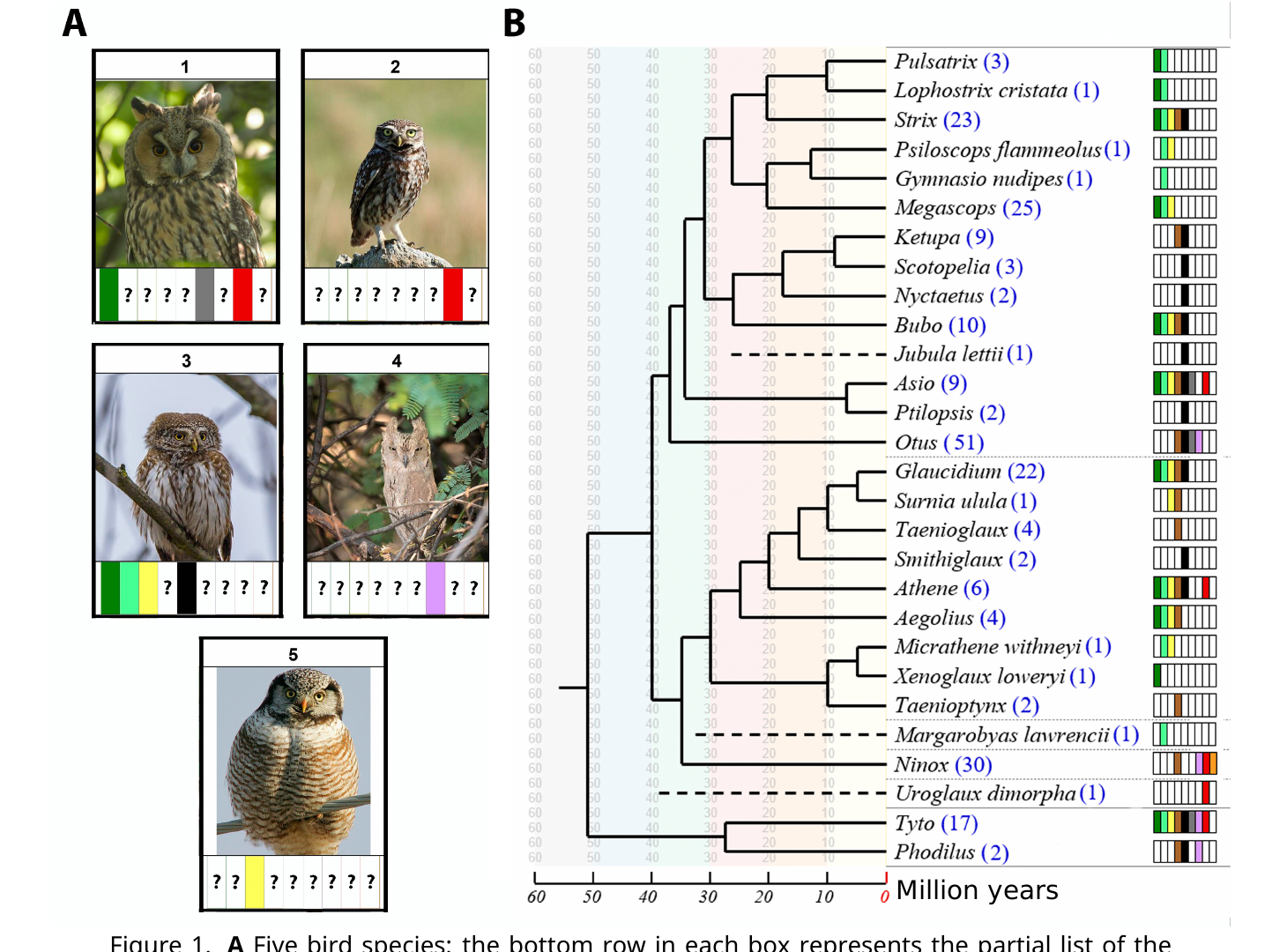 Figure 1. A Five bird species; the bottom row in each box represents the partial list of the birds’ inhabiting areas (refer to Figure 2). B Phylogenetic tree of the Strigiformes order with their full inhabiting area lists. The number of species that make up the corresponding genus is indicated in parentheses.
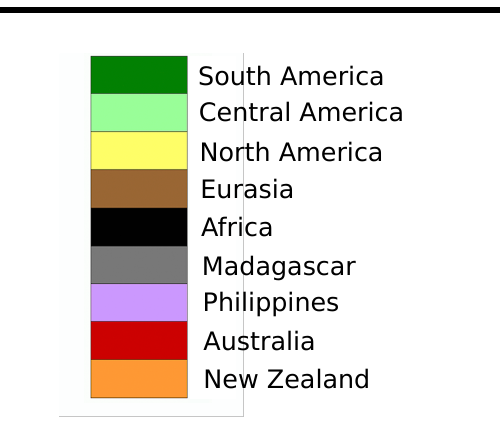 Figure 2. Area distribution key; each rectangle corresponds to a certain area.
It is also known that:
- Species 3 and 5 share the most recent common ancestor that lived 5 million years ago.
- Species 2 and 3 share the most recent common ancestor that lived 20 million years ago.
- Species 5 and 4 share the most recent common ancestor that lived 40 million years ago.
- The genus to which species 1 belongs has never been found in the Philippines.
On your answer sheet, indicate “T” for true statements and “F” for false ones.
Question reproduced from IBO 2024, Theoretical Exam Part A, licensed under CC BY-NC-SA 4.0 - attributed to the International Biology Olympiad. Open the full exam PDF · Community solutions (unofficial)