Q4 - Tumor Microenvironment: OCR and Extracellular pH
The extracellular pH of normal tissues is typically between 7.35 and 7.45. Meanwhile, in the tumor microenvironment, extracellular pH is mildly acidic in the range of 6.5–6.9. Figure 1B provides an overview of the average extracellular pH values observed in different tumor types compared to their respective normal cells. Cancer cells also exhibit changes in the oxygen consumption rates (OCR). This phenomenon is demonstrated in Figure 1A by comparing the OCR of normal and cancer cells from three patients.
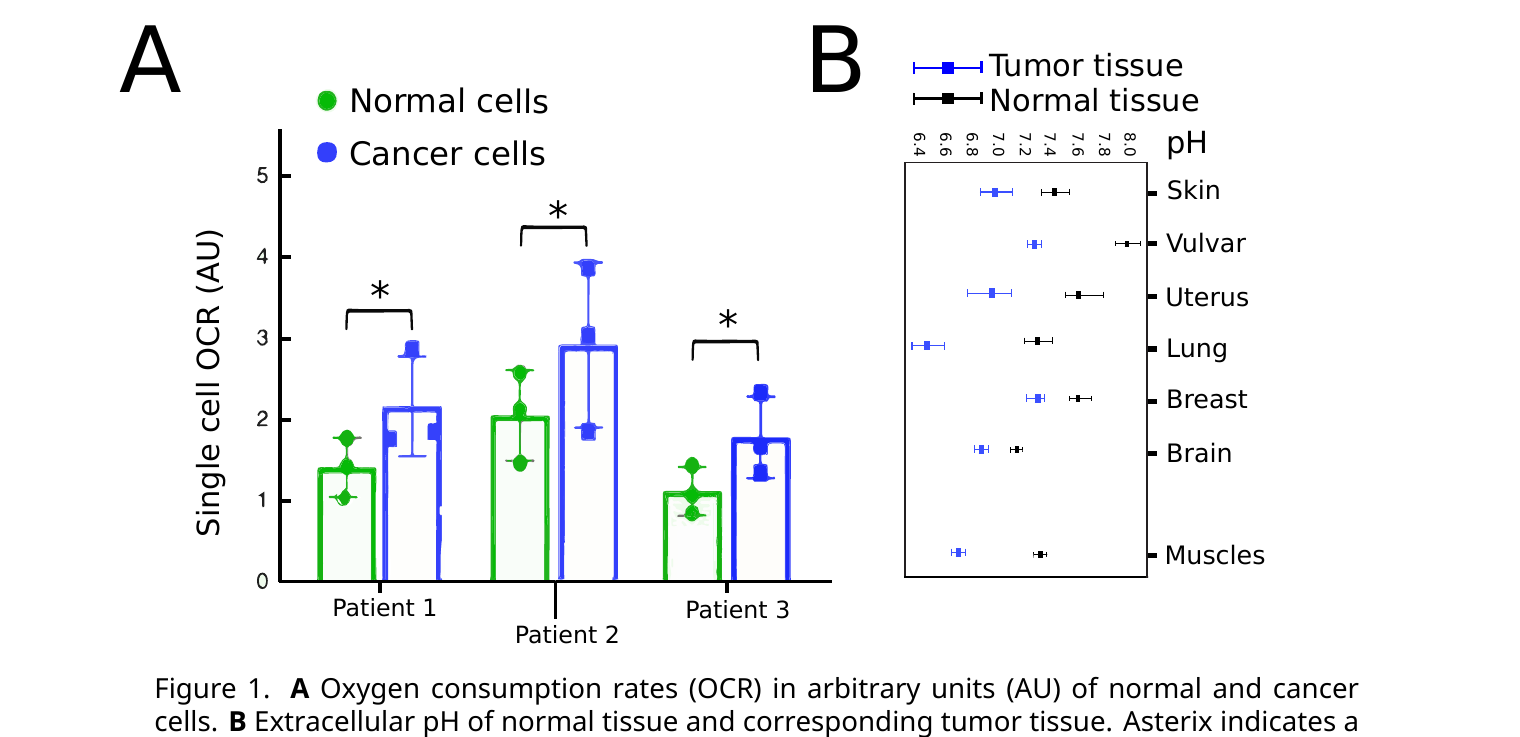 Figure 1. A Oxygen consumption rates (OCR) in arbitrary units (AU) of normal and cancer cells. B Extracellular pH of normal tissue and corresponding tumor tissue. Asterisk indicates a significant difference.
On your answer sheet, indicate “T” for true statements and “F” for false ones.
Question reproduced from IBO 2024, Theoretical Exam Part A, licensed under CC BY-NC-SA 4.0 - attributed to the International Biology Olympiad. Open the full exam PDF · Community solutions (unofficial)