Q43 - Saiga Nasal Anatomy and Wolf Predation
Saigas (Saiga tatarica) are herding antelopes that have an enlarged nasal cavity. Figure 1 below shows computed tomographic (CT) sections of their head.
The main natural enemy of saigas is the wolf. However, in open areas, saigas are not afraid of wolves because of the difference in their running speeds: saigas - 75-80 km/h, wolves - 40-45 km/h. At the same time, the weight load per 1 cm² for the saiga is 500 grams, while it is 160 grams for the wolf.
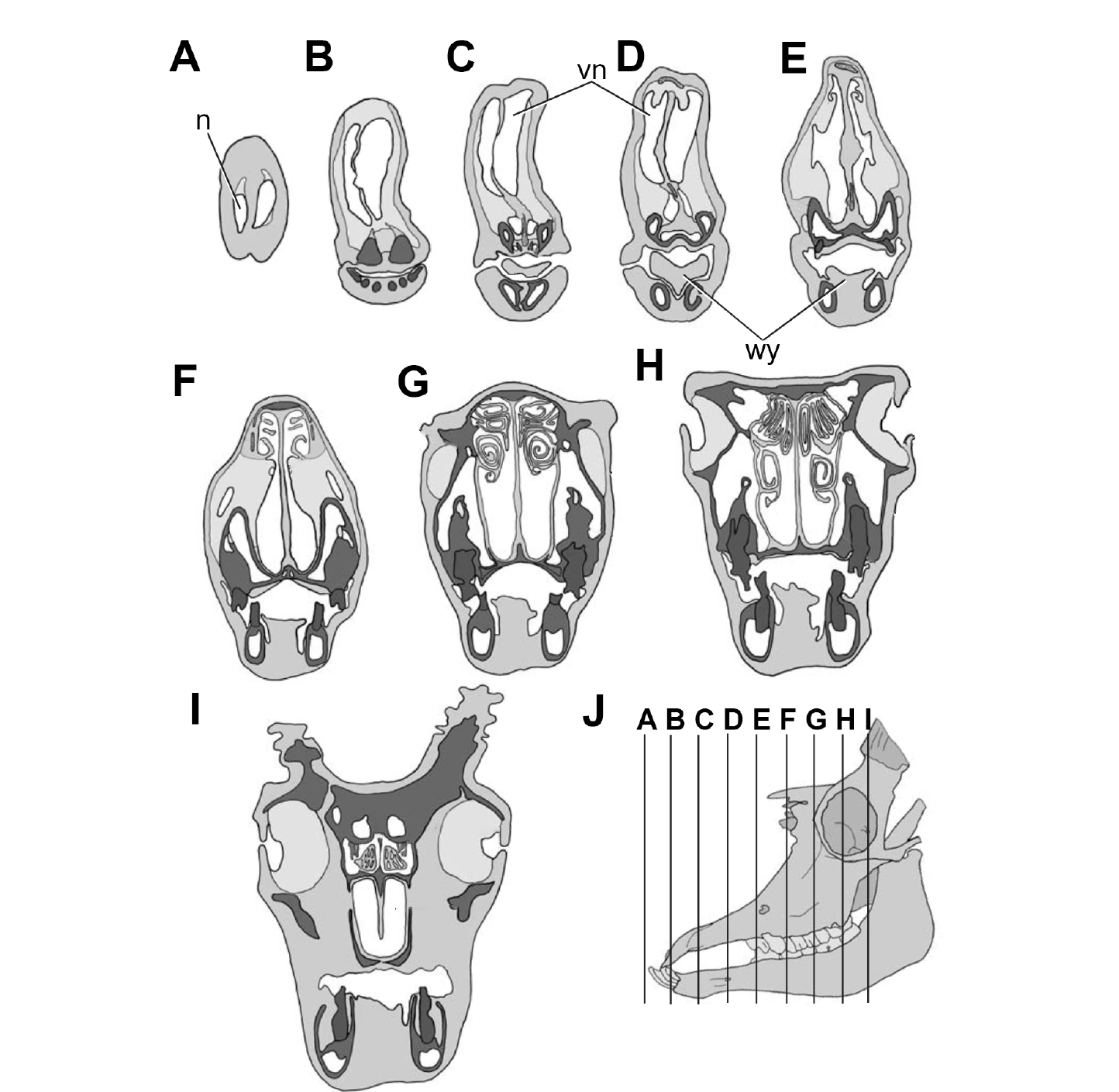 Figure 1. Internal structures of the saiga head in successive CT transverse sections. J - lateral view of the skull to show the levels of the sections shown in A–I.
On your answer sheet, indicate “T” for true statements and “F” for false ones.
Question reproduced from IBO 2024, Theoretical Exam Part A, licensed under CC BY-NC-SA 4.0 - attributed to the International Biology Olympiad. Open the full exam PDF · Community solutions (unofficial)