Q42 - Electric Eel Prey Detection
Electric eels (Electrophorus electricus) are predatory fish that utilize electrical and mechanical signals during hunting. They emit two types of electrical impulses: low-voltage, which induces sudden muscle contraction of the prey, and high-voltage, which paralyzes the prey, aiding in capture and consumption.
In the experiment conducted for studying electrolocation mechanisms of eels, a container with two compartments was used, as shown in Figure 1. The lower compartment contained an isolated fresh fish corpse attached to electrodes, connecting it to the upper compartment’s environment. Additionally, several electrically non-conductive rods and one conductive rod were placed beneath the transparent, perforated divider.
Results of the experiment indicated that upon placement in the container, the eel began attacking the conductive rod, but not the fish corpse (Figure 2). Assume that the fish corpse was supplied with a sufficient amount of ATP.
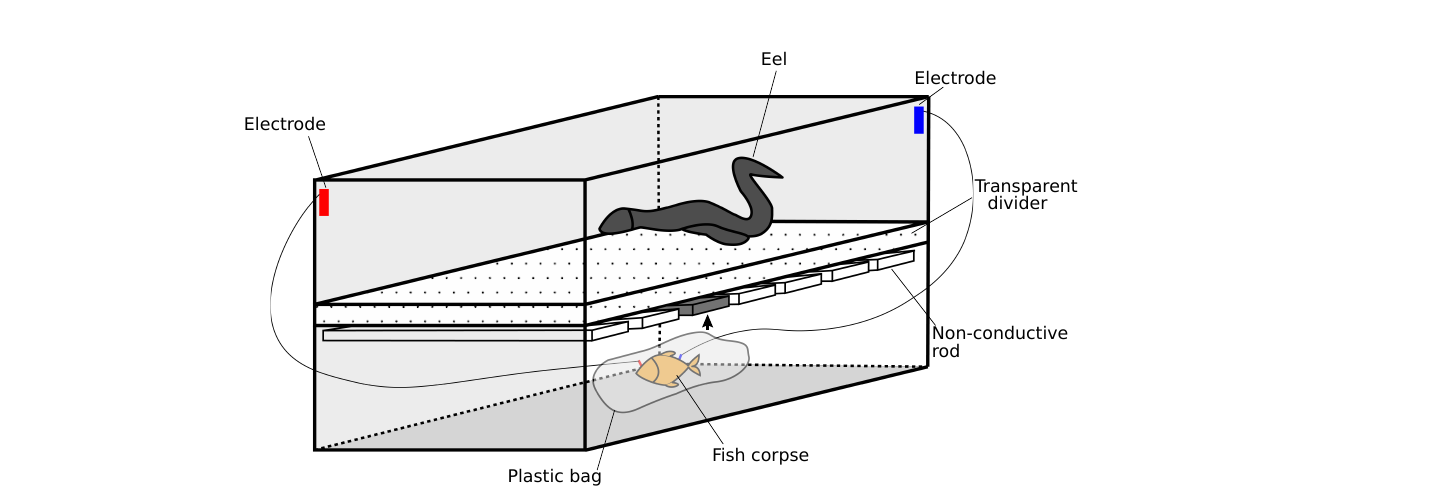 Figure 1. Experiment setup; black arrow - conductive rod.
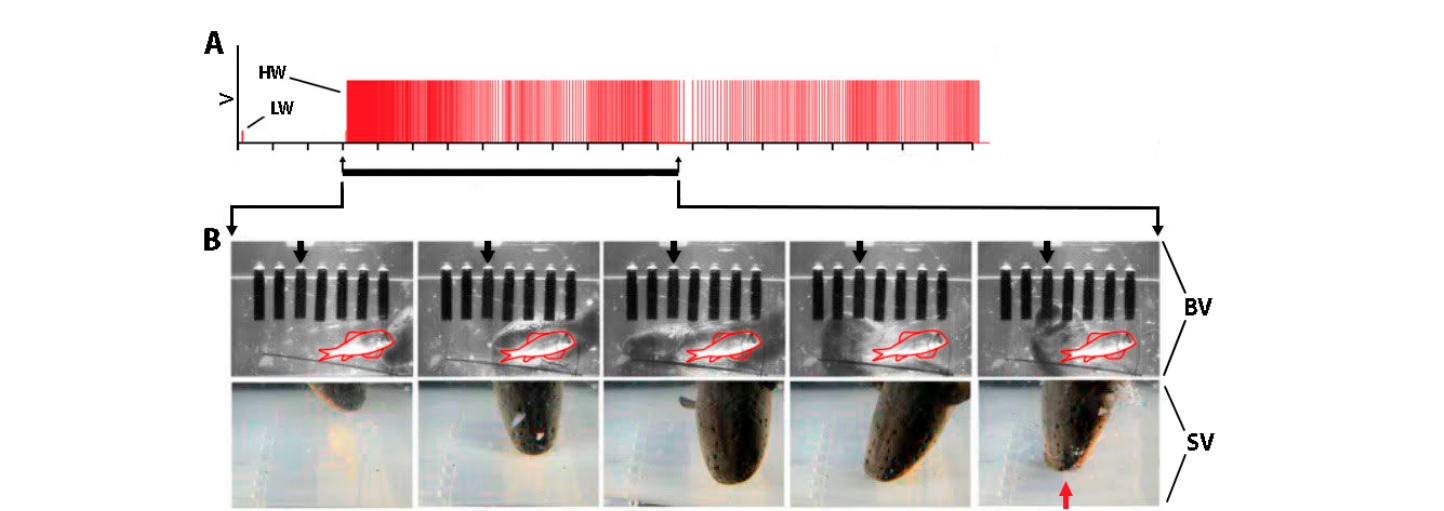 Figure 2. A Impulses recorded from the upper compartment (x-axis - time, y-axis - voltage); LW - low voltage impulse, HW - high voltage impulse. B Frames shot from the experiment (BV - bottom view, SV - side view); black arrow - conductive rod, red arrow - attack. The fish corpse is highlighted in red.
On your answer sheet, indicate “T” for true statements and “F” for false ones.
Question reproduced from IBO 2024, Theoretical Exam Part A, licensed under CC BY-NC-SA 4.0 - attributed to the International Biology Olympiad. Open the full exam PDF · Community solutions (unofficial)