Q7 - Pentose Phosphate Pathway (PPP)
The Pentose Phosphate Pathway (PPP) is a metabolic pathway occurring in the cytoplasm that mainly generates NADPH and ribose 5-phosphate. NADPH is used for the reduction of reactive oxygen species (ROS) such as hydrogen peroxide. PPP has oxidative and non-oxidative phases, which are irreversible and reversible, respectively.
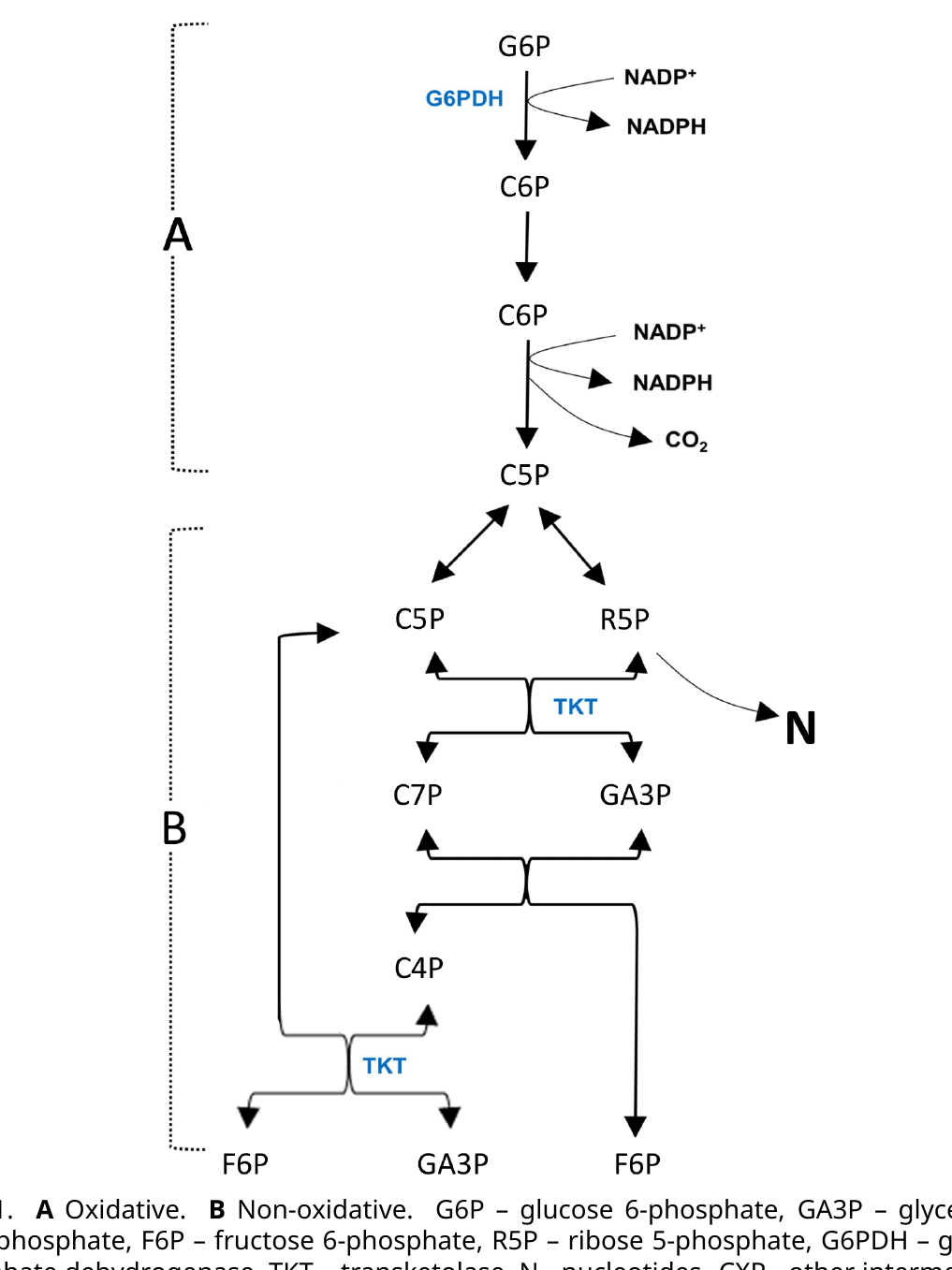 Figure 1. A Oxidative. B Non-oxidative. G6P – glucose 6-phosphate, GA3P – glyceraldehyde 3-phosphate, F6P – fructose 6-phosphate, R5P – ribose 5-phosphate, G6PDH – glucose 6-phosphate dehydrogenase, TKT – transketolase, N - nucleotides. CXP - other intermediates where X is the position of phosphorylated carbon. Note that all intermediates of PPP are phosphorylated on the last carbon.
On your answer sheet, indicate “T” for true statements and “F” for false ones.
Question reproduced from IBO 2024, Theoretical Exam Part A, licensed under CC BY-NC-SA 4.0 - attributed to the International Biology Olympiad. Open the full exam PDF · Community solutions (unofficial)