Q22 - Genomic Imprinting at the IGF2-H19 Locus
Genomic imprinting is one mechanism by which sexes can encourage favourable traits in a fetus to maximize their own reproductive success. The most evident imprinting phenomenon occurs when the normal gene expression is disrupted.
Particularly, Beckwith–Wiedemann syndrome (BWS) is characterized by fetal macrosomia (birth weight >90th percentile) and an increased risk of congenital tumors. Meanwhile, babies with Silver–Russell syndrome (SRS) are born small for their gestational age and later exhibit dwarfism.
Both cases can be associated with genetic defects in clusters of imprinted genes on chromosome 11. IGF2 is a pro-proliferative regulator of fetal growth. H19 knockout does not have pathological consequences. Another paternally imprinted gene (active on a maternal chromosome) is IGF2R; its protein binds IGF2 and targets it for lysosomal degradation.
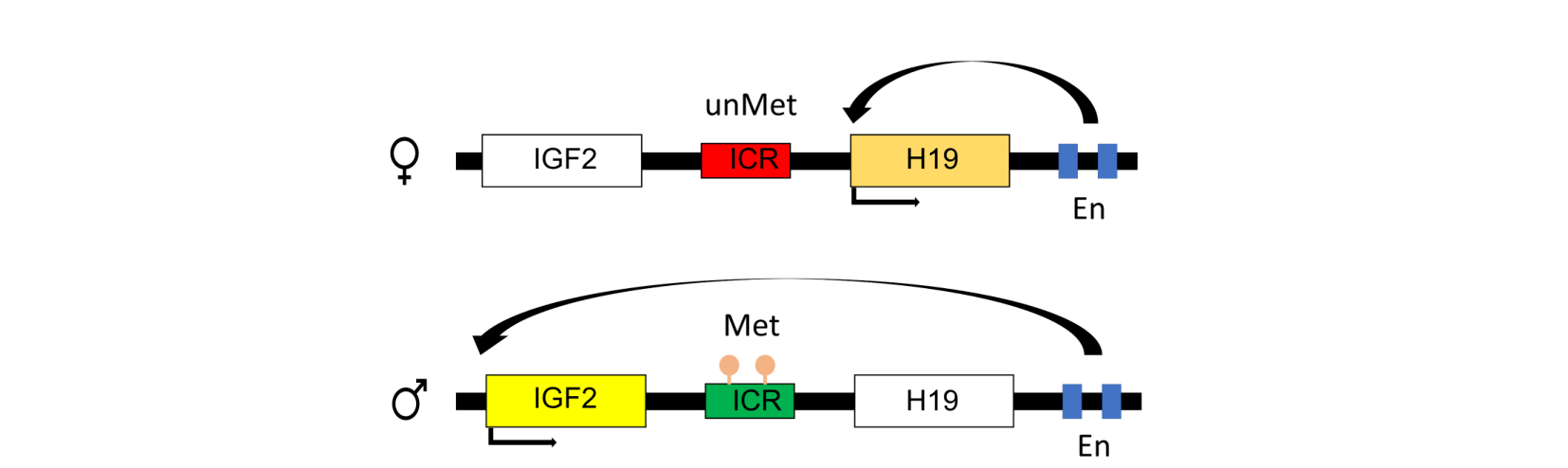 Figure 1. Maternal and Paternal structures of the IGF2-H19 cluster. ICR - imprinting control region; En - Enhancer, Met - methylated, unMet - unmethylated.
On your answer sheet, indicate “T” for true statements and “F” for false ones.
Question reproduced from IBO 2024, Theoretical Exam Part B, licensed under CC BY-NC-SA 4.0 - attributed to the International Biology Olympiad. Open the full exam PDF