Q63 - GPI-Anchoring Deficiency and Growth Phenotypes in an Arabidopsis atgpi8 Mutant
A protein can be integrated into a membrane through a polypeptide sequence or via a lipid anchor. The attachment of eukaryotic proteins to the outer leaflet of the plasma membrane occurs only via Glycosylphosphatidylinositol (GPI) anchors. The biosynthesis of GPI glycolipid is a multistep process relies on many proteins, including GPI transamidase. In Arabidopsis plants, AtGPI8 gene encodes the enzyme GPI transamidase. To study the role of this gene in plant development, scientists constructed a mutant (atgpi8-1) plant line. They observed phenotypes of both wild type (WT) and mutant plants.
Figure Q.63.1 Cotyledonous epidermis of wild type (A) and atgpi8-1 (B) plants.
Figure Q.63.2 Growth phenotypes of wild type and atgpi8-1 plants. (A) Seedlings, (B) cotyledons and (C) first two leaves of seedlings. (D) 30-day-old and (E) 60-day-old plants. F-G: Inflorescences.
Figure Q.63.3 Morphometric analysis of wildtype (gray bars) and atgpi8-1 (white bars) seedlings and mature plants, comparing hypocotyl length, root length, plant height, age at flowering, internode length, pedicel length, and numbers of cauline branches and siliques. All differences shown are statistically significant. Measurements for the mature-plant traits were carried out at full maturation, 60 days for wild type and 90 days for mutants.
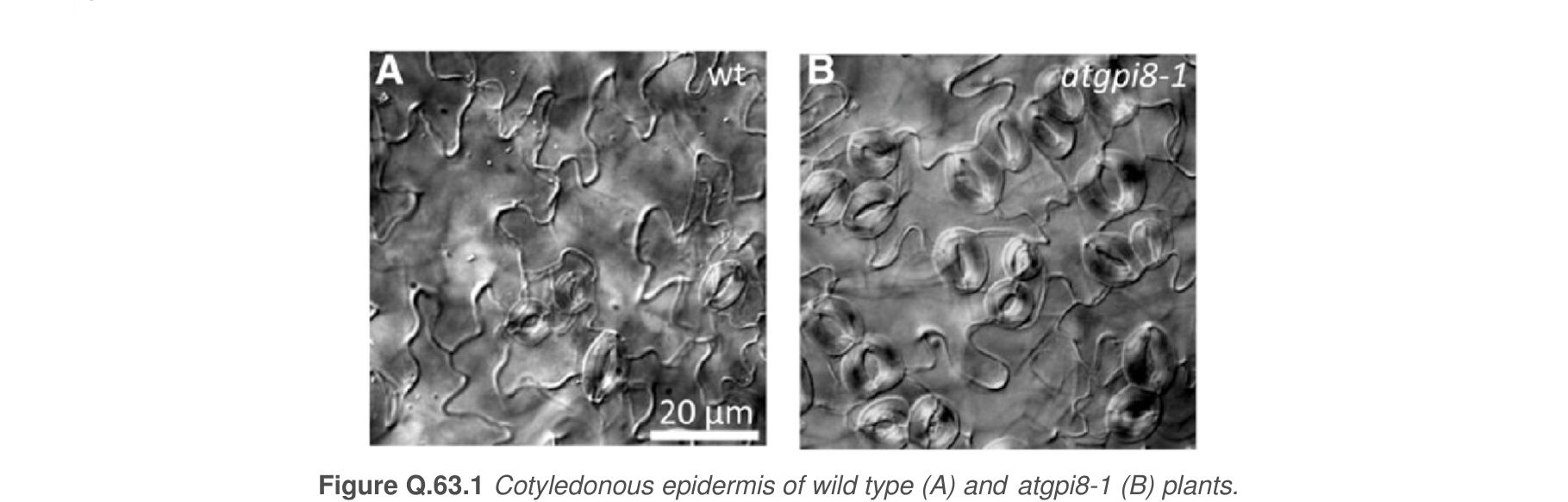 Figure 1.
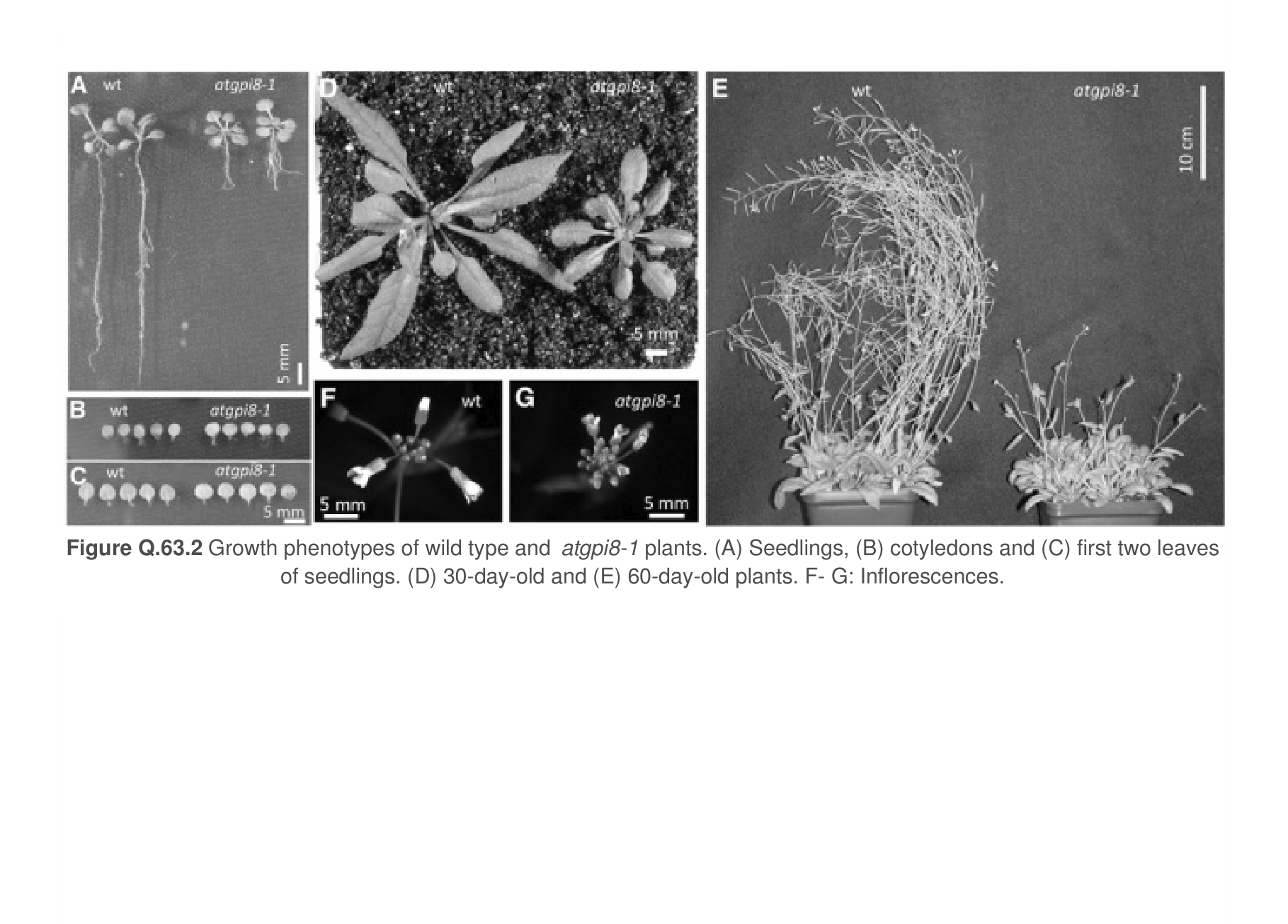 Figure 2.
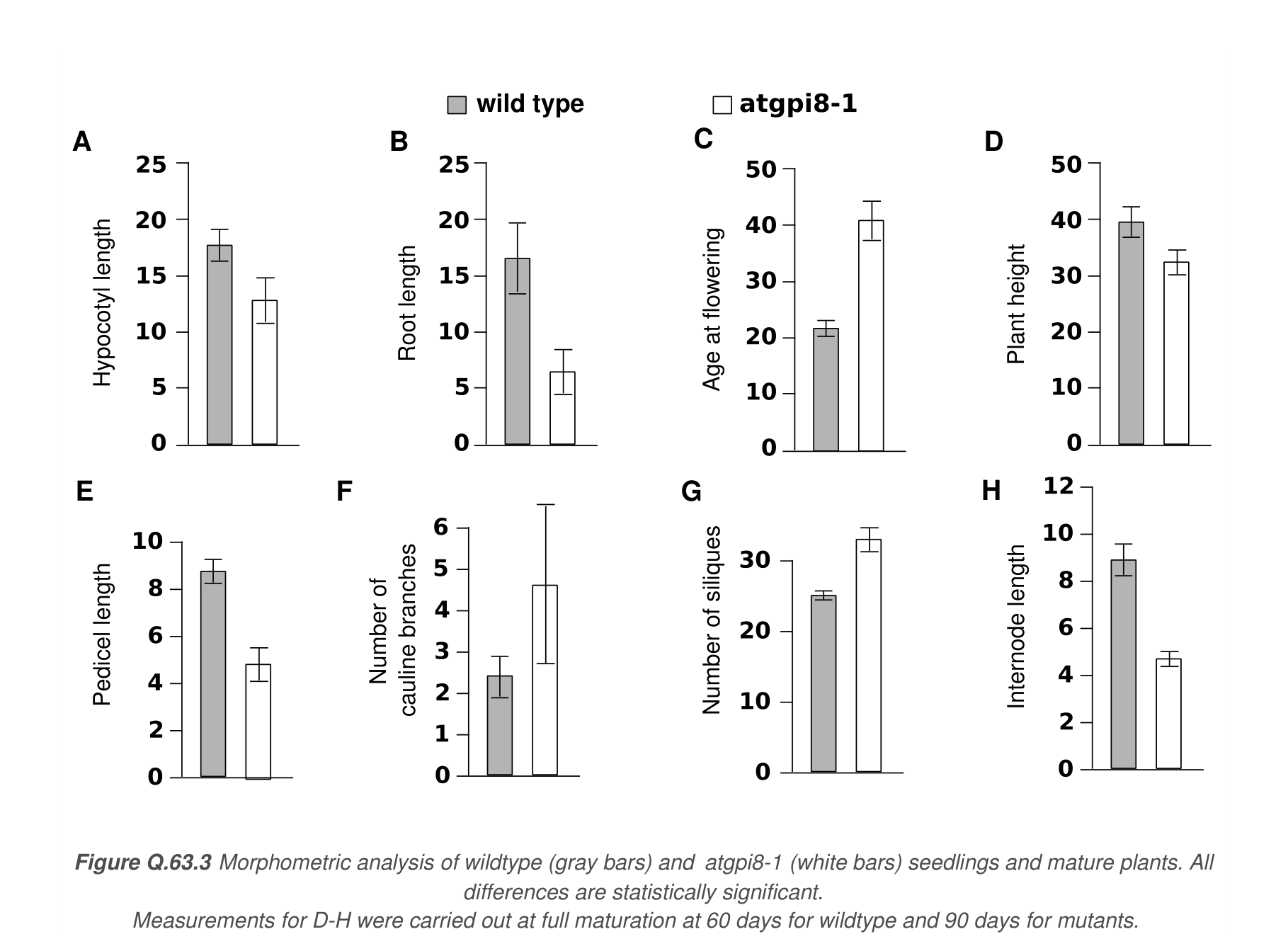 Figure 3.
Using the information and data, determine which of the statements are true or which are false.
Question reproduced from IBO 2016, Theoretical Paper B, licensed under CC BY-NC-SA 4.0 - attributed to the International Biology Olympiad. Open the full exam PDF · Community solutions (unofficial)