Q35 - "Seed and Soil": Why Tumours Favour Specific Secondary Organs
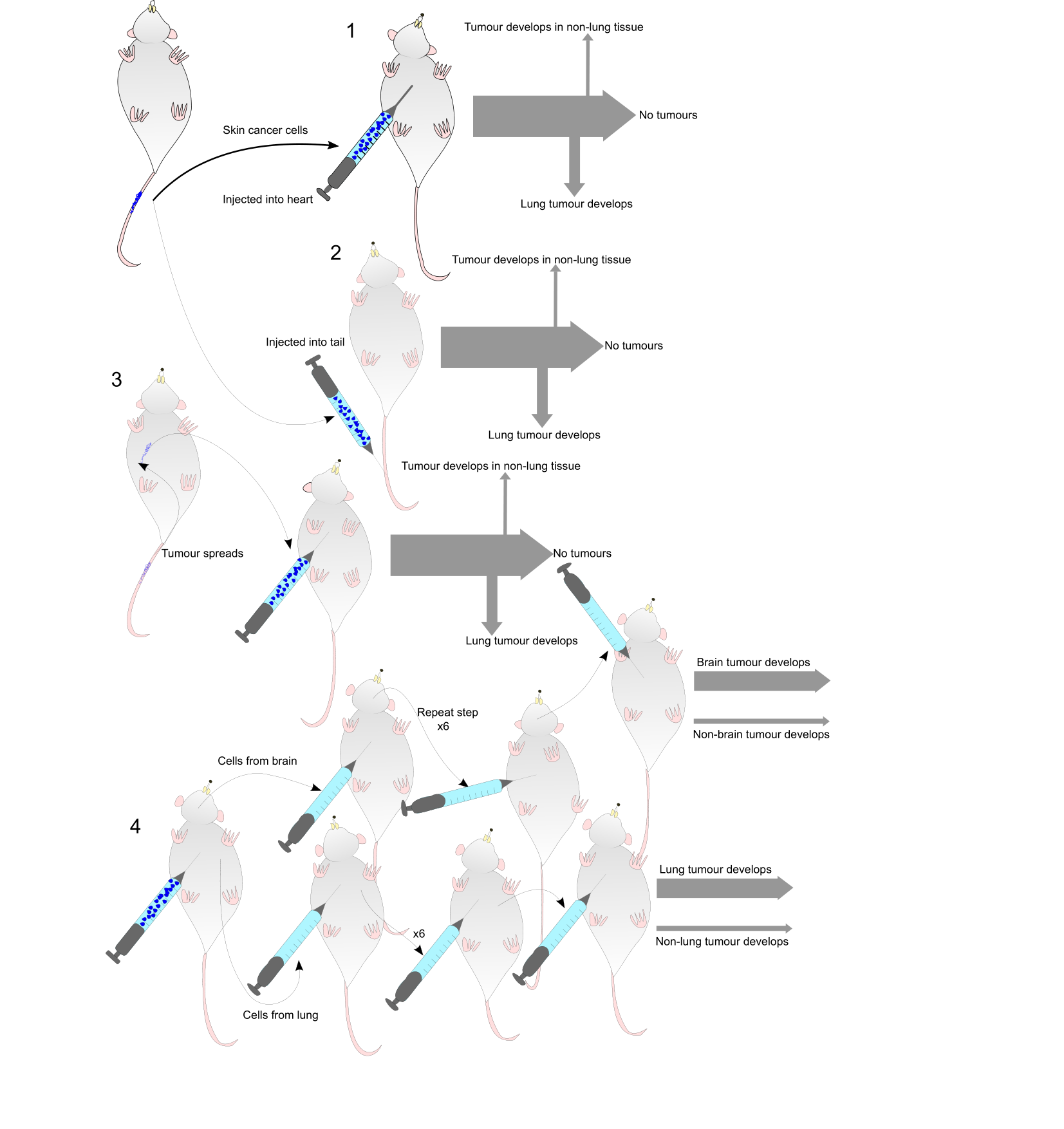
Different types of primary tumours give rise to secondary tumours at different rates, and in characteristic places. (The primary organ is where the primary tumour occurs, the secondary organ is where the secondary tumour develops). To understand why, healthy mice (Mus musculus) were injected with cells from skin cancers which spontaneously developed in different mice: Arrow thickness = relative proportion of mice exhibiting the symptom. (1) Cells from the primary tumour were injected into the heart. (2) Cells from the primary tumour were injected into the tail vein. (3) Cells from a secondary tumour were injected into the heart. In (1, 2 & 3) cancer cells were recovered from the lymph of 100% of the injected mice within hours. In (4), cells from primary tumours were injected into the heart, and cells recovered from homogenised brain or lung were serially passed through fresh mice.
Using the information and data, determine which of the statements are true or which are false.
Question reproduced from IBO 2017, Theoretical Exam B, licensed under CC BY-NC-SA 4.0 - attributed to the International Biology Olympiad. Open the full exam PDF · Official answer key & worked solutions