Q36 - A Luciferase Reporter Measures Caspase Activity in Apoptosis
Sir Alastair Currie (1921-1994), Sir John Sulston (1942-present) and colleagues discovered how cells can commit controlled suicide (apoptosis). Apoptosis is executed by Caspase enzymes. Cyclohexamide (CH), which inhibits ribosomes, was used to induce apoptosis in cells treated with the hormone bone morphogenetic protein-9 (BMP9). To measure the number of apoptotic cells after treatment, inactive luciferase substrate, and the light-emitting enzyme luciferase, were added.
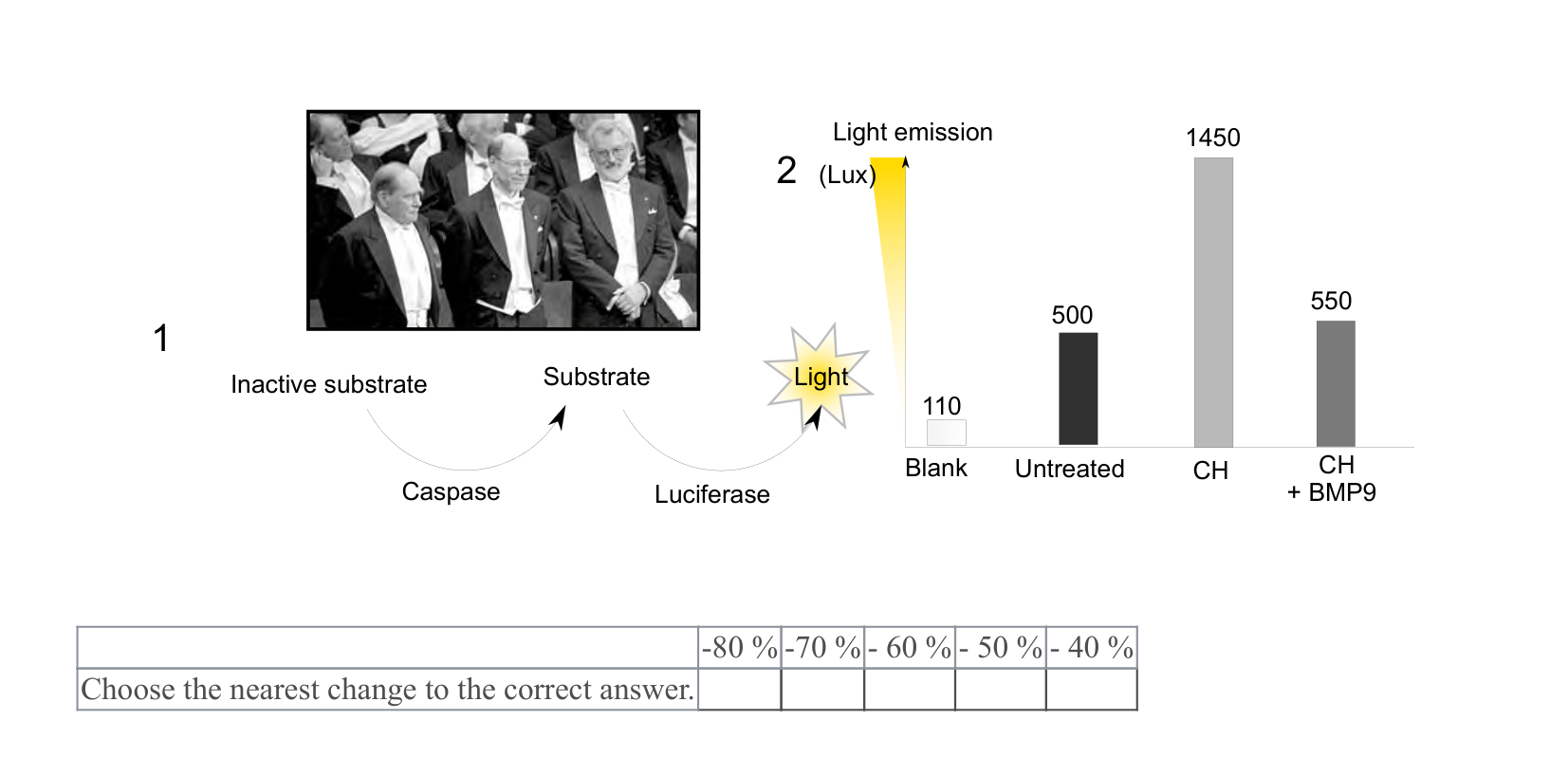
This question mixes multiple-choice/numeric-estimate parts with True/False statements - answer each part using the information and data above.
Question reproduced from IBO 2017, Theoretical Exam B, licensed under CC BY-NC-SA 4.0 - attributed to the International Biology Olympiad. Open the full exam PDF · Official answer key & worked solutions