Q14 - 2D Gel Analysis of Plasmodium Peroxiredoxin
Plasmodium is a parasitic protozoan that is prevalent in tropical countries. Once the parasites invade host red blood cells, they multiply within 24 h. Fe2+ in red blood cell can react with free O2 as well as H2O2, causing formation of free radicals that can damage parasite cells. Unlike host cells, the parasites lack several enzymes of antioxidant defence systems. Scientists analysed the proteins from the parasite cytosol using two dimensional gel electrophoresis (see image below). Then, using mass spectrometry and peptide mass fingerprinting, they identified 6 proteins (spots 1 to 6) corresponding to human peroxiredoxin, while one protein (spot 7) corresponding to Plasmodium peroxiredoxin.
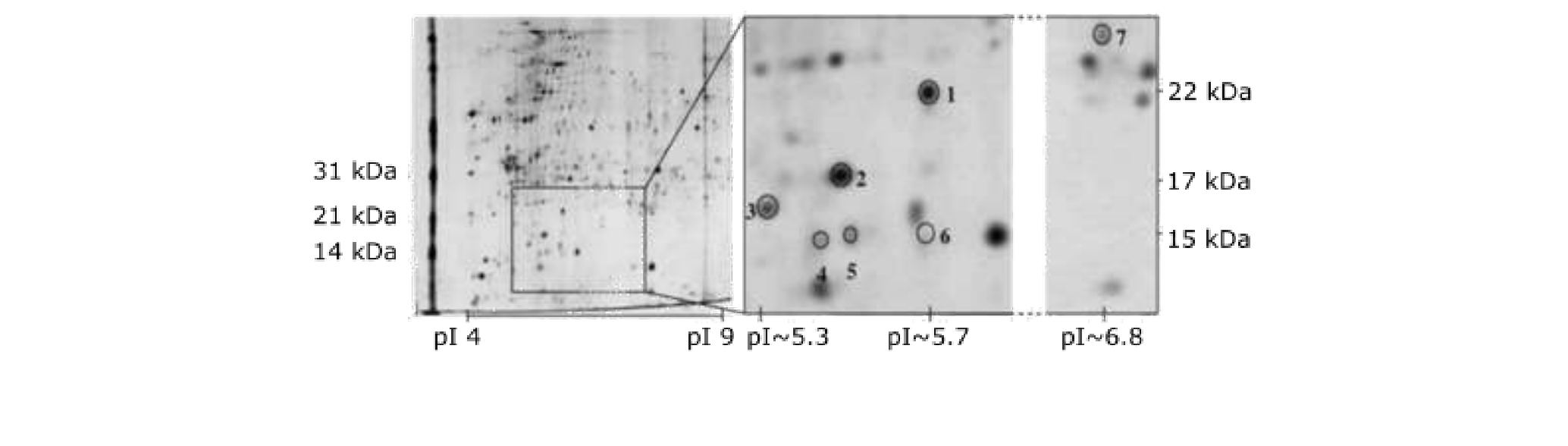 Figure 1.
Using the information and data, determine which of the statements are true or which are false.
Question reproduced from IBO 2018, Theoretical Paper 2, licensed under CC BY-NC-SA 4.0 - attributed to the International Biology Olympiad. Open the full exam PDF · Community solutions (unofficial)