Q30 - Circulatory and Filter-Feeding Anatomy of Amphioxus
Amphioxus (lancelet) is a marine slender, laterally compressed and translucent filter-feeder deutrostome that inhabits the sandy bottoms of coastal waters around the world. Sexes are separate, gonads are located in the atrial cavity and there are no ducts. The closed circulatory system of this fish-like animals, is complex for such a simple chordate. The flow pattern is remarkably similar to that of primitive vertebrates. The colourless blood is pumped forward in the ventral aorta by peristaltic-like contractions of the vessel wall only, then passes upward through branchial arteries (aortic arches) in the pharyngeal bars to paired dorsal aortas which join to become a single dorsal aorta. From here the blood is distributed to the body tissues by microcirculation and then is collected in veins, which return it to the ventral aorta.
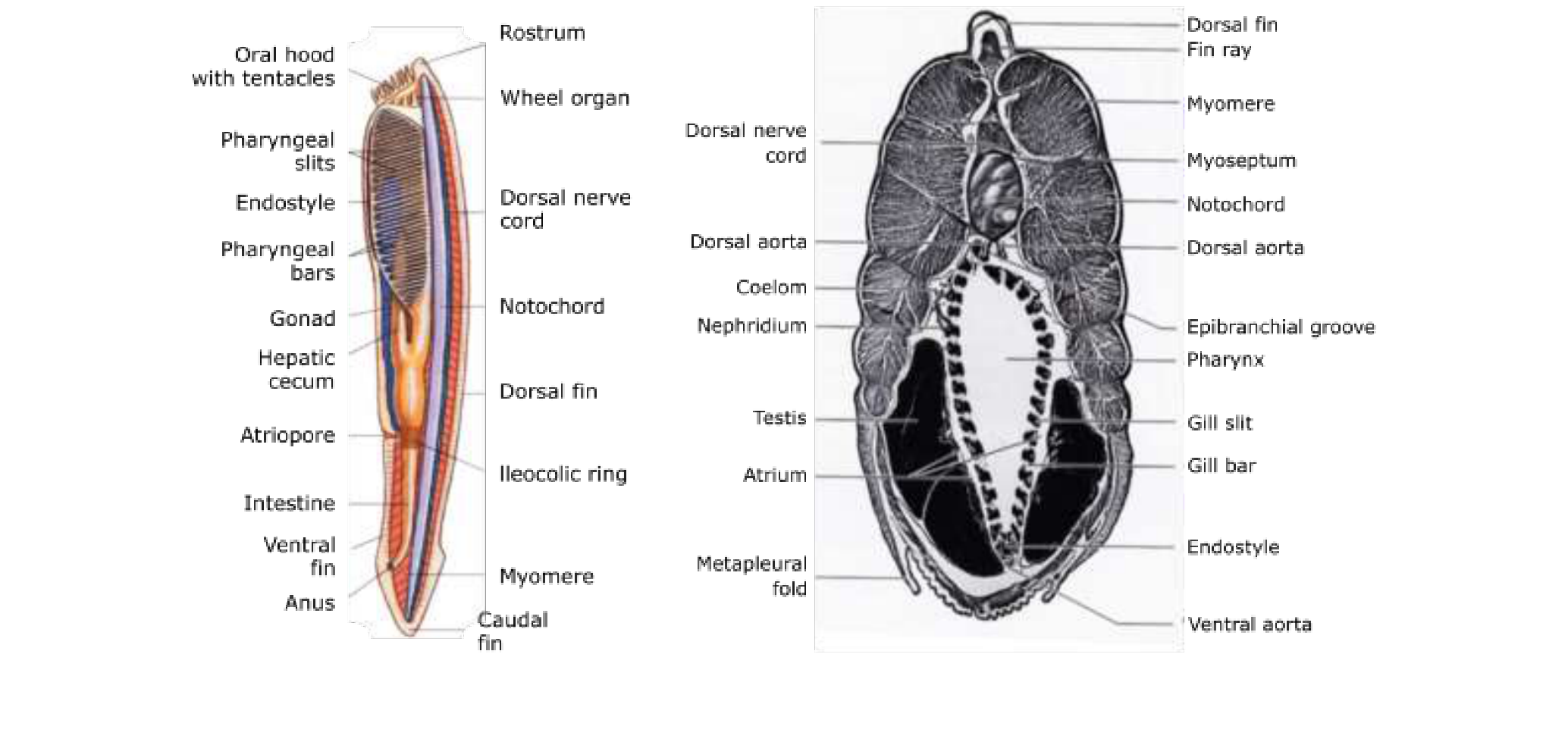 Figure 1.
Using the information and data, determine which of the statements are true or which are false.
Question reproduced from IBO 2018, Theoretical Paper 2, licensed under CC BY-NC-SA 4.0 - attributed to the International Biology Olympiad. Open the full exam PDF · Community solutions (unofficial)