Q31 - Effect of Body Temperature on Canine ECG Intervals
Electrocardiography is a method to study the electrical activity of the heart (ECG). In addition to P, QRS and T waves, there are segments and intervals which are defined to show a specific period of time in a cardiac cycle. A variety of different factors like concentration of electrolytes, drugs and temperature could have an effect on waves and intervals of ECG. A group of researchers have studied the effect of body temperature on QT and RR interval in electrocardiogram of beagle dogs. The result of their study is demonstrated in the figures. Note that RR interval is the time between two consecutive R waves and QT interval is the exact time before start of Q wave till the end of the next T wave. Given that QT interval gets shorten by the shortening of the RR interval, a formula (given below) has been approved to calculate a corrected QT interval (QTc) to allow the comparison of QT interval over time at different heart rates. Hodges formula: QTC = QT + 1.75 (heart rate - 60)
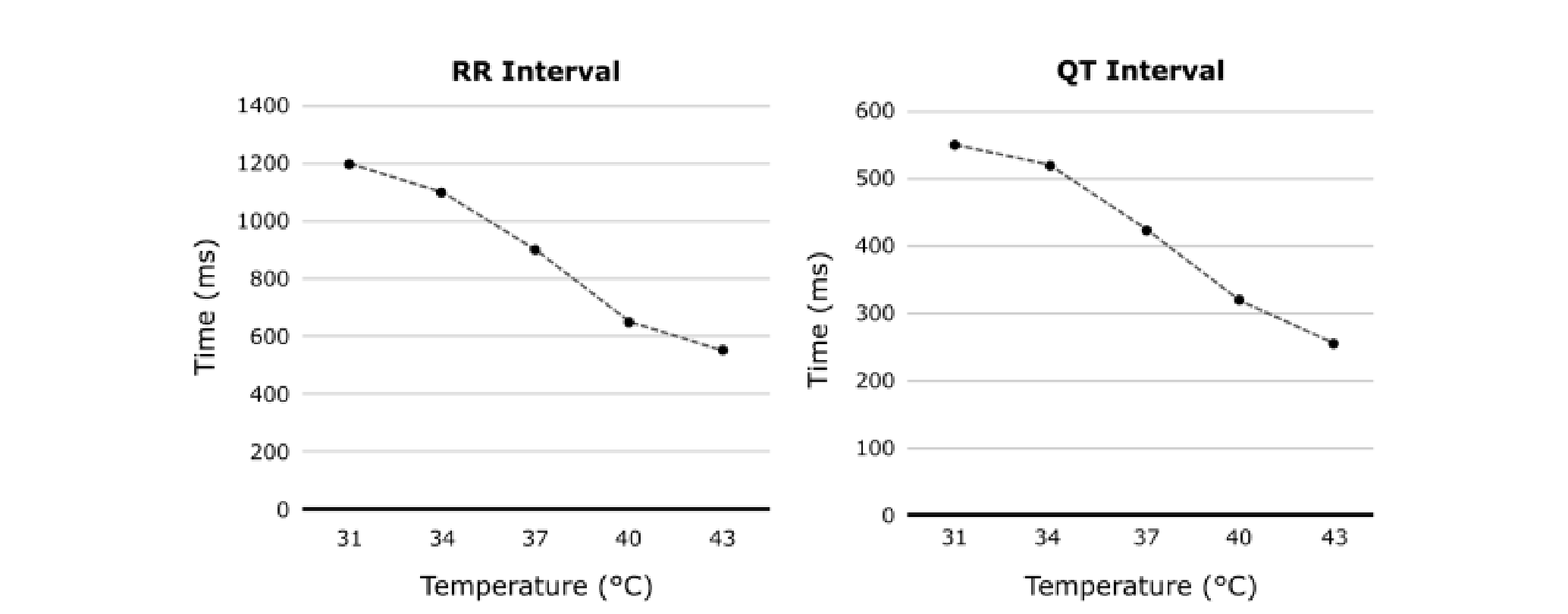 Figure 1.
Using the information and data, determine which of the statements are true or which are false.
Question reproduced from IBO 2018, Theoretical Paper 2, licensed under CC BY-NC-SA 4.0 - attributed to the International Biology Olympiad. Open the full exam PDF · Community solutions (unofficial)