Q8 - Dominant-Negative Effects in Receptor Tyrosine Kinase Mutants
Two different mutant forms of a gene that encodes a cell surface receptor tyrosine kinase (RTK) are separately inserted into vectors. One mutant encodes a protein with a non-functional kinase domain, and the other lacks a functional ligand binding domain. Each vector is separately introduced into normal cells that can express wild type RTK from their endogenous genes. It is known that the cells used have a high capacity for RTK receptors on their surface, that ligands bind to monomeric forms of receptor proteins and that heterodimeric receptors are inactive in signalling. The diagrams below depict four cell types identified. Each diagram shows the only receptor forms observed on the respective cell types in the ratio that they were observed. The experiments were performed under non-saturating concentrations of ligand.
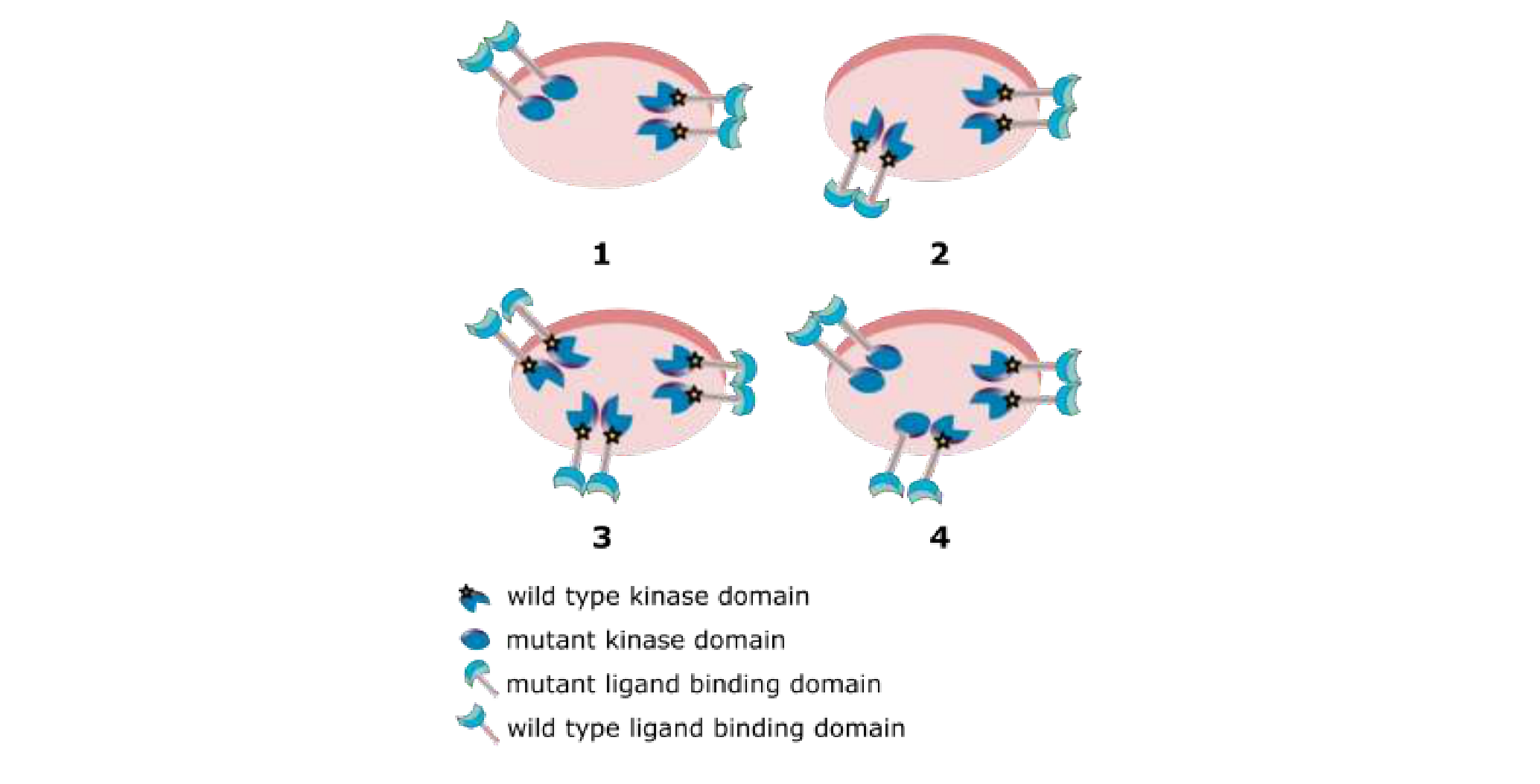 Figure 1.
Using the information and data, determine which of the statements are true or which are false.
Question reproduced from IBO 2018, Theoretical Paper 2, licensed under CC BY-NC-SA 4.0 - attributed to the International Biology Olympiad. Open the full exam PDF · Community solutions (unofficial)