Q9 - Nuclear Import of the ErbB-2 Receptor
ErbB-2 is a receptor found on the plasma membrane of mammalian cells which can move from the plasma membrane to the nucleus. Because most proteins that shuttle between the cytoplasm and the nucleus are soluble and not integral membrane bound proteins, the mechanism by which ErbB-2 undergoes transport to the nucleus is of particular interest. Three experiments described below were done to shed light on the underlying mechanisms. Experiment 1: siRNA knock down of importin beta1 expression in target cells. The cells were transfected with importin beta1 siRNA (Imp), non-functional siRNA control (N.S.), or buffer only (-). Proteins from the cytoplasmic and nuclear fraction of cell lysates were analysed by Western blotting using importin-beta1, and ErbB-2, alpha tubulin and histone H3 antibodies as indicated. Experiment 2: Mutant cells lacking ErbB-2 gene were transfected with wild-type ErbB-2 (WT), ErbB-2 mutant containing a deficient nuclear localization signal (deltaNLS), or vector control (-). Proteins from the cytoplasmic fraction, nuclear fraction were then analysed by Western blotting with ErbB-2, importin-beta1, alpha tubulin and histone H3 antibodies as indicated. Experiment 3: Cell lysates from the cells were immune-precipitated with anti-ErbB-2 or mouse IgG (mIgG). The precipitated immune-complexes and the cell lysates were then analysed by Western blotting with clathrin, importin-beta1, and ErbB-2 antibodies.
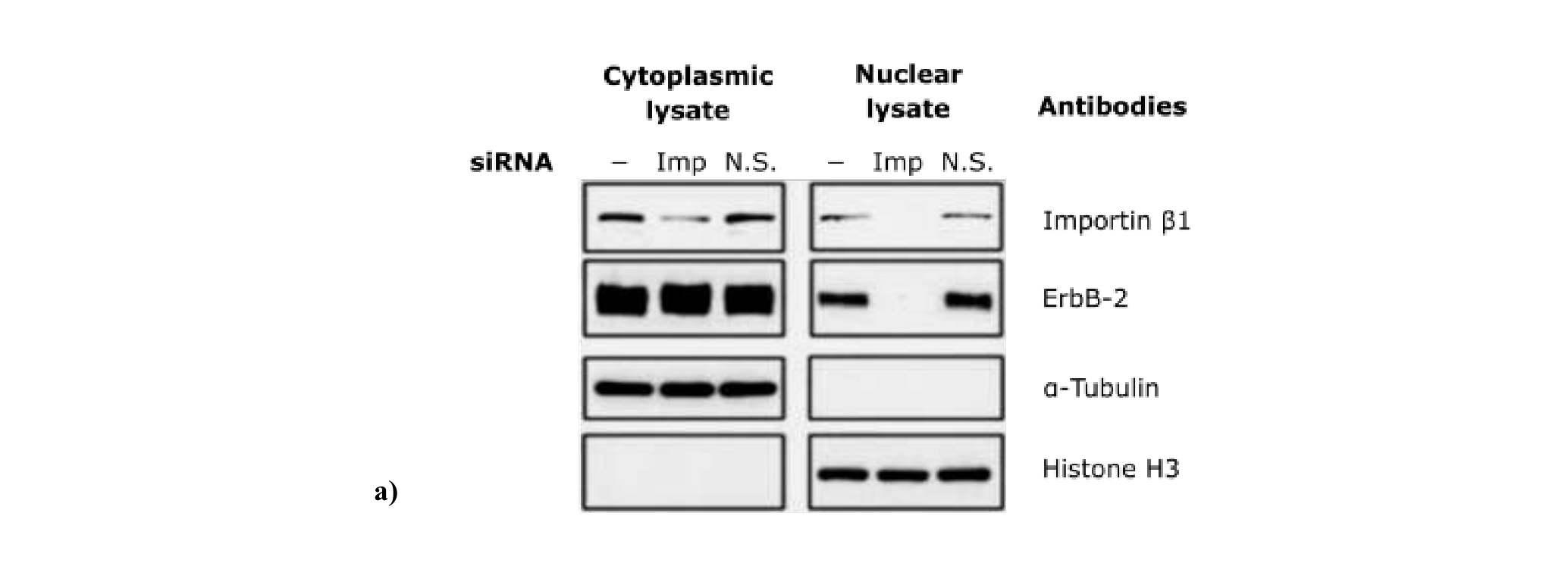 Figure 1.
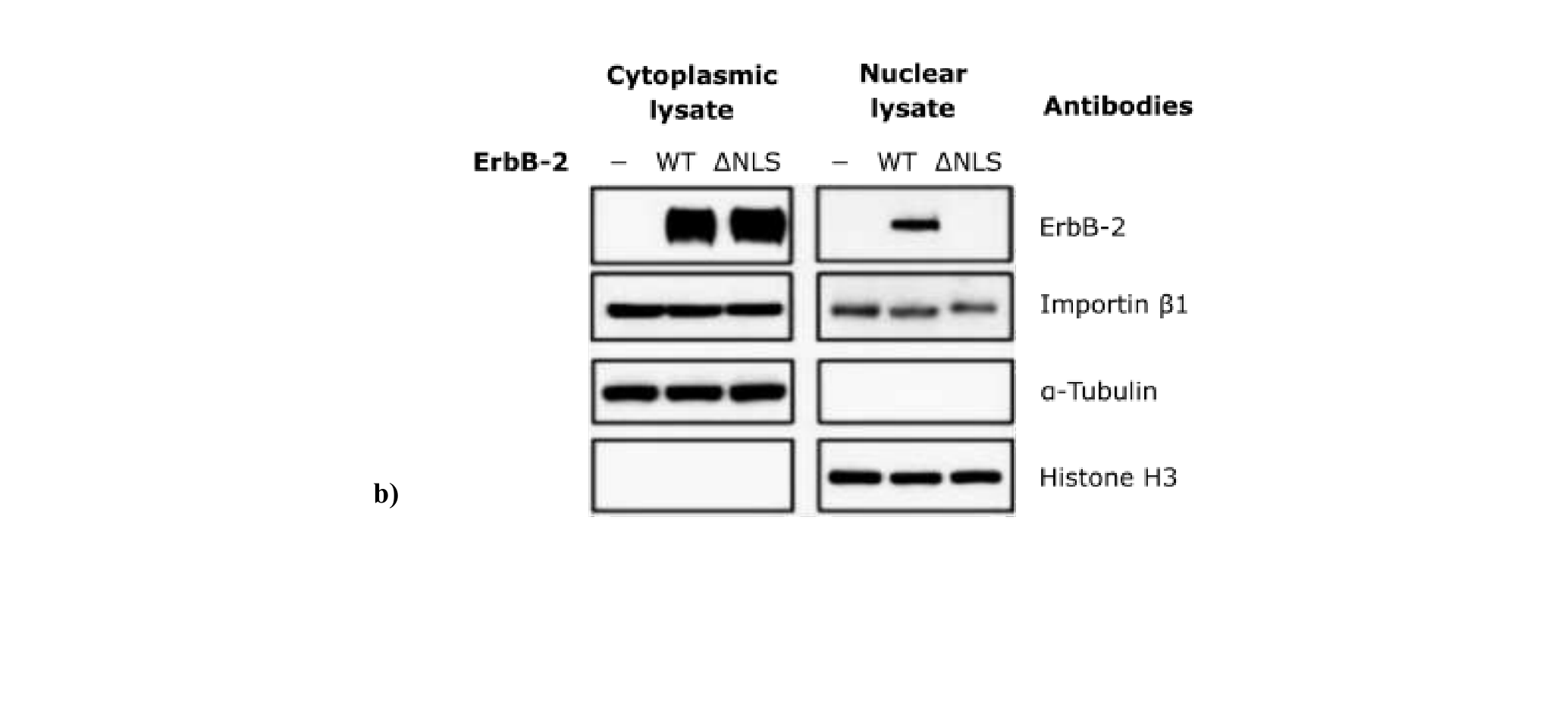 Figure 2.
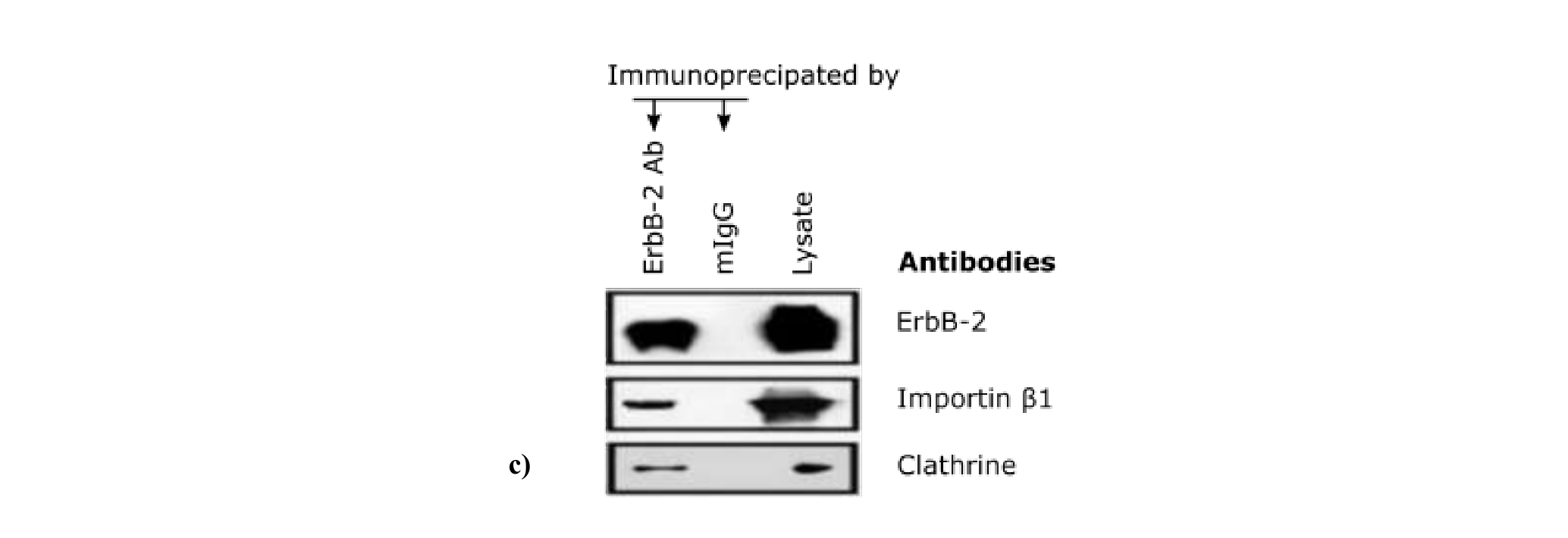 Figure 3.
Using the information and data, determine which of the statements are true or which are false.
Question reproduced from IBO 2018, Theoretical Paper 2, licensed under CC BY-NC-SA 4.0 - attributed to the International Biology Olympiad. Open the full exam PDF · Community solutions (unofficial)