Q4 - CDK Knockout and Liver Regeneration
CDK is a family of cyclin dependent kinases which drive the cell cycle. A portion of the liver was removed in WT mice, or in livers which had a particular CDK gene knocked-out. Mice were allowed to regenerate, then their regenerated livers were weighed, measured and stained. Individual liver cells were removed and stained for total DNA content, or for newly synthesised DNA (Figure 1).
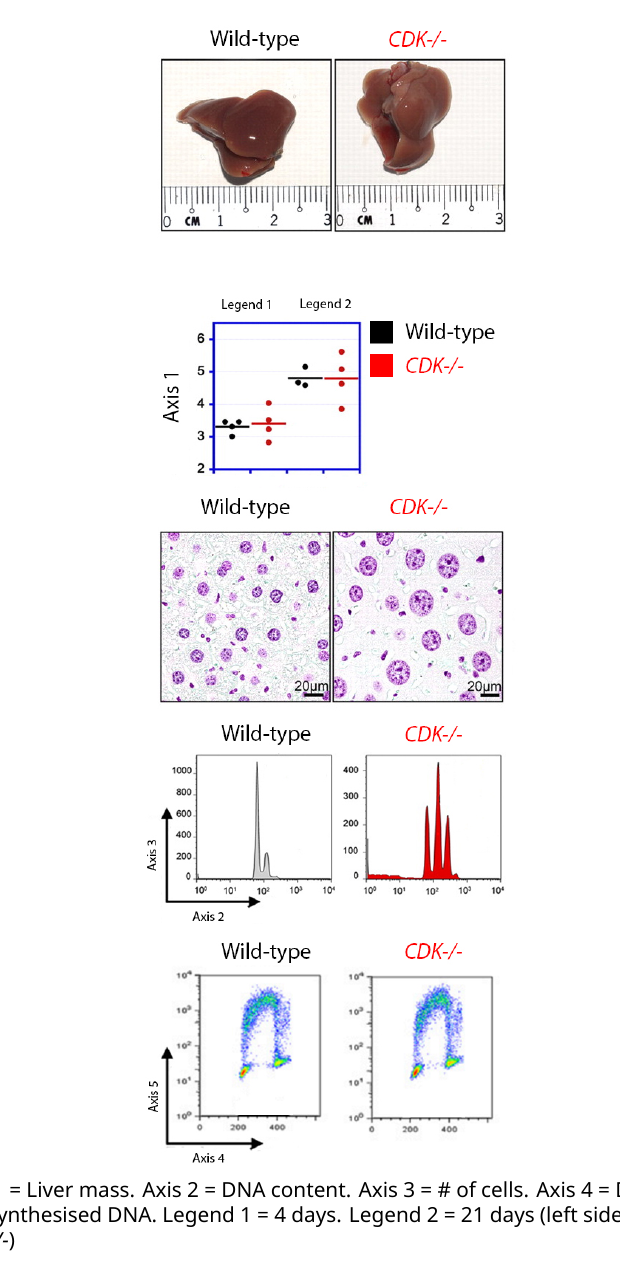 Fig.1. Axis 1 = Liver mass. Axis 2 = DNA content. Axis 3 = # of cells. Axis 4 = DNA content. Axis 5 = Newly synthesised DNA. Legend 1 = 4 days. Legend 2 = 21 days (left side = wild-type, right side = CDK-/-).
Indicate with an X whether you would expect the number or amount of each of the following structures to increase (A), not change (B), or decrease (C) in CDK knock-out livers versus wild-type ones.
Question reproduced from IBO 2019, Theoretical Exam A, licensed under CC BY-NC-SA 4.0 - attributed to the International Biology Olympiad. Open the full exam PDF · Official answer key