Q5 - Molecular Crowding of Hemoglobin and Ion Diffusion in Red Blood Cells
Cytoplasm is generally occupied by very high concentrations of biomolecules and condensed organelles. This property is called “molecular crowding”, which affects the rate of intra-cytoplasmic diffusion and enzymatic reactions. Mammalian red blood cells (RBCs, Figure 1) are a typical case that demonstrate molecular crowding. The concentration of hemoglobin molecules (molecular mass, 64,000 g/mol) inside RBCs is called “mean corpuscular hemoglobin concentration (MCHC)”. It is as high as about 320 mg/mL in humans. From this concentration, we can estimate the mean cytoplasmic volume in a RBC occupied by a single molecule of hemoglobin. If hemoglobin molecule has a density as usual protein molecules of about 1.35 g/mL, we can also estimate how large is the molecular volume of hemoglobin.
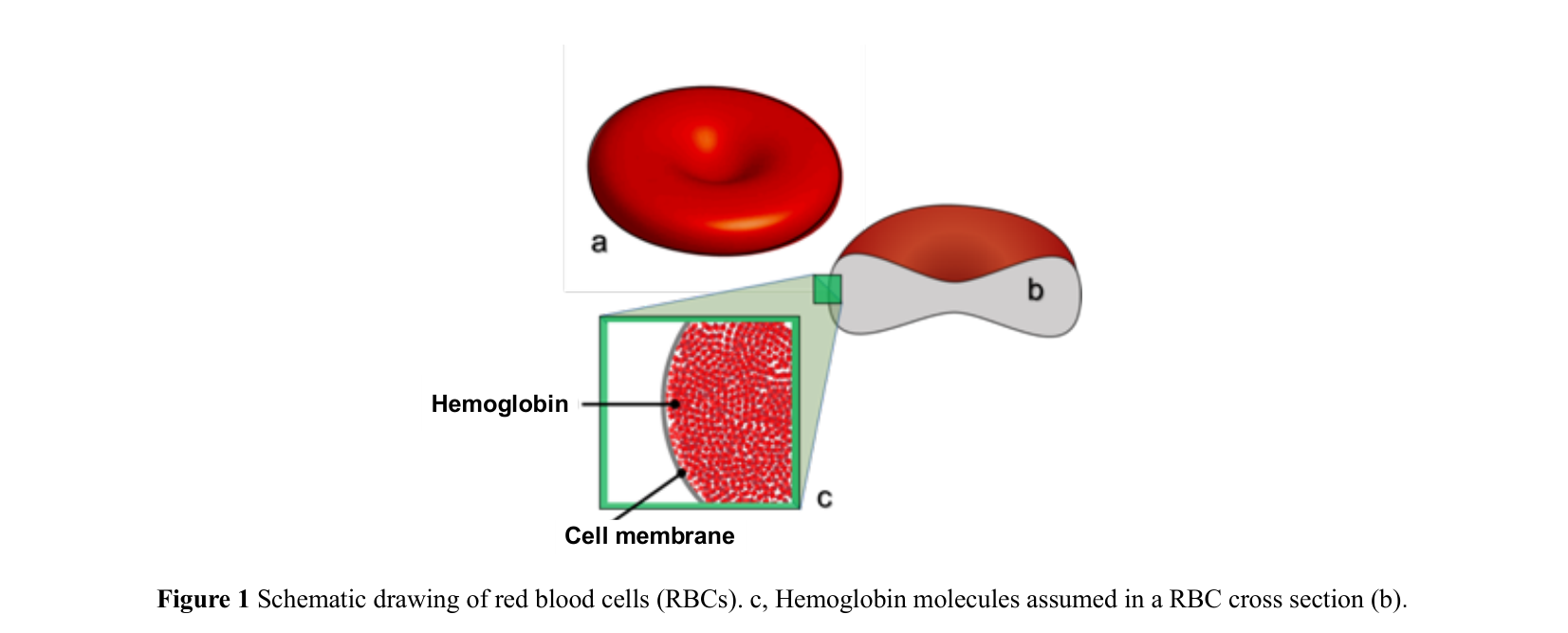 Figure 1.
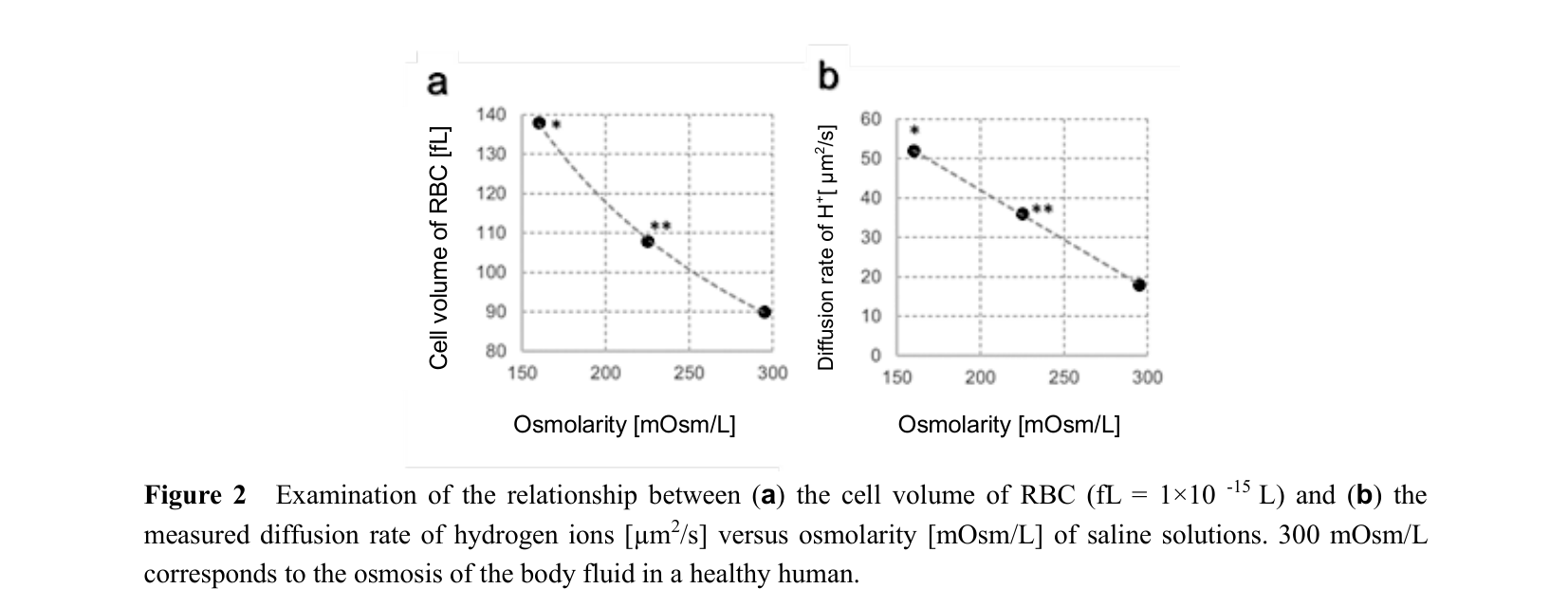 Figure 2.
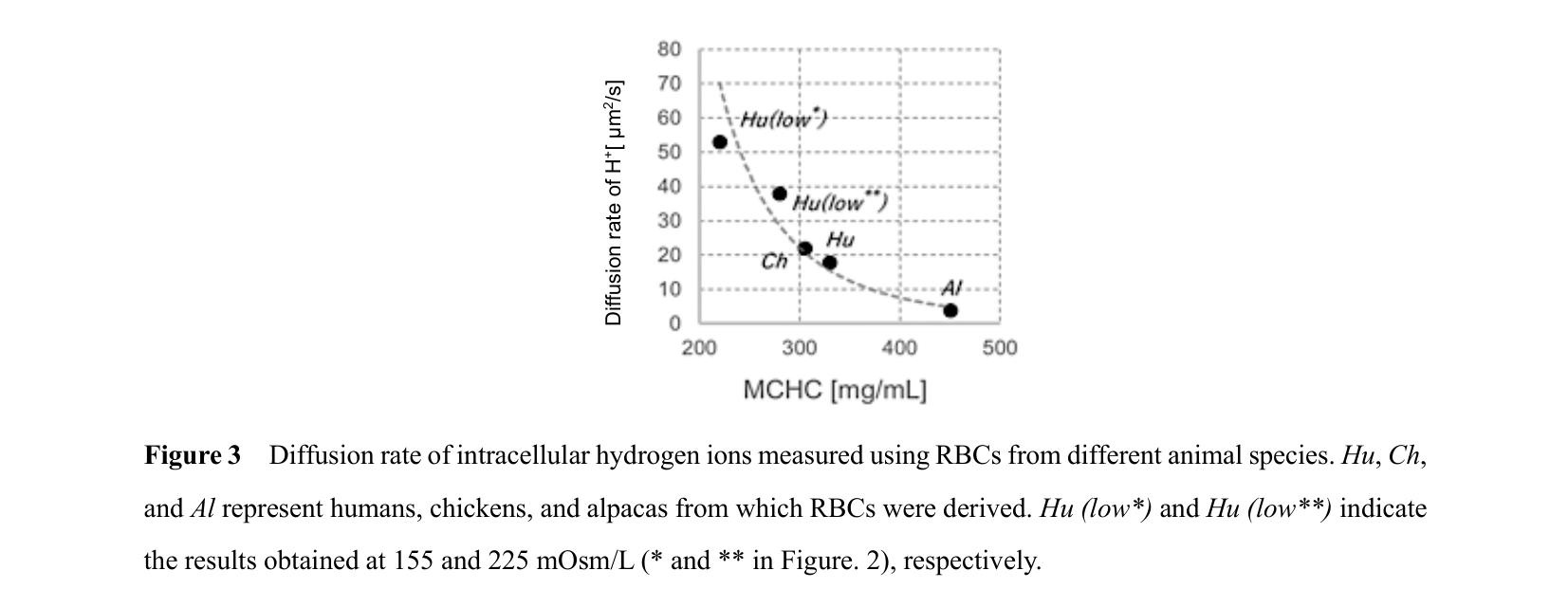 Figure 3.
Using the information and data, determine which of the statements are true or which are false.
Question reproduced from IBO 2020, Theoretical Exam 2, licensed under CC BY-NC-SA 4.0 - attributed to the International Biology Olympiad. Open the full exam PDF · Community solutions (unofficial)