Q1 - Alfalfa Mosaic Virus - m6A Demethylation & Viral Replication
Alfalfa Mosaic Virus (AMV) consists of a capsid and 4 RNA fragments: R1, R2, R3, R4. Capsid protein (CP) is known to play an important role at different stages of the AMV viral cycle. In particular, CP is involved in the initial translation of replication factors encoded by the viral RNA. CP interacts with the atALKBH9B protein of the host cell, which catalyzes the following reaction in the cell (Figure 1).
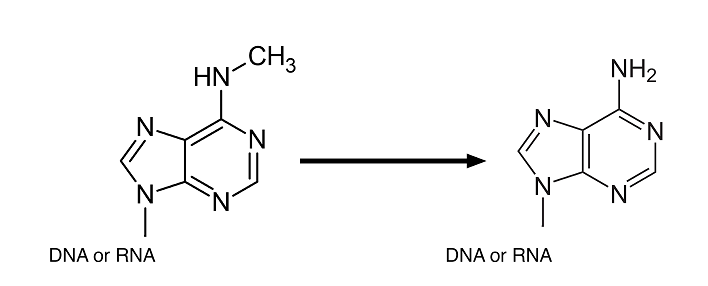 Figure 1. Reaction catalyzed by atALKBH9B.
Methylation of the viral RNA in the host cell inhibits viral replication. CP is thought to neutralize this cellular antiviral mechanism by binding to and recruiting atALKBH9B. To test this hypothesis, researchers have grown Arabidopsis thaliana individuals with mutations in the atALKBH9B gene (atalkbh9b). Then the mutants (atalkbh9b; 4, 5, 6 in Figure 2) and wild types (WT; 1, 2, 3 in Figure 2) have been infected with AMV. Separation of viral RNAs by gel electrophoresis was performed in the two studied plant groups 3 and 6 days post infection (dpi). The results of the experiment are presented in Figure 2.
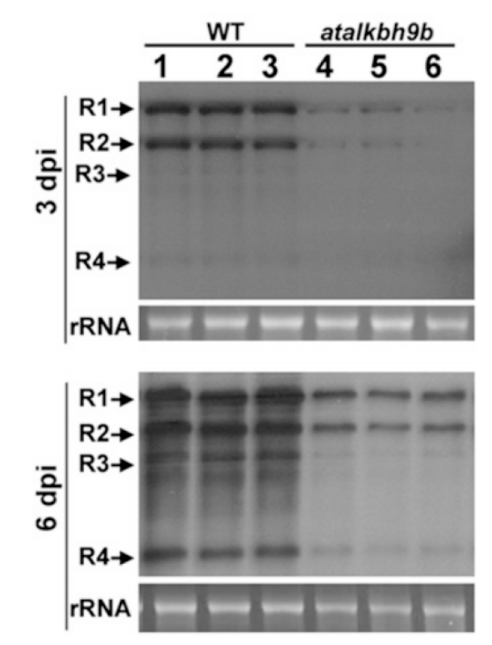 Figure 2. Separation of viral RNAs by gel electrophoresis in the two studied plant groups, 3 and 6 days after infection (dpi). rRNA is the ribosomal RNA of the host cell.
Based on the results of the experiment, indicate whether the following statements are true or false:
Question reproduced from IBO 2022, Theoretical Paper 1, licensed under CC BY-NC-SA 4.0 - attributed to the International Biology Olympiad. Open the full exam PDF · Community solutions (unofficial)