Q10 - Yeast Prion [GAR+] and Bacterial Metabolite Signaling
Yeast (Saccharomyces cerevisiae) prion protein Pma1 is found in two significantly different conformations.
In one of these conformations, the protein clumps resulting in loss of physiological function of the protein. This results in the [GAR+] phenotype. This phenotype is spread by cytoplasmic, non-Mendelian inheritance: sporadically daughter cells are formed which do not contain Pma1 protein clumps, so these have a [gar−] phenotype.
Catabolic repression describes the phenomenon of yeast using glucose as a sole source of carbon and energy, despite the presence of other organic compounds that yeast cells can use in metabolism. Only in the absence of glucose will yeast cells use other sources of carbon and energy, e.g. glycerol.
In [GAR+] yeast, there is no catabolic repression.
Lactic acid secreted by Staphylococcus gallinarum bacteria, which live alongside S. cerevisiae, can induce a change in the yeast phenotype from [gar−] to [GAR+]. In an experiment, yeast was grown on solid agar-agar minimal medium containing glycerol (Gly) or glycerol plus glucosamine (Gly+GlcN). Glucosamine induces catabolic repression in yeast but is not metabolized by S. cerevisiae.
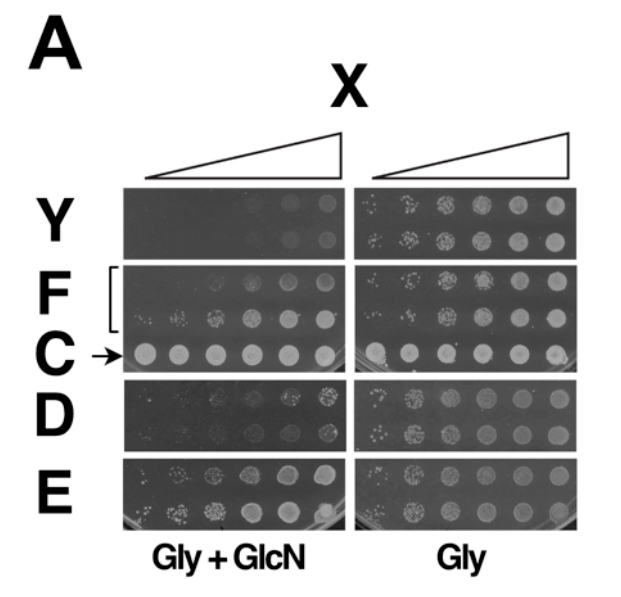 Panel A. Colony growth under different conditions. X = serial dilution of S. cerevisiae, Y = S. cerevisiae only, F = S. cerevisiae with S. gallinarum, C = S. gallinarum only, D = S. cerevisiae + filtered unused bacterial medium, E = S. cerevisiae + filtered medium after S. gallinarum cultivation.
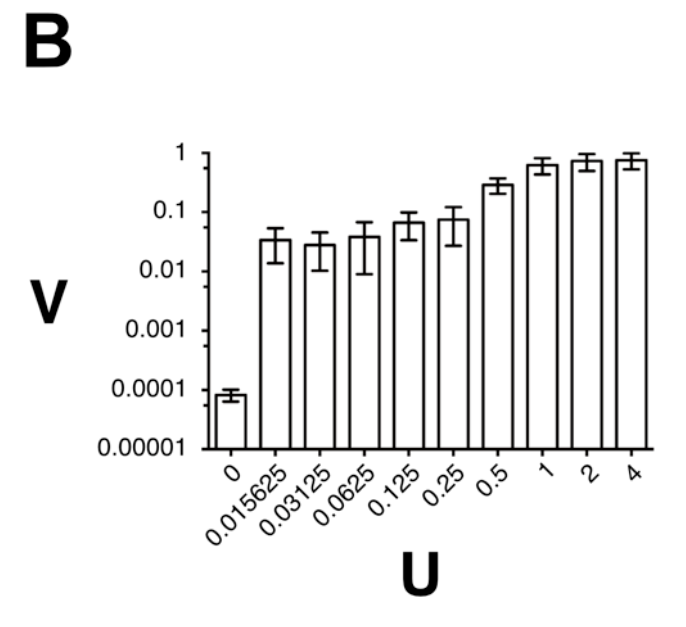 Panel B. Fraction of [GAR+] colonies in the yeast population at increasing lactic acid concentrations.
Question reproduced from IBO 2023, Theoretical Paper 1, licensed under CC BY-NC-SA 4.0 - attributed to the International Biology Olympiad. Open the full exam PDF